Tag: Environmental

  • Why History isn’t Just for humans

    “On the planet Earth, man had always assumed that he was more intelligent than dolphins because he had achieved so much – the wheel, New York, wars and so on – whilst all the dolphins had ever done was muck about in the water having a good time. But conversely, the dolphins had always believed that they were far more intelligent than man – for precisely the same reasons.”

    – Douglas Adams, The Hitchhiker’s Guide to the Galaxy (London, Pan Books: 1979)

    It is not uncommon for historians to dismiss, or even scoff at, the notion that pigs, dandelions, or bacteria could be capable of changing the course of history as humanity does. Indeed, in a previous article I myself wrote that “History is only important to humans, it is a humanity after all. If no humans are affected, aware of, or record something, then surely it cannot be history.” In retrospect those words speak volumes toward my fatal ignorance about the reality of our planet’s complex ecosystems, a reality I will seek to illustrate herein. Furthermore, they reveal a sentiment born of a culture that deifies the human as the sole source of meaningful action and casts the rest of the biosphere as mere clay waiting to be moulded by others’ hands. In this article I will seek to put right these mistakes and to demonstrate the importance of all nature in affecting historical events, including as agents independent of human involvement.

    Initially, let us take the most obvious manner in which the natural world outside of humanity has affected history: as a resource to be consumed or manipulated. A human “survives biologically or not at all”, and ultimately it has been the desire to acquire food, shelter, and prosperity from the surrounding ecosystem that has driven the development of human societies. Historical epochs are defined by humanity’s exploitation of the natural world: Who would the Mongols have been without horses? What would the slave trade have been without sugar? Human action is fundamentally entwined with the rest of the natural world; where, when, and how other life survives has shaped our decision making as both individuals and groups throughout time, this much is generally accepted. What has proved more controversial is the idea that these historical relationships have often been more a story of “interspecies cooperation” than of dominance of one over the other. If we examine these histories from an ecological perspective, we will soon find that the story is not as unidimensional as commonly perceived.

    To return to our aforementioned hypotheticals, beginning first with the Mongol-horse relationship. Certainly, for the Mongols themselves their bond with the horse was as close to symbiosis as could be achieved; this extended as far so that horse and rider would be buried together upon death. According to Mongolian shamanic tradition your soul, referred to as the ‘wind horse’, would then be protected by the equestrian deity Kisaya Tngri. Horses were the centre of this culture and were valued creatures of status and importance, their cooperation with the Mongols was what allowed the successes of that empire, and the Mongols knew it. Sugarcane too, although traditionally seen as “a domesticated essence and nothing more”, has been as much a benefactor of its interactions with humans as vice versa, if not more so. The slave trade is an example of how far humankind will go to satisfy the desires of the plant, wilfully destroying the lives of many members of its own species in order to rapidly spread and cultivate it at the expense of all other competition. From the sugar’s perspective it appears like it is humanity that has been taken advantage of, spending huge amounts of labour to propagate the plant on an industrial scale whilst the sugar does little to help human propagation in return. Only this small change in perspective, to consider how other living things are being benefited or impeded by historical events, reveals the centrality they hold to them. It must not be lost sight of that all the social, political, and economic systems of civilisation are completely reliant on the ecosystem which supports them. To view nature simply as a resource is “to render it dead”, when it is very much alive.

    We have established that in cooperation with humans other living things are affecters of historical change, but what can we say to the notion that the native biota of our planet can be defined as historically significant for actions they take independently of humans? The question of whether cotton, cattle, or cholera has agency in affecting such things will be dealt with later, but with agency or without the literature increasingly concludes that living things other than humans can independently affect historical events. The most explored example of this in the field of environmental history is that pioneered by Alfred Crosby in texts such as The Columbian Exchange and Ecological Imperialism; Crosby brings to the fore the biological element of European imperialism, highlighting the spread, sometimes intentional and other times not, of flora, fauna, and microbes across the world alongside humanity. The ‘successes’ of imperialism, previously ascribed to solely human action, have been re-evaluated. The European “portmanteau biota” of rats, cattle, dandelions, and many others have been acknowledged for the intense disruption of local ecosystems upon their introduction to colonial targets such as the Americas, South Africa, Australia, and New Zealand. Many indigenous plants and animals were overwhelmed and began to recede in the face of the invaders, undermining the ecological foundations of native societies and causing economic, political, and social instability, an instability which the Europeans took advantage of. Even more crucial than this however was the role of imported European diseases which ravaged populations, smallpox alone causing demographic decline in some regions of up to 90%. In some instances the spread of this portmanteau biota was orchestrated and controlled by humanity, but in many others these organisms spread and propagated untempered, like an ecological tsunami, across those lands unfortunate enough to be targeted. From this independent action, many of the victories of colonialism were allowed, and thus history was profoundly changed in the process.

    This is by no means the only example of independent ecological action profoundly affecting historical events, often against the will of Homo sapiens. Disease particularly has provided a multitude of examples to point toward, given the difficulty humans find in influencing microbes. Infamous plagues such as the 14th century black death, 1918 Spanish flu, and the contemporary HIV/AIDS pandemic have all killed millions of people and absorbed incalculable amounts of human time, energy, and resources. In these situations the bacteria has used humanity as a resource to further its own ends. For plants and animals we can look to the recent jellyfish invasions of the Mediterranean and the black sea, completely unwanted by humans attempting to avoid “ecosystem collapse”. We could also look at the battle for water and oil taking place in Kazakhstan between human and cotton, currently being won by the latter. All such examples demonstrate that the natural world does not sit statically waiting to be interacted with and will change history with humanity’s permission or not.

    These prior examples have shown us that non-human living things have the capability to independently change the course of human history, but must we be so focussed on history as a human domain? Must our definition of ‘historical events’ be one that assumes the involvement of the human at all? If other life forms can influence human history then they must be capable of influencing their own; a simple change in the value historians place on the importance of natural history is all that is required to view the discipline as something that lives beyond a singular species. For some particularly intelligent animals this line of argument is considerably easier to argue than for others, as there is an increasing volume of evidence arguing that humans are by no means the only species on the planet capable of understanding the concept of history. Most spectacularly, Elephants have been observed to travel to the bone sites of their ancestors with their calves, seemingly in order to pay homage to them and pass on a shared history to their children. Similar behaviour has also been seen in dolphins, giraffes, Siamese cats, and even ducks. If other creatures have a concept of history then the notion of ‘historical events’ as uniquely human quickly appears an anthropocentric egotistical falsity.

    However, even beyond those wonderfully intelligent creatures that can conceive of the concept of history, humans included, we must still admit the presence of historical events. All living things have a history, and one that is important to their own future and all the life about them whether they know it or not. Would we seriously deny the extinction of the dinosaurs the status of ‘historical event’, given its significance in affecting the evolution of all life on this planet since? We see human historical events as significant because they satisfy human values of significance, humanity is the most advanced species on Earth only by its own parameters of what it has considered advanced. As Michael Pollan notes: “plants have been evolving much, much longer than we have… perfecting their designs for so long that to say one of us is the more “advanced” really depends on how you define that term”. Inherent in environmental history as a discipline is a certain amount of deflation of the human ego, to note that humanity does not always command its environment in the manner it imagines it is able to. Indeed, were the bees or the ants or the grasses of earth to die out tomorrow their demise would have a far more devastating effect upon the biosphere than if humans were to do the same. These life forms are so evolutionarily advanced that they have made themselves indispensable, their very existence tied to almost all other life on earth.   

    But why must so much time be spent demonstrating that humans are not at the centre of historical events? Because the principles of such an argument often run directly counter to many of the principles on which contemporary human society has been built; principles of human exceptionalism and the myth of a species that wields ultimate power over the others. Our modern economists, politicians, mathematicians, and historians have been educated within a system “designed to further the conquest of nature and the industrialisation of the planet”. In a contemporary context, the complete domination and control over the natural world is a defining concept of humanity itself and thus the notion of non-human living things affecting historical change has come to be seen as a far more radical concept than it deserves credit for. This has not always been the case however, indeed the 18th century ‘age of enlightenment’ is generally accepted as the period of time where an evolution in attitude took place between humankind and the rest of nature. In this environment of increasing urbanisation, invention, and belief in the power of man (woman coming roughly 200 years later) the academic and the populous view of nature shifted from seeing it as a force to be worked with, toward something to be worked against.

    Only over recent decades has the increasing awareness of the threat of climate change, the “historical event of our times”, begun to reintroduce narratives that place greater emphasis on the role of the natural world in affecting human affairs. This has occurred almost simultaneously in many fields including anthropology, geography, and sociology alongside history. The inherently interdisciplinary nature of ecological study has also led to vital increasing influence from the sciences on the academics of the humanities and social sciences in this sector. Donald Worster’s lamentations of 1993 that “Evolution and history remain… separate realms of discourse” are beginning to be addressed. For many years most of our historical canon has been telling us that humanity has been the controlling factor in all historical events, which has ill-prepared us for the present threats we face from outside the anthroposphere. Environmental factors have been denied importance in history in a similar fashion to how other historical minorities have been; swept under the rug in favour of tales which affirm baseless assumptions about whose history is more important than others. Environmental history is the next stage in the movement of ‘history from below’, bringing to light new interpretations of past events through the lens of a demographic that has been historically underrepresented.

    In this field of study, the question of agency in history is often brought up and has proved a complicated affair for historians to discuss. William Sewell concluded that agency “implies consciousness, intention and judgement” and is therefore “limited exclusively to humans”. Amanda Rees, conversely, criticized this view, claiming that modern notions of agency have been tied to ideas of a “rational, liberal, individual self” that omits the possibility of agency through group action or unintended consequence. Ewa Domańska respects non-human agency so far as to call for a “multi-species co-authorship” of history. The central problem, which many acknowledge, is the loose nature with which the term ‘agency’ can be defined, to the extent that much of this debate has spilled over into the realms of philosophy, where even the notion that humans possess agency has been called into question. Andria Pooley-Ebert perhaps makes the best compromise when she concludes that “giving an animal historical agency is not necessarily implying that the animal acted independently, but rather that it was an integral component in a complex relationship”. The only change needed to this statement is to include all living things under that definition, not just animals. Ultimately, however, the question of agency is less important than the question of importance, whether we place value on historical events which are not our own or otherwise.

    The famous adage which asks: ‘if a tree falls in a forest and no one is around to hear it, does it make a sound?’ is a rather presumptuous one. It assumes that we should struggle to consider whether anything really occurs outside of our own narrow perceptive field. In actuality, all we need do is consult the creatures of the forest to know it made a sound. Non-human living things are not only integral to affecting historical events from a human perspective, they are essential to the histories of their own species which exist, at various points throughout history, in either independence of, or symbiosis with, our own.

    Author/Publisher: Louis Lorenzo

    Date of Publication: 13th of March 2019
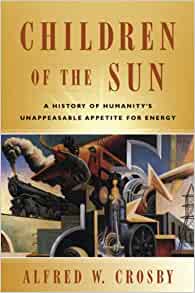
  • Review: Children of the Sun: A History of Humanity’s Unappeasable Appetite for Energy

    Text: Children of the Sun: A History of Humanity’s Unappeasable Appetite for Energy. By Alfred W. Crosby. New York: W. W. Norton & Company, 2006. 208pp.

    The experience of reading Children of the Sun feels more akin to a fable than a history volume, even the title rings of fairy tale. As if meant to be read aloud Alfred Crosby fills his text with intriguing and often humorous accounts that serve to compliment the overall story he endeavours to tell; each chapter ends with a “coda” that sets aside historical analysis in favour of engaging narrative. Indeed, “narrative” is the correct word to describe Crosby’s survey of human history which is structured so that every section presents a problem which our protagonist, humanity, must overcome lest they fail in their mission to consume ever increasing quantities of energy. Migration into inhospitable environments results in people learning how to cook. The felling of forests requires a need to mine for coal. The hunting of whales to near-extinction for their oil requires the creation of electric bulbs, and so on. The text even pulls off a traditional literary-style ending as Crosby brings us ‘full circle’ with a discussion of how prospective nuclear fusion will replicate the prime energy source upon which humanity has relied for all its history, the sun.

    In terms of achievement in adding material to the historical literature in this field of study, Children of the Sun is light. Most of the text consists of a patchwork of previous work, some of it his own, that has been drawn together and then explained and interpreted by Crosby so as to create his narrative. However, this description does not do service to the brilliance with which Crosby has managed to so eloquently combine multiple fields of research under his one large umbrella. Physics, geology, anthropology, biology, archaeology and others find a home together in between these pages wherein Crosby dips his toe into each of these separate pools of knowledge and pulls out only the appropriate information that he needs. The use of all these disciplines collectively creates a sense of grandeur that effectively convinces the reader of the importance of Crosby’s world. The history of energy seems to pervade all aspects of our universe from guinea pigs to Phileas Fogg and the historical sections of this book have a great deal of pace that do well to match the increasing speed of humanity’s developments over time. To compliment this approach Crosby uses numbers as a technique with which dazzle his audience as the reader sees an exponential growth occurring before their eyes. In 1682 people were calling 14 waterwheels on the seine that supplied 75-124 horsepower the “eighth wonder of the world”, in 1834 steam engines were providing 33,000 horsepower in the cotton mills of Britain. In 1900 the world produced 100 million barrels of oil, in 2000 it produced 20 billion. Crosby’s story is one on which the stakes are consistently raised.

    Humanity may be the protagonist of the narrative in Children of the Sun, but it is not necessarily the hero. The human ability to innovate and invent its way out of problems throughout history is extraordinary, but there is the air of tragedy in the way all humankind’s energy problems seem to be those which it creates for itself through its own exponential demand; such a notion could also be interpreted as untempered greed. Crosby likens energy to a drug which humankind has become unable to stop taking for fear of the crash, and with every hit of increasing strength they make it harder and harder to revert to old ways of life. His final coda asks whether a 2003 blackout in New York, which caused momentary chaos throughout the city, might be a ‘premonitory vision’ of a future energy crisis. Crosby makes great effort to show the reader the fragility of our energy networks and reminds us that power on-demand is an abnormality of history, not a commonality, and there is no precedent which says that all could not collapse around us. However, it must be said that ultimately Crosby takes an optimistic approach towards his subject matter, preferring to consider solutions than lament over difficulties. Children of the Sun wants to inspire its readers, to be the handbook by the side of problem solvers of the present which enlightens them as to the history behind, and the significance of, future environmental action.

    To facilitate this optimistic approach Crosby has had to re-work concepts that he developed in his earlier works such as Ecological Imperialism. Prior to Children of the Sun Crosby had taken a pessimistic view over humanity’s influence on its own history. The argument being that the influence of forces such as bacteria, flora, fauna, and the weather have had a more defining impact on the course of history than the person, shaping human decisions which they believed were primarily their own. Children of the Sun still carries these themes (we are constantly reminded of the utter dominance of the sun in all things from fire to fission), but it develops them in a direction so as togive homo sapiens greater agency than Crosby has previously ascribed to the species. The focus now is on co-dependence between humanity and the natural world, rather than on humanity’s inferiority to it. Whether with dogs, maize, or horses (which Crosby claims humanity may have saved from extinction) humanity has managed to further exploit the energy of its age with the assistance of the natural world; these have been our protagonist’s allies in Crosby’s narrative. Another consistent theme with Crosby’s earlier works is that of the environment for change, how humanity is only ever pushed to innovate if forced to by circumstance, otherwise we are content to be ‘no more than a parochial kind of ape’. Children of the Sun’s stance on this is that the human’s genius is that it is able to create the environment for itself in which it is pushed to innovate. The unsustainable expansion and consumption of humankind forces invention.

    Sometimes narrative acts as a deterministic and negative force behind historical work but it is clear why Crosby has constructed Children of the Sun in this anecdotal style. In the tradition of big history for which the author is so well known, Crosby has written an alternative “origin story” for humanity. The simple and straightforward tone works well for communication around the kind of fundamental issues that Crosby faces in the text that would be lost in a more finnicky and academic format. In many ways Children of the Sun delves to the elementary roots at the heart of Crosby’s earlier works around ideas of consumption, destruction, and propagation and simply focusses down on energy as the central driving force at the heart of these themes. The text’s relative simplicity also serves to widen the audience to which Crosby writes and thus disseminate the moral lessons contained within this text as broadly as possible. Indeed, moral teachings have always been an aspect of Crosby’s writingsbut on a far more implicit level, with the author seeking to draw the reader’s opinion in a particular direction but never explicitly stating intent (an extremely common feature of historical work). Completely conversely, Children of the Sun explicitly proclaims its judgements as incontestable truths, simply stating in conclusion that ‘the way we live now is new, abnormal, and unsustainable’. This is a refreshing approach which leaves the reader with no ambiguity as to the author’s intent and thus allows them to make more informed decisions about their own judgements of the text and its ideas.

    However, it is unfortunately true that when Crosby turns from historian into contemporary commentator in the third and final section of his book that the pace of the earlier text falls away. The prospective and uncertain nature of future developments forces a dryer and less confident literary style which fails to enthuse in quite the same fashion as the rest of the text. Many readers may also not enjoy Crosby’s transformation into moral philosopher during this section and feel as though they are being told what to think without being allowed to make up their own minds. On the other side of this there will be readers that wish Crosby did more in this last section to insert urgency around present environmental issues; as it stands Crosby’s optimism leaves the reader concerned but not worried about the current energy conundrum, confident that human innovation will prevail in one manner or another.

    Crosby’s fable is a complex story told simply. As a yarn for modern times it weaves a narrative which keeps its reader engaged as they wait to see how humanity will overcome the next obstacle in its path, each higher than the last (although the end is somewhat anticlimactic). As a historical text it is an informative and interesting survey whose greatest achievement is to draw together multiple disciplines which so often are left apart. As a moral guidebook it is a refreshingly straightforward philosopher that looks to the future as a place of uncertainty, but also of optimism.

    Author/Publisher: Louis Lorenzo

    Date of Publication: 20th of November 2018

  • The Death of a New World: Disease and Population Decline In South America from 1492 to 1800CE

    Preface: A Subject of Scale

    In its whole, the story of population in South America from 1492 to 1800CE is one of demographic collapse. At the low point of this period the continent would be witness to a population that reached but 1/5th the size of its pre-Columbian standard. However, taken individually, the huge variance in experience within South America during this period becomes apparent; from regions whose population figures fall and rise in dramatic peaks, to those that undulate composedly across modest crests.

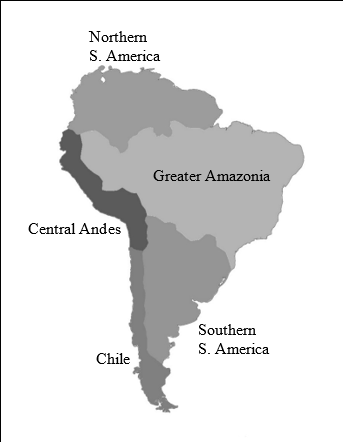
    Initially however, it is important to note the vast scale of this undertaking and the limitations therefore imposed, namely a limitation to the macro. Many of the studies concentrating on South-America in this field have been of a type that focus acutely on one specific area and are successful in realising the demography of such a space in fine detail. These studies range in size from David Noble Cook’s study into Peru over a period of 100 years to Brian M. Evans’ study of an Andean Village over a period of 43 years. The view herein over all South America over 308 years will draw on studies such as these but will not attempt to replicate them in outcome. The expansive scope of this article requires it to correlate broader trends and seek to contextualise them within a continent-wide context. This is a complimentary approach to the mathematical facet of this study which operates more effectively with larger pools of data. The ultimate achievement of this article is to plot the change of the indigenous and total population of South America over this period, as a collation of other studies done in this area alongside primary census data. Moreover, it will explain to what extent disease was the primary causation for demographic change and shall provide offerings as to the variance in population decline across five distinct regions within South America (see figure 1.). Furthermore, when the term ‘disease’ is used herein it is used as a collective term for multiple afflictions; this is due to the fact that there is much dispute as to which diseases affected which populations at what times, although it is generally accepted that smallpox, measles, and typhus were the main killers with the Variola Major strand of smallpox constituting the greatest killer overall.

    The standard disclaimer must be applied here that the figures presented herein, although primarily drawn from census data of the period and believed by the author to be broadly correct, are bound inevitably to be inaccurate in many aspects. This is the challenge of applying a scientific approach to historical data. However, dealing with incomplete source material is the perpetual challenge of the historian and one that cannot be shied away from, lest no history be written at all.

    Pre-Columbian South America

    Before we begin to assess change across the continent we must first be clear in what we are assessing a change from. What was the makeup of South America in 1492?  Estimates for the overall population for the region continue to exist in dispute however some mean figures have been produced for this article, in aggregation of several other estimates made over recent years. The central influence for these pre-Columbian figures continues to be the work of William M. Denevan and his text The Native Population of the Americas in 1492 which remains an excellent source on this topic. Ultimately the total population statistic reached for pre-Columbian South America in 1492 is 20,000,000. Across this study, this total figure is broken down into five regions across South America. These are: Northern S. America, Greater Amazonia, Central Andes, Southern S. America, and Chile. The continent has been split this way partially due to geographical differences in the five regions and partially to facilitate cross-comparison over time. If we were to use boundaries that shifted over time, such as the borders of nations, our comparisons would be less accurate. These borders are approximates of regions and are not intended, nor should not be taken, as accurate boundaries.

    Figure 1. Map of Identified Regions of South America

    The regions identified in figure 1 are the geography to which the rest of this article is referenced to. Thus, the population split for South America in 1492 is as presented below.

    Figure 2. Table of Pre-Columbian Populations in South American Regions

    These demographics aside, what other features can we ascribe to these five regions that might be important in a study of post-Columbian disease spread? For this study the focus lies on significant factors that can be compared across the five regions identified. These are: climate, geography, and patterns of settlement.

    In terms of climate, for which the Köppen-Geiger climate classification system is used, our two most northerly regions of Northern S. America and Greater Amazonia can be described as ranging between a tropical (Aw) and equatorial climate (Af). These warm and wet conditions which comprise the great majority of these two regions are well suited to the spread of disease, particularly as they are prone to monsoon; we would therefore expect higher levels of mortality in these regions than in others. The Central Andes region contains a greater variance in climates due to its mountainous geography: it is mostly covered by a cold desert climate (BWk) but also contains large areas of semi-arid climate (BSk) and temperate oceanic climate (Cfb). We would expect these colder and drier conditions to be more effective at staying disease spread here. The Southern S. America region would mostly be classified as a warm oceanic climate (Cfa) with some areas of tropical (Aw) and semi-arid climates (BSh). This region can be described as susceptible to the spread of disease but not to the extent of Northern S. America and Greater Amazonia. Finally, in Chile we find areas of cold desert climate (BWk), temperate Mediterranean climate (Csb), and temperate oceanic climate (Cfb). This, in similar fashion to the Central Andes, is an area we would expect to find reduced mortality rates in due to these pathogen-hostile climatic factors.

    The geography of the continent can be split into two areas on either side of the Andean mountain range which covers the regions of the Central Andes and Chile. These mountains are a dominant factor in the lower temperatures seen in these regions as discussed above. Additionally, the mountains help to curtail the spread of disease by limiting travel and isolating groups from one another. On the eastern side of this “Andean split” in Northern S. America we can identify the Guiana highlands as a geographical feature that would act similarly. This is also true for the Brazilian highlands in Greater Amazonia and Southern S. America. However, these highland areas will prove less effective at preventing disease spread in these regions as they do not cover them in entirety, unlike with the Andes, and thus their major comprisal of large lowland areas still allows disease to spread more efficiently.

    For patterns of settlement across the continent: in clear majority we are discussing a dispersed population of peoples that do not gather into large permanent communities. This is the case for Northern S. America, Greater Amazonia, Southern S. America, and Chile. Certainly, there were areas of more concentrated populations within these regions, often along rivers and coastlines, but these were still clusters of villages rather than towns or cities. This type of isolated pattern of settlement is one which is often effective in curtailing the spread of disease, so we would expect regions with this pattern to be less susceptible to illness. In 1492 the exception to this rule was the area of the Central Andes, occupied in majority by the Inca Empire which was home to cities with populations of 700,000 or more such as Cusco, Quito, and Choquequiaro. In this case we would expect to see this area prove more susceptible to disease spread than others.

    Three Hundred Years of Disease in South America

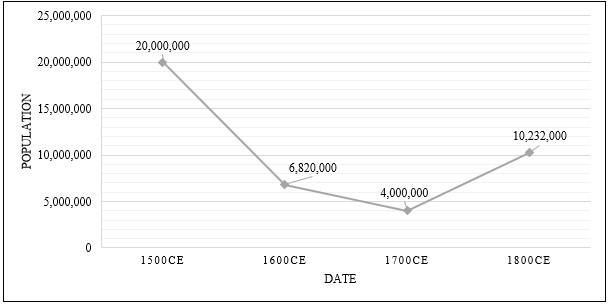
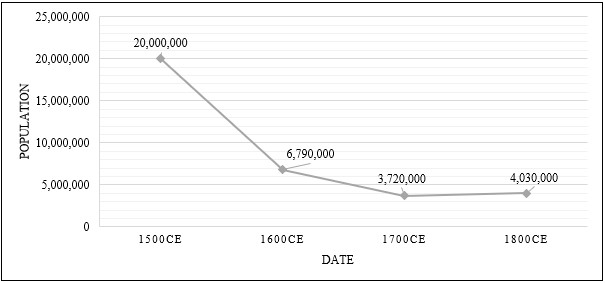
    Population figures across this period, particularly during the first 100 years, are to be taken with a large margin of error. After 1600 the Spanish and Portuguese began taking censuses of the regions they controlled, spanning by this point almost all the continent, and so we do have primary statistics available to us that were not available for our pre-Columbian assessment. Even so, it is highly likely the numbers they give are low estimates, as even today our estimates ever increase for the number of indigenous on the continent. Nonetheless, by collating all these censuses in conjunction with our pre-Columbian estimate we can produce a graph that tracks the population of the continent over these 300 years.

    Figure 3. Graph Plotting the Population of South America from 1500 to 1800CE

    Using this data, we can also calculate the rate at which the population changes between these points, as seen in the table beneath.

    Figure 4. Table of Total Population Rise and Fall (%) in South America 1500-1800CE

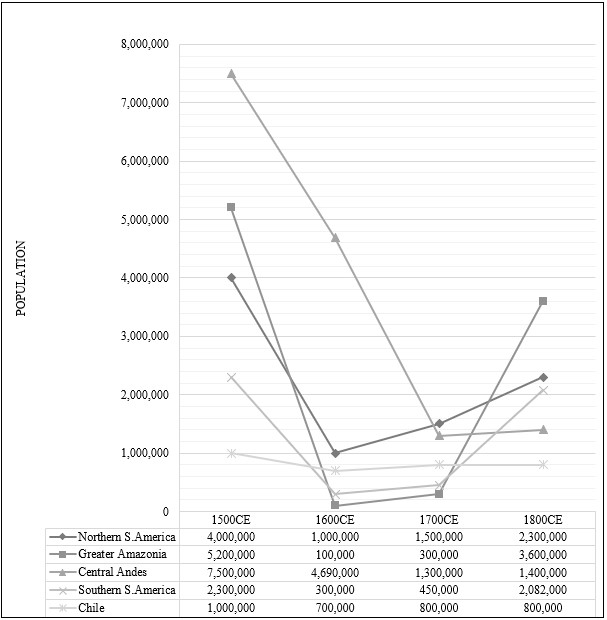
    These statistics show the immediate damage done to the continent and the recovery from that. However, it must be noted that these population statistics are not solely for indigenous peoples, they include all those people who have, either by choice or by force, moved to the continent during this time. This is what explains the 155.8% increase in population from 1700 to 1800, it is comprised of immigration, we would not expect a native population to recover at this rate. The question therefore asked becomes what is the rate of native population recovery, as supposed to simple population increase overall? For this we can utilise our regions; by splitting our demographics between these five zones, including those that saw large immigration and those that didn’t, we can determine the extent to which immigration as a factor has affected the overall population statistics. 

    Figure 5. Graph Plotting the Population of Regions of South America 1500-1800CE

    For this above graph we can also produce a population change rate table.

    Figure 6. Table of Population Rise and Fall (%) in Regions of South America 1500-1800CE

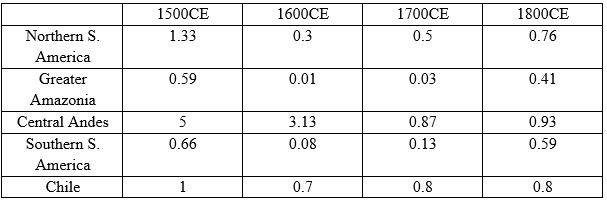
    This information is enlightening in multiple aspects. From 1500 to 1600 we can immediately see that some areas have declined to far greater extent that others, namely Northern S. America, Greater Amazonia, and Southern S. America have declined at much higher rates that Chile and the Central Andes. This can be explained by the climates and geography of these regions which, as was explained above, are far more suited to preventing the spread of disease in the Central Andes and Chile than in the other regions. In Chile this can be further explained by noting that disease did not reach the region before 1561, much later than the other regions (see figure 9.). However, some Umbridge must be taken with the 98% decline figure for Greater Amazonia during this period. Of all the data drawn on for this study this figure seems the most inaccurate. Although it may well be true that mortality rates were high in this region due to its tropical climate, the 0.59 population density for this area would never allow such a drastic reduction (see figure 8.). This article would hazard that the rate of reduction would be closer to the 75% reduction seen in Northern S. America as these two regions have very similar climates and geographies. Nevertheless, in the absence of any further data the -98% figure will continue to be used.

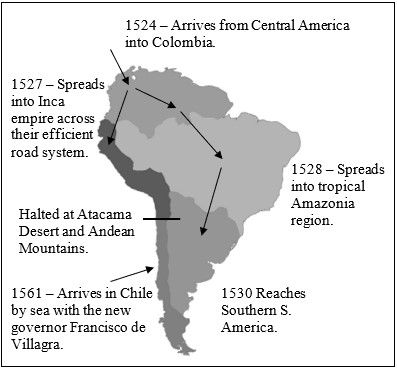
    From 1600-1700 the notable standout is the one region which continues to decline whilst the others begin to rise in population, the Central Andes. This is likely explained by the concentrated population density in this region which allowed for disease to continue to spread virulently, as seen in figure 8. By 1600 the other four regions all have populations densities beneath 1 compared to the Central Andes which sits at 3.13. At this point it may well be argued that these other four regions have reached a point beneath the ‘minimum concentration of hosts’ threshold whereas the Central Andes has not; this means their populations are now too small when compared to the size of their landmass to facilitate further disease spread. The well-developed road system of the Incas will have also allowed continual consistent movement of peoples around the empire; further facilitating dissemination of infection. This is especially crucial if you note the long incubation period of the two largest killers, smallpox and measles, which exist in the body for c.10 days before the person infected begins to show symptoms. The further a person is enabled to travel within these 10 days the faster these illnesses can spread. We can also see within the regions whose populations do rise the difference in the rates of the population increase. This is explained by immigration, not native recovery, and will be explored in depth with the assessment of the data between 1700 and 1800.

    Figure 7. Table of Landmass Area of Regions (km2)
    Figure 8. Table of Population Density of Regions Within South America (Number of Persons Per km2) from 1500-1800CE

    From 1700-1800 we can clearly identify the regions which are experiencing outside immigration and those which are not. Again, we see a divide made between the Andean regions of Chile and the Central Andes and the rest of the country. On the west side of the Andean split we see population figures that are struggling to begin a recovery towards pre-Colombian levels, with Chile’s population becoming stagnant and seeing no increase in the 100 years between 1700 and 1800. This is representative of how the native population across the country is recovering from the impact of disease: slowly. The reasons for this are numerous; one large factor is a decrease in fertility rates after disease has ravaged a population. This can be due to the disease itself physically affecting reproductive abilities or unbalancing the gender ratios in a population but can also be a result of social grief and stress. Recovery rates are also affected in the long term because disease results in higher mortality rates in the young population, who are the ones able to reproduce.

    Figure 9. Map Depicting the Spread of Disease Across South America 1524-1561CE

    With our knowledge of the western side of the Andean split the extraordinary nature of the figures from the eastern side becomes apparent. Even the 53.3% increase seen in Northern S. America would be classed as an unprecedented event, with figures of over a 1000% increase existing in realms of fantasy. These statistics correlate well with the records kept by the Spanish and Portuguese of slaves imported during this period, which indicate c. 5,000,000 were imported into the Viceroyalties of Brazil, Rio de la Plata, and New Granada from 1700-1800. Using this data we can calculate how much of the increase in population on the east side of the Andean split is due to immigration. Taking Greater Amazonia as our example, given that it saw the greatest increase in immigration, we can take 10% as a generous figure for the increase in native population during this period. This would constitute only 30,000 of the 3,300,000-increase seen in population and means that 99.16% of the new population is imported. Using similar thought we can interpolate new data across all our existing figures produce a graph that tracks only the indigenous population statistics

    Figure 10. Graph Plottingthe Indigenous Population of South America 1500-1800CE
    Figure 11. Table ofIndigenous Population Rise and Fall (%) in South America 1500-1800CE

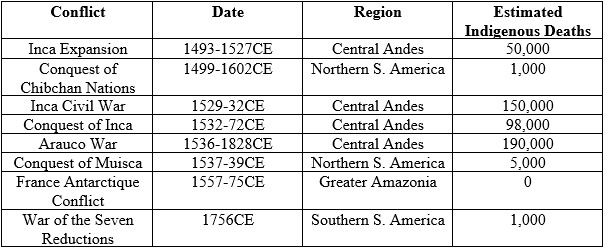
    Now we have calculated the decrease in native population we must ask: to what extent is disease responsible for these deaths? It is understood that it is the major factor, but how far so? Let us examine the Spanish and Portuguese maltreatment of the indigenous to see the extent of their impact.

    Figure 12. Table of Conflicts Within South America 1492-1800CE

    It is evident from this information that death from conflict may be considered a negligible factor when considering the overall indigenous population decline of South America. The single conflict with most meaningful impact on population is the Inca civil war which accounts for only 1.1% of the population decline from 1500 to 1600. The Arauco war is the cause of the most deaths but stretched over a far longer period, giving it less impact.

    As for the encomienda and mita systems, alongside other forms of cruelties brought about by the Europeans, it is unknown how many died as a direct result of these persecutions as no records were kept, not even estimates. These, evidently, were not numbers the colonisers wanted recorded. Even if we did have such data it would be difficult to extricate deaths directly caused via cruelty and those that came tangentially because of it. We may still make some assessment of their material impact however; the one undisputable fact is that these systems helped facilitate the spread of disease through multiple means. They gathered previously dispersed populations into concentrated groups, forced them to travel long distances, and worked them into a state of weakness. All of which are ample conditions to facilitate infection. In this sense their impact on population decline may have been far greater than they are given credit for here. Nonetheless the ultimate cause of death is disease in majority by a far margin, as far as our statistics show us.

    If we take our statistics from figures 10 and 11 and subtract population decline for reasons aside from disease we can produce an estimate of indigenous population decline specifically as a result of disease. We have calculated that approximately 1% of the population die as a result of warfare between our 100-year intervals, using a global average we can also calculate that approximately 1% can be accounted for by “natural causes” and accident. As discussed there are no statistics for the impact of systems such the encomienda but we must estimate they had some impact given the severity of their programmes, and have been given a 2% impact factor. Overall these account for 4% of the total indigenous population decline from 1500 to 1800. The total indigenous population decline from 1500 to 1700 (it’s lowest point) is 81.4%, so therefore the total decline as a result of disease before the population begins to rise is 77.4%. This means the total number of indigenous killed by disease from 1500 to 1700 is 15,480,000. It must also be noted for clarity that even after this point, as the population increases, indigenous peoples are still dying from disease and that some of these infections continue to plague areas of South America in the 21st century. 

    Ultimately this article has been able to track the population, indigenous and otherwise, of the South American continent from 1492 to 1800. It has provided reasoning for the variance in figures seen across the five identified regions and compared them against each other to infer further detail about the impacts of disease and other factors during this time. Although it is understood that these figures are approximates, it is nonetheless understood their significance in helping us understand this troubled period of history.

    Author/Publisher: Louis Lorenzo      

    First Published: 19th of October 2018

    Last Modified: 23rd October 2018 (Clarity)