<- Chapter 2 – Chapter 4 ->
- 3.1 Introduction: A Neighbourhood Re-Placed
- 3.2 Destruction: Attractions and Fears of Dangerous Environments
- 3.3 Construction: Finding Space for Play on the Fringes
- 3.4 Conclusion: Children as Sociological Explorers
- References
3.1 Introduction: A Neighbourhood Re-Placed
During the 1980s, 1990s, and 2000s, Byker provided a specific and formative environment for the children who called it home. In contrast to Chopwell – and indeed most North East communities – Byker’s physical landscape saw rapid change in this period. The beginning of the 1980s saw the completion of the project to knock down the ‘old Byker’ of Victorian terraces and back lanes (see Fig. 1) and construct a ‘new Byker’, with its circuitous network of roads, paths, and greens (see Fig. 3). The scale of this project was notable nt only for the sheer size of the 200 acres that was redeveloped, but also for its modernist ambition.1 The new estate’s most iconic feature was the ‘Byker wall’, a winding contiguous low-rise block of flats that enclosed the inner dwellings to shield them from a planned motorway. This not only differed from the red-brick terraces of old Byker, but the romantic styling and use of varied colour and texture also stood in stark contrast to the brutalist architectural conventions of the period.2
The scheme was the brainchild of British architect Ralph Erskine, who had a particular interest in the relationship between architecture and the natural environment, and based his Byker design on an earlier idea of his for an ‘ecological arctic town’.3 Erskine’s inward-facing design followed the advice of contemporaneous architects and planners such as Nicolas Taylor, author of The Village in the City (1973), who advocated for neighbourhoods to act like self-contained ‘villages’ within an urban environment. A fellow architect on the project stated that the purpose of ‘vehicular separation’ in the design was to ‘allow for a dense and village-like character’, with a clear intention to blend ‘private gardens, via semi-private courtyards, to the public realm’.4
The buildings and streets were not all that changed with the advent of New Byker. The people changed too, with only 20% of the original population ultimately moving back into the new development, despite plans to retain 50%.5 A report written for the Department of the Environment critiqued this low-retention and concluded that ‘One is only left to speculate what would have happened had the policy not been to retain the community’.6 It is difficult therefore to understate the change that Byker underwent during this period, as it lost not only its buildings, but the people within them, on top of the existing loss of traditional places of work at the shipyards and the economic and social structures intertwined with them. That the transformation of the area was so total is evidenced in the use of the still-popular framing device of ‘old’ and ‘new’ Byker, connoting a rift in the continuity of the community. The area hadn’t simply changed, it had been ‘re-placed’; its identity as an environment and community had been overwritten.
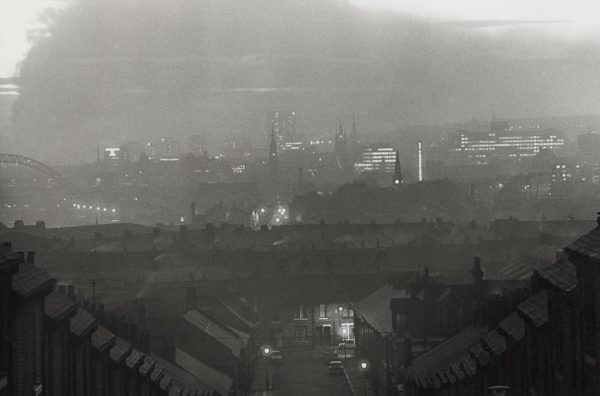
Figure I. Old Byker, Carville Road, looking toward city centre, 1969.7
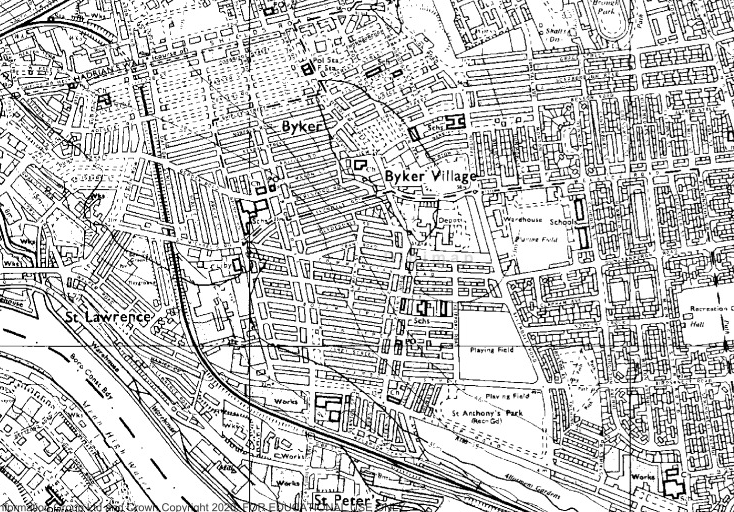
Figure II. Map of Byker in 1970.8 Note the already bulldozed streets (dot-outlined) to the north, making way for the new development.
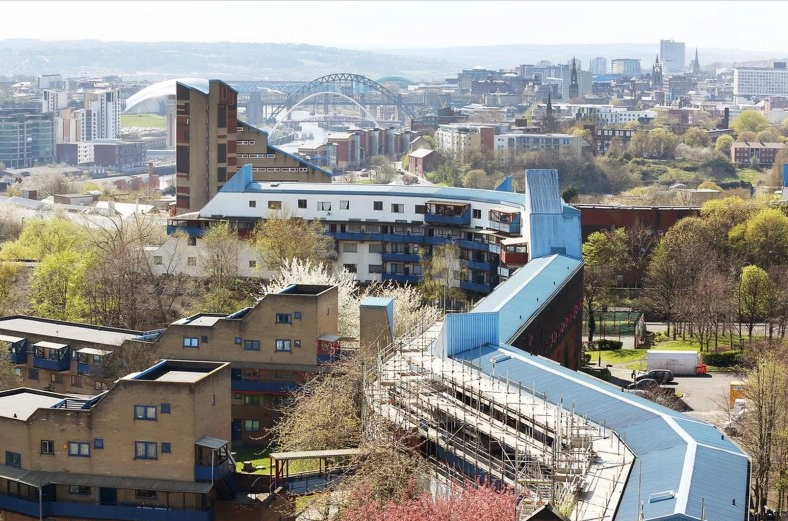
Figure III. New Byker, looking toward city centre, 2016.9
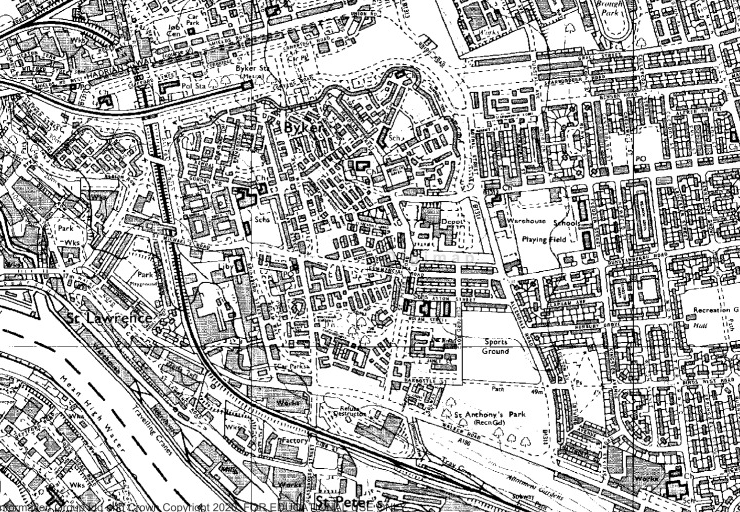
Figure IV. Map of Byker in 1980.10
Academic work on Byker has tended to focus on the architectural merit of new Byker rather than the experience of Byker’s population. Much of this literature, particularly that written between the 1970s and 1990s, considered the estate as a ‘good example’ of modern urban design, not least because the estate was developed in close consultation with its future residents. For example, in 1976 architect Alison Ravetz observed that the integration of features from the old Byker ‘gave the feeling of Portmeirion without Portmeirion’s hollow disappointment and sham, because this is for ordinary people to live in’.11 In 1987, architect Mary Comerio argued that Erskine’s ‘concern for public participation’ was the key to the scheme’s success and would allow them to ‘rehouse [residents] without breaking family ties, patterns of life and neighbourhood traditions’.12 As already noted, however, this optimistic assessment did not reflect the reality of the low retention rate of original residents. Architectural historian Elain Harwood also praised Erskine’s achievement, in 2000 noting that the establishment of a ‘tree bank’ which ‘ensured a continuity and that the landscape element was not cut from budgets in subsequent phases’.13 However, notwithstanding the valuable academic work on Byker, children were never the focus – or even a sub-category – of analysis.14 This is surprising given the apparent child-friendliness of new Byker’s pedestrianised spaces, colourful balconies, and varied green spaces. But this absence of children in the literature also reflects Erskine’s own tendency to frame his work as ‘people friendly’, without specific reference to children. You may take any work from Erskine, his team, or those writing about them and will find many references to designing for ‘people’, but scant or more likely no reference to children. His interest in Nordic-style social-democratic principles inculcated a design philosophy wherein every person was considered an equal user of a space, but this approach failed to consider how different categories of people use a space differently.
3.1.1 Children in the Planning and Building of Byker
An example of how children were conceived of by the architects can be read in Michael Dradge’s 2008 reflections on the project. Dradge, one of Erskine’s original architectural team, talked up the successes of Byker with particular reference to community engagement. Dradge says that at its peak in the mid-1970s the architects had an on-site office of ‘fifteen staff, plus four clerks of works’, which allowed them to keep residents informed about the ongoing works and solicit feedback.15 Dradge recounts how the architects hand-built a ‘prototype children’s play area’ outside their office and ran a children’s drawing club to help ‘break down barriers and get parents talking to the architectural team’.16 It is clear here that the architects recognised how children can act as key facilitators of community involvement, as indeed they would go on to do when New Byker was complete. It is also revealing of the way children would be expected to behave in the New Byker; as users of prescribed play equipment and activities by adults. That New Byker’s plan included playgrounds and a school was implicitly understood as ‘planning for children’, yet the myriad of resident complaints that soon arose around noise, climbing, landscaping and more, in relation to children shows how the plan did not account for what young people would actually value in the environment and how that may come into conflict with the values of adult residents.
It is also noteworthy that Dradge speculated that it wouldn’t be possible to do make the prototype playground and drawing club ‘today’ (in 2008) because they were living in ‘more litigious times’ and a ‘less innocent age [where] all kinds of formalities and checks would, no doubt, apply’, referencing new developments such as the establishment in 2002 of the Criminal Records Bureau (CRB, precursor to the DBS) which required background checks for those working with children.17 Aside from neatly demonstrating the change in parenting culture between the 1980s and 2000s, Dradge’s speculation highlights how the sorts of handmade informal play structures they erected would come to be considered a problem by residents when children later built them on their own terms.
Despite the emphasis these writers placed on consultation, Byker’s design was similar to Erskine’s ecological arctic town concepts of the 1950s, and also to the millennium village project he later worked on in London. This suggests his ideas about what constituted good urban design were quite decided, bringing into question the extent to which Byker residents had the power to influence the designs. Dradge makes it clear that when it came to community involvement ‘the aim was always to demystify the process’; the key purpose, therefore, being to explain and convince residents of the architects’ plans rather than devise these plans in equal collaboration with the Byker populace, which is the impression sometimes given by both the contemporary and academic literature.
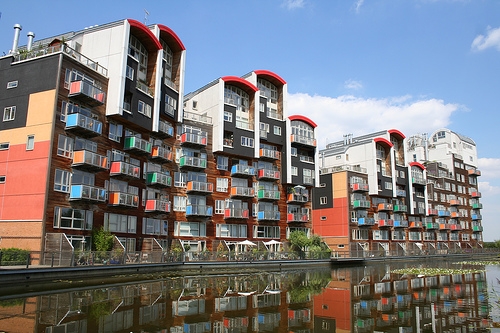
Figure V. Erskine’s Millenium village built in the 2000s.18
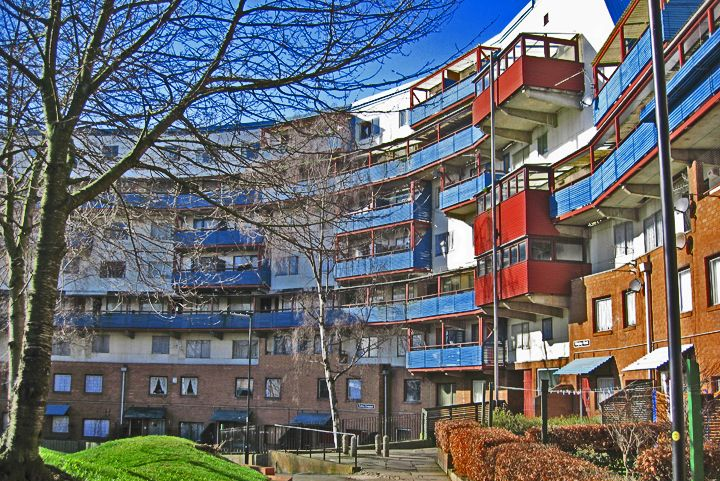
Figure VI. Inside The Wall, built in the 1980s.19
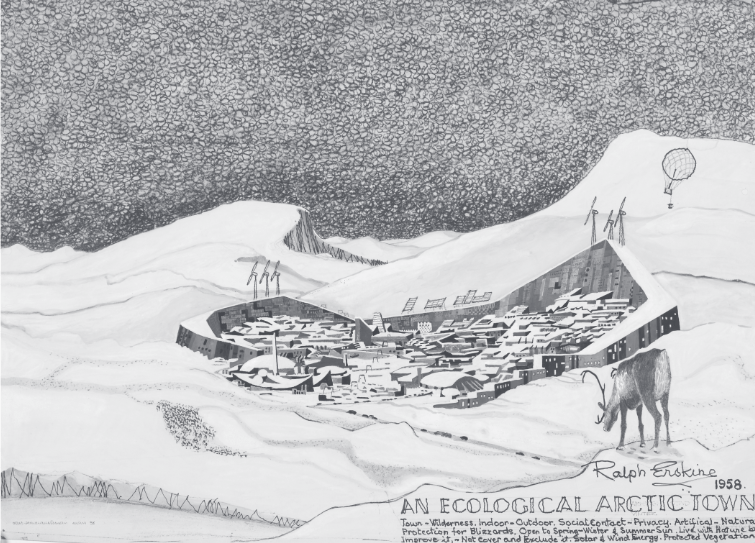
Figure VII. Plan for ‘An Ecological Arctic Town’, 1958.20
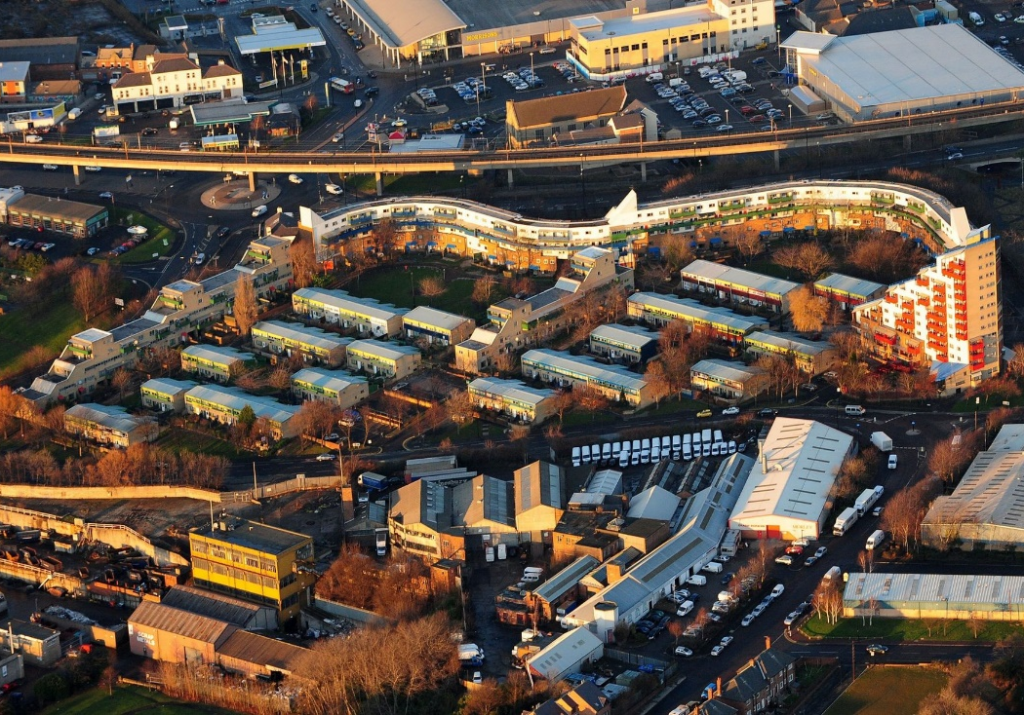
Figure VIII. Aerial view of the western section of New Byker, 2016.21
Indeed, despite his overall positive evaluation, issues on the estate were evident to Dradge by 2008. He noted five problems: ‘the assimilation of new residents’, ‘people wanting to park right next to their houses’, ‘need for the restoration of hard and soft landscaping’, and ‘a greater demand for privacy’.22 As Dradge conceded, Byker had not fulfilled the promises promoted by its architect-planners and fallen into disrepair. His concerns were emblematic of a new wave of academic research that began to re-evaluate Byker, challenging the optimistic accounts of the architect-planners.
Most thorough was architect Robin Abrams’ Byker Revisited (2003) which followed up on his first visit in 1983. In the 1980s Abrams had already begun to spot problems arising on the estate, noting ‘more incidents of vandalism’ in the less desirable area of south Byker.23 Due to the landscaping being too expensive to maintain it ‘quickly became overgrown’ and, Abrams says, elderly residents feared the children and teenagers who hid in, or set fire to, the shrubbery. Furthermore, tree sap dripped onto parked cars, and people were cutting down trees and shrubs in their gardens that blocked the light. Others complained that the sound of birds kept them awake at night.24 For the residents of old Byker (and those older residents who had moved in from other areas) who were used to a far more orderly terraced environment, the natural elements of new Byker could often be an annoyance rather than a joy. The beauty of the communal network of natural landscaping, conceived of for ornament rather than function, rubbed up against the realities of working life. This was not the same as a leafy, wealthy suburb where greenery is largely kept and maintained in private gardens. Instead, some residents felt like their house was an island within a landscape of unkempt wilderness very different from the romanticised understanding of ‘the wild’ that Erskine’s design evoked.25
With Byker Revisited in 2003 Abrams described a community in a far greater state of distress than 20 years earlier, and outlined more clearly the failures of design that had contributed to the area’s challenges. As first observed in the 1980s, one factor was that residents had ‘an inherent understanding of where the preferred housing clusters are’. The northern section or top of the hill was better, as had been the case in Old Byker. This meant the old residents chose to live at the top, near the wall, relegating newcomers to the lower areas. They also chose to shop on Shields Road rather than the new shopping area in south Byker, as this was also what had been done in old Byker. This expedited the decline of south Byker in favour of the north, and represented a rejection of new Byker’s self-contained design philosophy from its residents. Even though the environment encouraged people to stay within the ‘village’ to go shopping, many chose to cross the wall due to social and economic factors, and thus demonstrated a desire for urban connectivity that their children would have witnessed and – due to their limited independence – often been denied.
The dilapidation of Byker’s public spaces during the 1990s and early 2000s was a manifestation of the failure of Erskine’s socialised concepts of space to match the prevailing inward turn of the neoliberal era, leaving communal areas abandoned to those who had nowhere else to go. For many children, of course, this was often a different story. With little attachment to the old landscape or the ways of living that came with it, young people instead were presented with an environment that many described to me as a place great for exploration, play, and hiding from the adult world. It was a place to build dens, hide scrap, start fires, or try other things their parents wouldn’t want them to. As adopters of Byker’s public space, many of its children were kept away from it simultaneously because adults worried it could pose them a danger and that they could pose a danger within it.
In 1993, a field study by a team of American architecture students found that most parents expected that their children would leave Byker for ‘better areas’.26 They compared the relatively stable community of north Byker to a housing cluster in south Byker called Bolam Coyne that, they concluded, was under ‘serious social stress’.27 Bolam Coyne was in certain respects a microcosm of the new Byker development. It was an inward-facing courtyard structure troubled with vandalism, anti-social behaviour, drug-use, and crime and became somewhat infamous locally for it. In the early 2000s, the Byker housing office polled residents and found that they wanted it pulled down and replaced with a car park.28 The insularity of Bolam Coyne locked residents into a social contract with troublesome neighbours, and necessarily restricted opportunities for roaming, discovery, and connection with residents outside their complex. Seeing Bolam Coyne’s demise, Abrams called it ‘a canary in a coal mine’ for the whole project, and identified the root of ‘the problem’ to be that all the housing was ‘designed for a single economic class, and a single ethnic group, and then a surrounding wall was built’.29 Thus the very poor wanted to get in to the area, and those that achieved greater prosperity considered it a mark of success to leave.
Twenty years on, a different perspective can be offered that challenges the gloomy prognoses of the early 21st century: Byker is neither utopian dream nor dystopic failure. Bolam Coyne was not demolished for a car park but was listed and eventually given an award-winning redevelopment.30 In 2008 the council began estate-wide refurbishment works, which later continued after 2012 when Byker at large was taken into a community trust and saw the restoration of its exteriors, interiors, and landscaping with financing available to the trust as a charitable enterprise. Byker today still has many problems. By the standards of the North East, it has comparatively high unemployment, a high crime rate, and low levels of education, but it is arguably in a more settled state and no longer attracts the same levels of regional or national attention it once did.31 To borrow a biological term, this loss of status as a ‘charismatic’ (or flagship, emblematic) estate is likely why there is far less recent academic literature on the area. As a local historian born in 1998 who was not aware of any academic ‘Byker debate’ growing up, this makes it easier to assess both the successes and failures of the estate in the round without being required to either defend the place, or to reproach it. For the participants too, it was a simpler exercise to be reflective on the area’s past without needing to first address any larger discourse that surrounded Byker in previous decades.
The interviews I have conducted with Byker residents show that those Byker residents who grew up during the 1980s recollected much excitement and joy in the process of redevelopment. Both the condemned old buildings and construction sites of the new were excellent places for exploration and play, and when complete the new homes had more facilities and were in better condition than the old terraces, which had been condemned as early as 1953.32 The new Byker also featured more pedestrian-only and green spaces, which provided opportunities for different types of play. The disruption to daily life and the displacement of the old community that many parents mourned had little impact on the children who were at the vanguard of forming what would become a new Byker community.
As my discussion of the secondary literature implies, there appears to have been a decline in optimism among Byker’s youth during the 1990s and 2000s, as the community continued to change environmentally, socially, and economically. The interviews herein reveal how the national trend of decreasing child mobility manifested itself in Byker, which despite featuring car-lite design also saw a fall in free outdoor childhood play. This tells us that we cannot only look at environmental factors when assessing children’s relationship with the environment; they must be placed in social and cultural context. The national concerns established earlier in this thesis, such as ‘stranger danger’, new technologies, and the threat from cars combined with and catalysed area-specific factors surrounding poverty, drugs, environmental management policies, and local features of Byker’s urban fabric. Child mobility is known to be linked to community cohesion, and the fall in child mobility during this period reduced social connectivity in a vicious cycle of restriction and isolation.33
While Byker’s physical form was fully reimagined for a post-industrial era, its economic, social, and cultural structures were not, and they carried the vestiges of the North East’s de-industrial half-life into a new era. There was thus a significant mismatch between the broader rapidly changing economy and society of the 1980s and 1990s that could be described as ‘post-industrial’, and that of Byker and the North East at large, that could be described as ‘de-industrial’, resulting in rising unemployment, poverty, crime, and parental fear.
In this chapter I explore the different needs and values Byker’s young people sought in their environment during a 30-year period of upheaval in the shape of North East childhoods. At times, these needs and values resulted in unforeseen and unintended environmental uses and consequences, as well as undesirable conflicts of desires between generations. Part 3.1.2 of this chapter will explain the interview process and the participants I spoke with. Part 3.1.3 will then contextualise the research undertaken by exploring the ‘Old Byker’ against which ‘New Byker’ was popularly framed. Parts 3.2 and 3.3 comprise the majority of the work, using 20 oral testimonies to explore and engage the stories of Byker’s children as they grew up amidst a rapidly changing world of new technological, economic, social, and environmental realities. Part 3.2 will focus on the theme of ‘destruction’, and 3.3 on the theme of ‘construction’ to draw out narratives of how change was negotiated – physically and intellectually – during the period. Within this bisected structure, parts 3.2 and 3.3 will divide their analysis by topics that illustrate key forms of interaction between environment and child. Under the theme of destruction, I consider de-industrialisation, cars, drink and drugs, and pranks, fights, and crime. Under the theme of construction I address climbing, dens, and weather. Through talking to ex-child residents I seek to draw a close, intimate, and complex picture of how children negotiated destruction and construction: attempting – and sometimes failing – to make the landscape their own; often against the odds. Hence, I will be reevaluating Byker’s iconic streetscape from a new angle, one long disregarded in the planning literature.
3.1.2 The Participants
I asked for volunteers who had grown up in Byker between 1980-2010 and conducted interviews with 20 Byker residents between 10 May 2022 and 19 December 2022. Participants were gathered through a variety of methods. First, I postered noticeboards at the community centre and in the windows of local shops as well as soliciting volunteers in various businesses and shops. These approaches proved to be ineffective however, and I only recruited one person by them. More effective (and less physically tiring) was recruiting through local Facebook groups – mostly the ‘Bygone Byker’ group, which is used as a hub for communal remembrance, commemoration, and investigation of Byker’s past. I recruited half a dozen participants this way and from this starting point recruited the rest by snowballing. The interviews were arranged according to the needs of each participant, with five being conducted online, and the rest conducted in-person at people’s homes, cars, in local cafes, and around the neighbourhood in walking interviews.
The final participant in this process was me. I was born in North-East England in 1998 and grew up a 10-minute walk from Byker in adjacent Heaton. I have been and still am in the neighbourhood often, usually to go shopping on Shields Road, and I have friends who live in the area. However, I was not well known in Byker at the time of this research and none of the participants knew me personally before the interviews. Therefore, although I knew the estate well from both personal and research experience going into the interviews, I was rightly considered an outsider by the interviewees. In my position as ‘somewhat local’, I agree with Moser’s argument that personality traits generally superseded positionality when it came to the interviews. Whether I was considered local or not by the participants was less important than the strength of the interpersonal connection between us, the tricky interplay of civility, humility, curiosity, and humour.34 As Hammersley and Atkinson suggest, effectively handling ‘field relations’ requires a mix of ‘patience, diplomacy…and occasionally boldness’.35
Although there were many things I knew of Byker’s past academically, participants often still had to explain to me various aspects of the estate’s geography, history, and terminology. For example, where a certain street was or what the name of a childhood game meant. I would argue that my unfamiliarity with the estate can partly be explained by the insular characteristics of the Byker wall, which Erskine deliberately designed to disincentivise non-residents from entering. With no convenient crossing points, many times I entered the area by crossing Byker bridge at a well-used gap in roadside fencing. It is also true that Heaton and Byker have two different school catchment areas (a primary school opened at the centre of the new Byker estate in 1982) and that Heaton is a richer neighbourhood, being quite literally ‘on the other side of the tracks’.
The interviews were semi-structured, and I asked each participant a range of questions on themes of play, safety, community, and technology. Within these themes I asked participants about de-industrialising playscapes, games and pranks linked to particular environmental features or events, perceptions of safety and negotiation of restrictions, communal child-minding, the social role of shops, animals, nature, and weather, differences in gender activities and parenting; den making; vandalism; drugs; and technology. Interviewees were also asked to consider how growing up in Byker has changed since they were young and – for those participants that were parents – how they raised their children in comparison to how they were raised. Conversation often progressed onto topics outside of my pre-set list of questions, and I was happy to allow participants to talk about what seemed important to them about growing up in Byker, making space for ideas I had not yet considered. The main objective of this focused, local case study was to deepen understanding of how the children of Byker perceived, experienced, shaped and were shaped by their environment over the three decades of study.
The twenty individuals interviewed represent men and women who were children in Byker across the period of study, though with a skew towards women and the 1980s. This self-selecting sample also represents long-term residents who identify strongly with Byker, and therefore does not represent those who feel unincorporated into the area’s social fabric. All the participants gave permission for their testimony to be used for research purposes, though three did so under condition of anonymity and five under use of their first name only. In total, fourteen women and six men were interviewed. The greater willingness of women in Byker to be interviewed is interesting because this was not the case in Chopwell, where an almost equal split was achieved. The character and self-selecting nature of the testimonies gathered suggests that this was due to a difference in feeling of connection to, and ownership of, place. Because those that came forward to speak with me were those with the most interest and investment in talking about Byker’s history, this suggests that in the round Byker’s women felt a greater sense of connection to their environment than men. The estate’s troubled history throughout the period of study was brought up by all participants, in which unemployment and disillusionment among men in particular grew with the loss of traditional industry. In contrast, whilst enduring the same hardships as the menfolk, many of the women I interviewed grew up in a period in which it was felt that their economic and social horizons were broadening. Even though girls throughout the period of study were given less opportunity to play out and engage with their local environment than boys, they still did so, and built a lasting sense of belonging that decades later would influence their decision to respond to my call for an interview.
This chapter will compare the decades these people grew up in whilst acknowledging that neither their childhoods nor the studied environments were constrained by arbitrary annual boundaries. Nevertheless, participants tended to identify themselves as being ‘a child of’ a particular decade, by which they referred to the decade in which they began to find independence and discover tastes and hobbies outside of their parent’s sphere of influence (around age 8). Those interviewed also fell into the broader categories of ‘generation x’ and ‘millennial’, but when talking about childhood specifically a decade-bound framing is more common in the British popular imagination and was naturally used by the participants. This proved to be a deeply practical way of organising the gathered material. In the table below, therefore, is listed the participants’ ‘Child of’ decade. Of those interviewed, one was a child of the 1970s, eight of the 1980s, six of the 1990s, and five of the 2000s. Also listed is the format of each interview.
| PARTICIPANTS, BYKER | |||
| Name | Gender | ‘Child of’ Decade | Interview Format |
| Pauline Alnwick | F | 1970s | Online |
| Alan Robson | M | 1980s | Walking |
| Anonymous Byker 1 ‘Sarah’ | F | 1980s | In-Person |
| Amanda | F | 1980s | Walking |
| Denise Nichols | F | 1980s | Online |
| Shelley Landale Down | F | 1980s | Online |
| Susan Whittaker | F | 1980s | Walking |
| Michael Scott | M | 1980s | Online |
| Val | F | 1980s | In-Person |
| Bill Richardson | M | 1990s | Walking |
| Dan | M | 1990s | Online |
| David Green | M | 1990s | In-Person |
| Lisa Richardson | F | 1990s | Walking |
| Lynne Steele | F | 1990s | Walking |
| Yvonne Leaney | F | 1990s | Walking |
| Andy Miller | M | 2000s | Walking |
| Anonymous Byker 2 ‘Jamie’ | F | 2000s | In-Person |
| Anonymous Byker 3 ‘Rebecca’ | F | 2000s | In-Person |
| Kate | F | 2000s | Walking |
| Sophie | F | 2000s | In-Person |
3.1.3 Old Byker
‘Old Byker’ was often invoked in my conversations with people for this research, even though most of the people I talked to have only ever known its successor. However, by fortunate mistake I ended up speaking with a child of the 1960s and 1970s, Pauline Alnwick, about what it was like to grow up in Old Byker. This proved to be very useful as it provided valuable context and a baseline by which to assess how childhoods changed in Byker in subsequent decades, and as a result I decided to conduct a similar interview in Chopwell. Before the bulldozers moved in, Byker was effectively considered a ‘slum’ by the council, with many dilapidated and abandoned buildings due to the decline of shipbuilding and other heavy industry. Pauline described the enormous communal bonfires they would have on bonfire night to get rid of all the scrap that was lying around:
Everybody in Byker was filling the lanes and streets around this open fire. It was right next to Raby Street, just like in the back lanes of Raby Street. Oh my gosh, it was so huge that windows were smashing, you know, the light, the streetlights as well… The kids were mostly like, you know, excited and just kind of you know, getting involved in this sort of, I don’t know, the mania of it. (Pauline, F, 1970s)
This is an example of the many dangers of old Byker for its young residents, who would play in and on the condemned terraces, and were drawn from across the estate to the Raby Street bonfire. In a game of chasey ‘there was no barrier to where you went, so if somebody went on top of a roof or a wall, you had to get up there too’. Notably across the decades the games of ‘chasey’ described to me (otherwise known as ‘ratcatcher’ or ‘ratty’) had increasingly small bounds. Whereas Pauline says ‘there was no barrier’ to the game in the 1970s, Lynn told me that it was ‘confined to kind of short areas’ in the 1990s.
One thing Pauline loved as a 1970s child was the TV, telling me she was ‘a complete television fan… I didn’t really have books when I was little. The TV was it. TV and music.’ This demonstrates that the story of the decline in outdoor childhood play is not a simple one, so often blamed today on screens and new technologies. Technologies such as the TV were a huge presence in Pauline’s 1970s childhood, as computers and video games came to be for those I interviewed during the 1980s and mobile phones during the 2000s. New technologies cannot simply be cited as the cause of the decline in children’s free play when the halcyon days many recall were saturated with screens.
The economic and commercial landscape of Byker massively changed between Old and New. In Pauline’s youth most mams worked part or full-time in the home, meaning there were many adults around to keep a passive eye on the children. Pauline remembered that ‘you always had grannies and mams looking out for the kids, no matter where you were’. As Wajcman observes, this casual network of mothers able to watch, and even discipline, each other’s children was a long-established way of life for working-class people in Britain and was facilitated by an economic model that forced women to stay at home.36 The density of the housing and the economic ability of the community to support a network of walkable local shops was also key to this, as this facilitated the necessary network of ‘eyes on the street’ to safeguard Byker’s children.37
Because everything was in walking distance and most people did not have the means to travel much outside the area, growing up in Old Byker was an all-encompassing experience. As Pauline described it: ‘I had a very sheltered existence, really. My whole world was there’. This meant trips outside the area were rare to non-existent. Pauline didn’t ever remember being taken out on a trip somewhere apart from ‘being took to Whitley Bay once and my oldest sister would take us to Heaton Park if she was in a good mood’. The collapse of this world then, broke down barriers for Byker’s young people. At the same time, Pauline recalled how young people mourned the loss of their ‘safe space’.
Even as kids we felt sad about all those places being taken out, you know, places that you would have been playing in. (Pauline, F, 1970s)
The children’s concerns for the old streets must have been partly a reflection of the wider concern of their parents and the community, which was vocally against Erskine’s redesign. This was vocalised in The Byker Phoenix, a community newspaper that campaigned on behalf of residents and attempted to influence the shape of redevelopment in Byker.
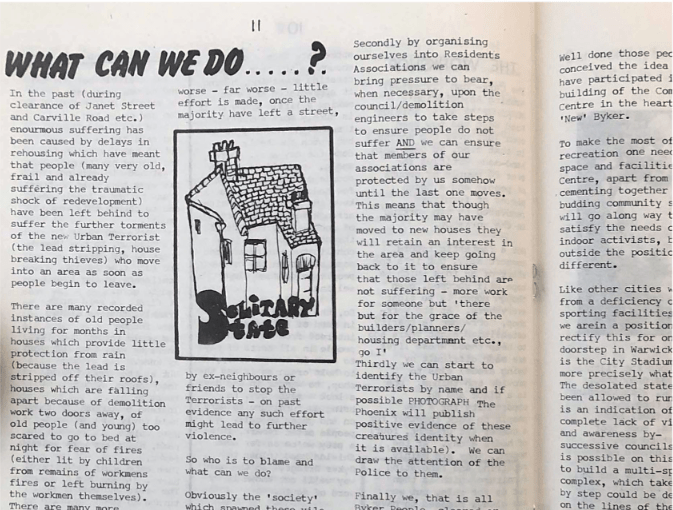
Figure IX. Page from Byker Phoenix, date unknown.38
The construction of new Byker changed everything first and foremost because it meant people had to be moved out to other areas of the city while the place was demolished and rebuilt. Pauline recalled how this fragmented the old community:
Once Byker was done, we were all expected to go back… but people were like so unhappy they didn’t want to go back because it wasn’t Byker anymore. (Pauline, F, 1970s)
This context is useful to understand when considering childhoods of the 1980s, 1990s, and 2000s, because the legacy of Old Byker lingered on. For example, a 2008 report found the North East to be one of the most sociable regions of Britain.39 Pattison argues this was due to the ‘half-life of de-industrialisation’ in the region, whereby lingering environmental and social structures of the industrial era created ‘a strong and federated sense of mutuality’ that persisted.40 Nostalgic narratives across de-industrial communities in Britain today paint many aspects of post-war working-class life as superior to the modern day whilst underplaying the associated hardships and inequalities, but the fragmentation of community and sociability is one narrative that this thesis supports. Indeed, the decline of ‘community’ in Byker from a time in the 1980s when ‘everyone knew everyone’ (that so many participants in this project noted) is a clear trend that tracks alongside the national ‘loss of childhood’ that this thesis seeks to explain in the North East context.
Pauline mourned a perceived loss of sociability in Byker, and so too did every other participant I interviewed. Desire for a return to a more communal environment can be seen to be part of the process of the half-life of de-industrialisation: a mourning for the social structures that were lost with the end of traditional industrial employment on Tyneside.41 Whilst the redeveloped Byker brought positive change in terms of improved living and working conditions for many, it did not replace many of the non-physical factors that were lost with the end of shipbuilding and manufacturing, such as jobs moving out of the area, or the increasing need for two adult incomes to support a family.
3.2 Destruction: Attractions and Fears of Dangerous Environments
Walking around, walking around this town…
What’ll be left, when the old streets come down?
Byker, you’ve born and bred some men…
If they tear you down your time won’t come again.
‘Byker Song’.42
3.2.1 De-Industrialising Places as Play Environments: Trash and Treasure
Broadcast on Tyne Tees Television in 1974, the lamentation of two unnamed musicians in Byker Song that ‘if they tear you down your time won’t come again’ proved to be true for most residents of Old Byker that were moved away during the redevelopment and never returned. Many children, however, found much to be excited about amidst the ever-changing environment of destruction and construction during the 1980s. Indeed, the more settled and orderly Byker of the 1990s and 2000s provided fewer opportunities for outdoor play, exploration, and transgression.
The newly built Byker of the 1980s possessed a liminal quality. New people moving into the estate had not yet formed an established community and the de-industrial process meant it was difficult to categorise as either ‘industrial’ or ‘post-industrial’.43 The concept of the ‘half-life’ acknowledges that industrial ruination is a lived process, enduring and complex, for people occupying the in-between spaces of post-industrial change. In this, Linkon’s concept agrees with Mah who wrote about Walker – an adjacent neighbourhood to Byker with similar heritage – in recognising the de-industrialised sense of being caught between two phases, negotiating a transition that lacks a clear end point.44 Strangleman also highlighted the half-life as characterised by ‘temporal open-endedness’.45 Because of the scale of its environmental change, I argue that Byker moved faster through the half-life process than other communities, but the evidence of my interviews also suggests that some structures of feeling remain today – decades after the loss of industry. This new liminal neighbourhood was not yet settled by any adult community. This provided an opening for children to move in and claim dominion. In remembering the redevelopment works, Susan described playing on the big rubble heaps that would pile up:
[The rubble heaps] were death traps really. But as a kid, they were just brilliant, they were just like disneyland you know?… We used to slide down them, winter when they were snowy and it was icy. Brilliant. (Susan, F, 1980s)
By acts of play such as this, Susan and her friends found value in environments that the adult world had deemed valueless, and her retrospective assessment of the rubble heaps as ‘death traps’ demonstrates the change in her value system since youth. This dissonance in values between children and adults – even between an individual’s younger and older self – refutes a simplistic narrative of destruction, turning these processes into matters of perspective. Where an adult sees wasteland, a child can see ‘disneyland’. Trash and treasure.
Demolition sites were not the only environmental reminders/remainders of Old Byker during the 1980s; the site’s steep geography also carried through. The top end of Byker is one of the highest points in Newcastle, from which you can get magnificent views over the city. In Old Byker Victorian gridded streets led directly downhill to the shipyards and although the redesign had replaced these with a more circuitous network, they did not eliminate all steep streets such as St Peter’s Road completely. This geography facilitated forms of play – namely any form of sliding or wheeling – that would be less interesting and less dangerous in flatter neighbourhoods.
I thought of how great it would be to skate down the bank… not knowing that I would pick up speed. And this is the first time I’d ever done it… Well, all lumps and bumps are literally flying all over and I realised, you know, straight away, I was in trouble… (Shelley, F, 1980s)
Equipped with a new pair of roller blades (a 1980s trend in Byker as elsewhere), Shelley’s curiosity got the better of her and only by grabbing onto a lamppost and crashing to the floor did she save herself from speeding further downhill to a potentially ruinous fate. This topography is another example of play at the ‘rough edges’ of a place. Rough edges that would be sanded back with time – as rubble was cleared and barriers erected – precisely to discourage (self)destructive behaviours like those recollected by Susan and Shelley.
It is important however in the context of de-industrialisation that environmental factors are not considered without also factoring in the estate’s economic and social strife during this period. De-industrialisation and ruination are processes and understanding the Byker landscape as a site that contained, reflected, and drove change is key to understanding how and why the nature of childhood evolved during this period too. In contrast to, for example, nearby ruins of Hadrian’s Wall preserved and maintained by heritage organisations, de-industrialising communities are not ruins; they are involved with processes of ruination that encompass much more than only environmental factors. For example, in the 1990s Byker experienced unemployment rates of 27% and was the third most deprived ward in Newcastle.46 The estate, typical of many social housing developments during that time, faced issues of anti-social behaviour and crime, resulting in a high number of empty tenancies. A Community Appraisal of Byker in 2001 highlighted it as having the highest and fastest termination of tenancies in Newcastle.47 These economic and social problems led to abandoned and derelict streetscapes which came with associated stigma and the area earning a reputation as ‘sink estate’ in the late 1990s and early 2000s. The story of the ‘Byker Rat-Boy’ – who escaped police by hiding in The Wall’s ventilation – became notorious and synonymous with the area.48 Overall, fear both for and of children drove parents’ reluctance to encourage unsupervised play in such an environment, compared to when ‘New Byker’ was genuinely new, clean, and full of modernist promise. Robin Abrams, an architect who visited the estate in 2001, said this:
Throughout the community, upper and lower, there were burned, boarded up houses. The incidence of untended gardens far outnumbered the tidy ones. All shops in the lower shopping precinct were boarded up. Portions of the Byker Wall appeared to be abandoned – previously secured entrances were open, the lobbies covered with graffiti. The landscaping was ragged or in some cases missing altogether; litter and graffiti were rampant. The entire community, not just the lower areas, projected an image of desolation and despair.49
| 2001/2 CRIME RATE STATISTICS BY WARD | |
| WARD | CRIME RATE PER 1,000 POPULATION |
| Benwell | 141.6 |
| Blakelaw | 108.0 |
| Byker | 211.6 |
| Castle | 48.8 |
| Dene | 58.7 |
| Denton | 86.8 |
| Elswick | 211.7 |
| Fawdon | 71.5 |
| Tyne and Wear (Overall) | 106.1 |
| England and Wales (Overall) | 110.5 |
Figure X. Table showing 2001/2 Newcastle crime rates for some wards. At 211, Byker’s is considerably higher than the overall Tyne and Wear and England and Wales rates.50
By 2010 Byker was certainly in better condition than in 2001 after seeing investment and efforts to ‘tidy up’ and increase tenancy, but many pre-1990s features of the estate never returned. Indeed, some people I interviewed described contemporary Byker in Abrams-like terms such as Lisa (F, 1990s) who said ‘everything’s, like wreck and ruin now compared to when we were kids’. Note, however, that as a child of the 1990s, Lisa still remembered the Byker of that decade as better kept than that of the 2020s. Given the descriptions of ‘desolation and despair’ that Abrams described Byker being left in just after the 1990s, this must at least partly be seen as nostalgia. However, the sense of a ‘loss of place’ expressed by Lisa and other participants I talked to was not only the product of rose-tinted spectacles. Whilst Byker was ostensibly ‘tidied up’ from the mid-2000s onward, this did not reverse the steady decline in working-class culture and community. Traditions of communalism and multi-generational employment have strong roots in North East England and this ‘structure of feeling’ was part of that legacy.51 Over time however, as Lisa observed, this legacy and connection to industrial communalism weakened. Furthermore, the tidying up of New Byker in the 2000s commonly resulted in degradation of the play environment to facilitate a more orderly environment. Damaged shelters and play structures weren’t replaced, fences, spikes, and CCTV cameras were erected, and trees and shrubs were uprooted. The excitement that many children took in the demolition of Old Byker demonstrates that their relationship to its destruction held a different character to that of their parents. Thirty years later the efforts to tidy up New Byker can also be seen, from certain perspectives, to be a form of ruination.
One key indicator of decline identified by participants was the closure of local shops over the period. New Byker was built with dedicated spaces for small shops but, as Abrams observed, by 2001 ‘all shops in the lower shopping precinct were boarded up’. Residents preferred to shop outside the estate on Shields Road because it was seen as the classier option and the opening of large supermarkets nearby continued to draw footfall away from local businesses. The economic destruction of many small shops in favour of fewer larger ones impacted Byker’s built form and the social aspect of the shop and shopping street as places of encounter. The sense of loss attached to participants’ testimonies on shops was not necessarily about economic prosperity, but rather the positive social and environmental spaces shops created, strengthening kinship ties between friends and families.
It’s completely changed now. When I was a kid there was plenty of nice shops, there was Beavans [a local department store] there was shops… butchers, post office… y’know, you didn’t have to go far. Everything was just there. (Val, F, 1980s)
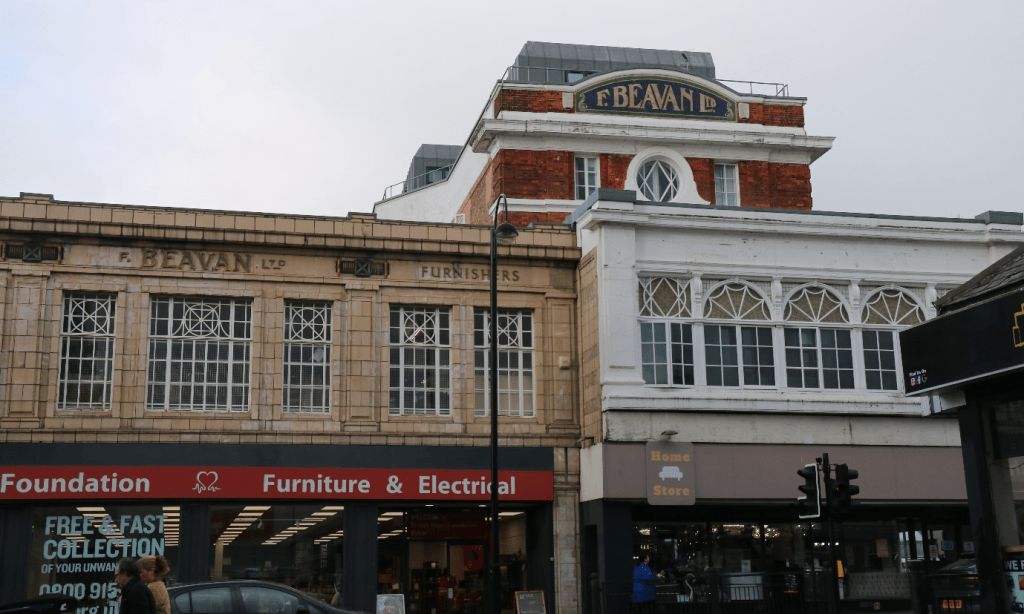
Figure XI. Signage for Beavans, the old department store, still preserved today.52
The type of urban fabric that disappeared during the period of study had helped to facilitate an environment of child safety by encouraging walking over driving, leading to more people and eyes on the street to keep passive watch over the kids, as well as fewer cars on the road to endanger them. Val’s memory highlights how the accessibility of these shops also gave children more independence as they could go to browse and buy things for themselves. New Byker’s reduced population density meant it could support fewer local businesses. Furthermore, whilst Erskine’s design was pedestrian friendly in one sense – if you wanted to move within its confines – it made travelling beyond a more attractive proposition by car.
3.2.2 Cars: Unplayable Streets?
‘Kids would play in the road, they wouldn’t be scared of cars. You could play out and have like an hour on Allendale Road – which is kind of a main road – for an hour on an evening time and maybe not see one or two cars.’ (Yvonne, F, 1990s)
This memory comes from a generation of Byker children who were some of the last able to play out on the street in this way without the constant fear of traffic. As my interviews show, the 1980s was the decade that marked the end of a centuries-long norm, already declining in decades prior, that the street could be used as a site of play. Yvonne’s memory of the 1990s however, demonstrates that mostly car-free outdoor play did persist in Byker into the 1990s, a working-class area in a region where rates of car ownership were slower to rise than the national average (in 2001 Newcastle had 3 cars for every 10 people, compared to British average of 5 for every 10).53 The increase in car ownership and traffic in Britain explored in Chapter One fundamentally altered the landscape of childhood play, as the added risk and reduction in quality of the outdoor environment led children to play either elsewhere, or simply less.
Compounding this the new dangers posed by cars caused parents to increase restrictions on children’s outdoor activities. This in turn contributed to a tearing of Byker’s social fabric, as children were less likely to gather and play together in the streets. The sense of community that was fostered through these interactions began to erode, leading to a more fragmented and isolated environment for adults as well as children. Over time, this problem was entrenched as infrastructural changes were made to accommodate the growing number of vehicles, prioritising the needs of drivers over the safety of pedestrians and cohesion of communities. Unlike the destruction of de-industrialisation, cars were a form of destruction that repelled rather than attracted young people to the outside realm.
Byker, however, was designed to be different. Erskine’s vision for Byker was of a car-lite neighbourhood, with many pedestrian-only streets and squares. Yvonne’s recollection of car-free play persisting into the 1990s is testament to a mark of success of this design philosophy. However, further evidence demonstrates that as car numbers in the North East continued to rise Byker, too, became overrun. The Wall shielded its residents only a little from the large forces at work across Britain during this period of individualisation, fear of strangers, de-industrialisation, and expansion of road infrastructure. It is also the case that Erskine’s walled design – skirted by a high-speed road – incentivised car adoption as much as the pedestrianised interior disincentivised it. Walking around Byker today there are still many areas that are inaccessible to cars, but also several small streets and squares that have come to serve primarily as car parks. In 2002 Byker residents petitioned to have the Bolam Coyne housing cluster pulled down and replaced with a car park, although unsuccessfully.54 During a walk Susan pointed out to me a car park on Brinkburn Close that had been a playground before it was removed in the early 2000s, and when I asked subsequent participants about this some of them also remembered its existence. It is telling, however, that most people had forgotten the existence of this playground, as it demonstrates the power environment exerts on memory. ‘Out of sight, out of mind’ very much applies in the context of children’s infrastructure where those who used it soon grow out of it. To emphasise this point, a playground by Laverock Court was removed which no participants mentioned to me.55
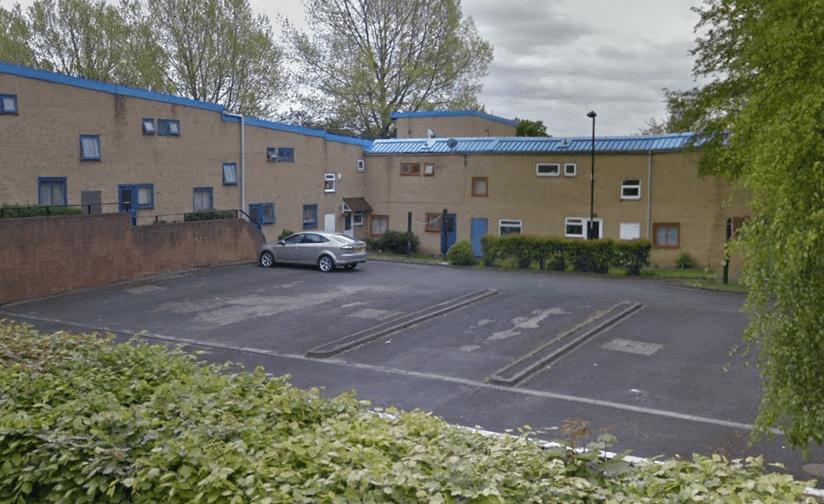
Figure XII. Brinkburn Close car park, previously a playground.56
When considering why children over time had come to feel less ‘at home’ in Byker’s outdoor spaces, participants of all three decades talked about how children wouldn’t be allowed or ‘wouldn’t get away’ with the sort of roaming and play activities archetypal of the earlier period. This has been a recurring narrative across generations that is reflective of three things in the context of 1980-2010. Firstly, childhood nostalgia played a role as participants tended to focus on positive experiences over negative ones. Secondly, the desire for secrecy in many children’s activities – highlighted often within the testimonies of this thesis – naturally results in adults often not being aware of the full extent of young people’s activities, especially those most transgressive. Thirdly there was a real and significant loss of freedom for children over these decades, driven significantly by an increased parental and societal focus on safety and a changing urban fabric unfriendly to the young. Cars were (and continue to be) a major contributing factor to this. Even in a neighbourhood designed to be car-lite, cars slowly pervaded the space and, unlike other factors limiting child mobility, were readily accepted as immutable facts of life. For instance, Tracey told me that despite growing up in the 1980s and feeling the urban landscape was entirely safe she still drove ‘to most places now’ and wouldn’t let her children play with as much freedom as she had. For many older participants, their understanding and appreciation of Byker’s heritage was gained through unsupervised exploration and personal experiences of the place. This opportunity was lost for younger generations amidst a vicious cycle of more cars meaning fewer people meaning more cars meaning fewer people.
3.2.3 Drink and Drugs: Environments of Familiarity and Fear
The problem of drugs in Byker came to the fore in the 1990s alongside rising unemployment, crime, and dilapidation. At the same time, alcoholism had always been an issue during and before the 1980s that led to violence and anti-social behaviour, making the streets less safe for children. The key difference between the impact of drugs and alcohol was that drinking was an accepted normal function of community, and even its negative externalities were somewhat overlooked. The difference in participants’ perceptions of drink and drugs was clear in our conversations. As is the common view across Britain, in all the interviews I conducted there was a sense of warmth towards drinking culture never extended to drug culture, despite drink undoubtedly being the longer standing and more pervasive aggravator of anti-social behaviour. Denise described how public drunkenness was a common sight in the 1980s:
All the blokes drunk really regularly. Then most of the women drunk on the weekends with the blokes, so drinking and drunkenness was quite common. You would see it. You still see it now. But there was a lot more pubs then. (Denise, F, 1980s)
Drinking and drunkenness was, and continued to be, a fact of life. Women being party to the culture was important as it meant – being held primarily responsible for children – they were less likely to see its dangers as serious. Scenes of drunken fighting, squabbling, and teasing were less threatening to parents when they knew the people involved, and with whom they may well have been drinking with themselves. The closure of local pubs also changed this dynamic, as it moved drinking out of the locality or into people’s homes.
You’d see fights. People scrapping outside the pub you know you might get shouted at… But it was usually you’d be home for your tea by then… ‘Cos when I was a bit older I’d go myself. Not that much older mind you! (‘Sarah’, F, 1980s)
This quote again demonstrates there was a tangible ‘danger’ alcohol culture posed to children, but that in the 1980s it didn’t much influence parenting practices in a society where drunkenness was normalised. For older children, underage drinking in pubs was also a means of communal socialising that tied them closer to their community and allowed for far more adult oversight than the subsequent drug culture. Indeed, for all Byker residents it was true that its communal drinking culture was important to community cohesion, which – I must emphasise – was critical to allowing the degree of childhood independence Byker saw in the 1980s. In moderate amounts alcohol itself helps facilitate social bonding, but more importantly it was a shared ritual in the community, facilitated by the communal environment of the pub.57 This is one reason why it is important to consider environment in these questions. Denise remembering that there was ‘a lot more pubs then’ emphasises the mixed legacy of that drinking culture.The venues were nexuses of connection for the community, providing ample opportunity for social drinking and reminiscences that would come to define Byker’s communal memory of its ship-building past. At the same time this culture led to increased incidents of public disorder and anti-social behaviour. For girls in particular, the regular presence of drunken men on the street each night contributed to their parents’ desire to get them home before dark.
If it was time for dinner I could hear my mam calling, or some other kid would come calling.
[and would you always go home, or would you ever disobey and stay out late?]
Not really, not at that age. I’d be tired! But yeah my mam was more lenient with my brothers I think. (Susan, F, 1980s)
Even if rules for boys and girls were the same on paper, the implementation or enforcement of those rules could still result in gender imbalance. Susan’s brothers were also expected to come home when called, but a more ‘lenient’ approach was adopted to the boys who were not understood to be implicitly in as much danger. Drinking culture played an important part in founding these fears, as drunken men did pose a real danger to teenage girls especially. These dangers shifted with environmental changes during the 1990s and 2000s – namely the closure of pubs and other ‘third places’, degradation of public spaces, and increase in car use. Drunkenness had moved into the home. Without community pubs (increasingly only those on Shields Road beyond the wall, across the busy road, and accessible to a much wider general public) the environment afforded fewer opportunities for social bonding. Fewer people walked the streets and over time a drunken person became more likely to be a stranger. As discussed in Chapter Two, the 1990s and 2000s saw a massive increase in public awareness and concern over domestic child abuse – sexual abuse in particular. However, as I have shown, that press attention largely portrayed abusers as one-off ‘monsters’ and thus avoided some of the trickier questions these incidents brought up around wider societal issues over the relationship between sexuality, masculinity, and power.58 In Byker none of the participants I talked to brought up domestic abuse as a factor of fear that caused children, parents, or the community to alter their restrictive practices, even with increasing levels of domestic drinking and the statistics clearly demonstrating how much more common domestic abuse was than attacks on children from strangers.
The existing drinking culture in Byker made it easier for drugs to take root. What began as a community tradition of social drinking evolved into a more dangerous mix of alcohol and drugs, leading to increased addiction and related issues.
In the 90s it went downhill, and people started getting access to stuff like that [drugs] more and more. But a lot of the drink came from, you know, it was our culture to drink. With the dads, and a lot of our lads got hooked on the drink, but then a lot of other stuff got mixed in with it. (Lynn, F, 1990s)
Methadone and ecstasy grew massively in popularity during the 1990s in Byker as well as many other places across the country. Heroin and cocaine also grew in popularity and new ways were developed to take them. Whilst a national trend, certain areas were more affected than others, and Lynn’s quote shows how Byker’s drinking culture contributed to the foothold drug abuse gained in the community. Poverty, unemployment, and social atomisation played an even greater role however, as evidenced by the correlation between drug-abuse epidemics and working-class communities across the country.59 Indeed, Byker’s drinking culture was itself a vestige of its own working-class industrial heritage.
Having fewer children and eyes on the street during the 1990s, as well as several abandoned buildings in the community like Bolam Coyne, allowed people to take drugs in public spaces where previously they would have not felt comfortable. This further stigmatised the public realm and the anti-social environment facilitated anti-social behaviour. Many participants described a ‘change’ that came over the neighbourhood with the introduction of drugs. For example, Michael recalled the absence of drugs during his youth in the 1980s, and their introduction during his teenage years:
There wasn’t much in the way of nastiness between the kids. There was always fights, but there was no such thing as drugs, right? Just wasn’t there. I was about 15 or 16 before I would have heard of anybody with drugs. (Michael, M, 1980s)
Drugs were a national concern during the 1980s when Michael was growing up but were not ‘felt’ in Byker by the participants I talked to until the 1990s. Largely this was due to changing perceptions around drugs with the advent of more socially acceptable forms of party drugs like Ecstasy and Ketamine.60 Thus, fears of ‘new’ forms of drug abuse that had begun growing during the 1980s began to fully manifest in the 1990s. Many participants who grew up around the turn of the 1990s described it as a ‘pivot point’ in time, marking the beginning of the end for Byker’s de-industrial community cohesion. Drug-abuse problems were both a contributing factor and a symptom of that degradation. Yvonne described a collective understanding in the community of the threats it faced:
We felt the change in Byker, especially in the early 90s… a lot of drugs started hitting and the people started using pot, it felt like the start. The Byker Wall became a bit of a dumping ground, and that’s a horrible start with people. (Yvonne, F, 1990s)
During the 1990s and 2000s council money was continually reduced for maintenance of the estate – the most expensive to maintain in the city – which further contributed to deterioration of the public realm, and consequently the morale and cohesion of the community.61 The prevalence of drug users and drug paraphernalia like discarded needles also made children more wary, for example, of crawling into bushes. Whilst walking along Gordon Road I asked Kate if she played much in Byker’s foliage growing up:
We did yeah like hide and seek and that… but I wouldn’t dare now. There’s probably all sorts of stuff in there. (Kate, F, 2000s)
Kate’s testimony and those of her contemporaries confirm that they did play out less than older generations, but the impression must not be taken that they stopped altogether. Rather, changes to the environment around them changed the balance of activity in their lives. Litter in the estate’s foliage as a reason for reduced outdoor play is an interesting case to examine because this had been a long-standing problem in New Byker. In earlier decades, children had used the estate’s shrubbery to hide and keep all sorts of materials and build dens. At that time adult residents had complained about this which is one of the reasons why the estate’s greenery was cut back.62
In the 1990s for Byker Revisited Abrams talked to a woman called Nancy who told him that ‘The council did away with all the men who used to come around and clean the streets’, which allowed drug-users to leave their stuff lying about on the street for days and even weeks. They get their needles from … It’s just beside Shields Road… one time, they had mattresses, settees and everything around there you know… You were scared to go down the back’.63
Drugs were not only seen as a hazard, however. Particularly for older children drugs offered a potentially enticing experience of escape and excitement that they could no longer get from unsupervised outdoor play. As Alan told me, the severe impacts of drug addictions that began in childhood lasted far beyond the 1990s and 2000s:
It was going downhill, in the early 90s, it definitely took a nosedive pretty quick. And kids who I went to school with a lot of them died from drug and alcohol misuse. Loads of them. From the 100 kids that I know, I’ve been about 40 or 50 funerals. The most recent one was maybe last year one of the lads my age died of a heroin overdose. And he was an alcoholic for a lot of years. (Alan, M, 1980s)
The North East region has the highest rate of drug-related deaths in England, with Byker having the highest rate within Newcastle.64 Alan’s quote again demonstrates how Byker’s social drinking culture contributed to its drug abuse epidemic. Furthermore, I argue, the unhealthy relationship that many Byker residents developed with drink and drugs during the 1990s and 2000s was environmentally stimulated. It is clear that the simple availability of a potentially dangerous substance does not inevitably lead to abuse of that substance.65 Rather, this comes when people find they have nowhere to go and nobody to turn to. Children in particular are a group with a unique lack of control over how and where they spend their time, and the testimonies I have collected lead me to conclude that many of them turned to dangerous activities in seek of excitement, independence, and community. Without the clear and predictable pathways into secure and reliable employment that had been at the centre of Old Byker’s industrial community, the 1980s, 1990s, and 2000s saw a waning of socialised drinking culture in favour of a far more atomised drink and drugs culture. This contributed to shifts in perceptions of many areas in Byker from familiar to fearful with the most out-of-the-way and run-down environments attracting problem users, exacerbating existing economic and cultural pressures, degrading the public realm, discouraging (permittance of) outdoor play, and encouraging further dangerous behaviours.
3.2.4 Pranks, Fights, and Crime: Children as Victims and Perpetrators of Destruction
According to police statistics, the absolute crime rate in Britain peaked in 1995 before falling.66 This trend was true at the national and regional level, with Byker having one of the highest crime rates in the North East throughout this period.67 It is very likely that the increase in drug use on the estate partly contributed to the sharp increase in crime in Byker during the 1990s, largely through a rise in theft.68 The unpredictability and threat of drunken and drugged people on the streets deterred parents from allowing outdoor play in an increasingly safety-conscious society. Children were not only victims of these forces however, themselves being commonly involved in dangerous behaviour. In the 1980s loud and violent behaviour among men and boys was generally understood as a ‘fact of life’ in the community. David, for example, recounted the normalisation of fighting amongst young people:
We were always fighting, and I thought it was fairly normal. But I really started realising that for a lot of people, it wasn’t. And for us it were because we were in that tiny little bubble so it was dead normal for us, but outside fears about it are something slightly different than what it was. It wasn’t violent and it wasn’t nasty. It was brilliant. (David, M, 1990s)
When Michael said ‘there was no such thing as drugs’in the 1980s he also noted that ‘there was always fights’, casting it as a routine part of life. David remembered fondly a culture that saw it as play rather than genuine conflict. Behaviours that may have been considered problematic by outsiders were understood as normal, not problematic but symptomatic of a strong community. If the 1990s marked the beginning of a shift toward promoting child safety (at the unintentional expense of health), this is a great example of what parents were reacting against.
Nobody was seriously hurt from fighting. There was a young kid killed just on our street there, where a car came through and got run over. But that was just playing hide and seek. (David, M, 1990s)
Firstly, the acceptance of cars and their dangers is telling in David’s quote, supporting the argument that the physicality of cars and car infrastructure meant they quickly came to feel immutable, unchallengeable sources of danger. Secondly my interviews suggest that fighting was far more common in the earlier period of study in Byker, but because it was of the community it was not understood as a threat toward it. Further to this, as children spent less and less time outdoors together and fighting reduced, this was yet one more factor leading to the dissolution of communalism and eyes-on-the-street that previously had deterred serious violence taking place in such public spaces. ‘Jamie’ told me about a time, growing up in the early 2000s, that her home had been robbed by somebody she knew from the estate:
There was one time. We got our windows broken in and stuff taken.
[Interviewer] You got robbed?
Yes, the TV the… and we knew who it was, yeah. It was a neighbour.
[Interviewer] How did you know who it was?
Because they’d taken stuff before, from other people. There was all loads of junk out the front as well. Their garden was, it was a tip. (‘Jamie’, F, 2000s)
Community fragmentation created the social conditions wherein Jamie’s neighbour could commit this type of violence, providing more opportunity than in prior decades for people to commit such an act against those who lived so physically close to them.69
This is not to say, however, that violent or nasty behaviour in earlier decades did not occur or was without negative consequence. The prevalence of fighting amongst Byker’s boys is testament to that. Rather, the nature and forms of violence changed over time, whereby increasingly Byker residents knew fewer of the other people who lived on the estate, and could therefore more easily view them as targets of suspicion or violence.70 The trend this thesis observes is a shrinking of the Byker ‘in-group’ over time and thus a growing number of people considered strangers, even if they live close by. This ‘strangerisation’ was especially important for children because it both fed and was fed by fears of stranger-danger. As I have argued, New Byker’s unclaimed liminal quality during its early years was one of the factors that made it such an excellent environment for children to adopt. During its early years then, children made up a central part of the New Byker ‘in-group’, and greater independent mobility led to outdoor play that helped to connect families within the neighbourhood. Over time reducing independent mobility contributed to the feelings of community distrust and decline that many participants described to me.
However, whilst childhood play did overall function as a vector for community connection, children in the 1980s could also use their status as New Byker ‘insiders’ to exact forms of violence against those they considered outsiders. An especially badly treated group in the 1980s was the disabled. The negative consequences of a culture more accepting of dangerous behaviour can be seen in the stories relayed to me of pranks and abuse children would carry out against members of the public, who generally were singled out for having some kind of mental or physical difference. In this way, children became forces of destruction in the environment by making spaces feel unsafe and vandalising property. Alan described some ‘characters’ of Byker in the 1980s that many children enjoyed ‘tormenting’. These ‘characters’ were thought about by the children as people who were curious or funny in some way, and they would give them nicknames.
You’ll see all kinds of stuff going on. But we had people around here and there one was called Jackie Shite-er. And he would get called ‘a half a dwarf’… if you got a chance to see Jackie you’d shout ‘Jackie Shite-er! Jackie Shite-er!’ And you know what? He was fast so he would run after all you chasing you. (Alan, M, 1980s)
This was a rough-and-tumble social environment wherein the line between harmless fun and abusive behaviour was blurred and often crossed. Another figure was treated similarly:
And there was Jimmy the brick. When he was born, one leg was shorter than usual, right? So that’s the thing what they did was to give him a special pair of shoes, you know, in the bottom of the shoe, they got this big bit of wood. So that was the brick that was the thing. And he would chase you as well. (Alan, M, 1980s)
New Byker’s environment facilitated these interactions as its car-lite spaces were friendly to all people who didn’t or couldn’t drive, including children and many disabled people as well as the general proportion of Byker’s population at this time who did not own a car.71 Testimonies of such ‘characters’ and the taunting of them reduced significantly throughout the period of study. Children spending less free time outdoors is one evident reason for this, but the other is that adults were affected similarly. In a car-oriented world with growing distances between amenities it became increasingly impractical to walk places – and this posed even more of a barrier to many with physical or mental differences. The mention of Byker’s ‘characters’ to other participants brought out further colourful stories and descriptions, and it became clear that these characters were well-known by children throughout the community.
Sandshoes Sam, he was just a bloke, older guy, who used to go running at night… But we all had these theories about Sandshoes Sam… We’d say ‘oh you better be careful or Sandshoes Sam will get you’, but he was just a bloke who was out exercising. But for some reason it got into everybody’s head that Sandshoes Sam was some kind of child abductor or something. (Denise, F, 1980s)
This testimony demonstrates how societal and parental fears over ‘stranger-danger’ manifested themselves within Byker’s childhood culture. Indeed, the general childhood fascination with – and antagonism towards – people in the community who stood-out in some way clearly reflects the public messaging of the period surrounding this moral panic. As detailed in Chapter Two of this thesis, media portrayals of ‘the stranger’ generally portrayed the figure as strange, ugly, or otherwise unusual. Such perceptions had real consequences as Shelley remembered:
Poor guy [‘Sandshoes Sam’]. He would have his windows smashed, multiple times, yes, kids threw rocks through his window. I feel so bad for him, because probably he hadn’t even done anything. (Shelley, F, 1980s).
The victim in this case was perceived within Byker’s childhood culture of the 1980s as a sort of bogeyman because he stood out in a way deemed menacing. Notably, he did not have a disability the children were aware of meaning that any ‘outsider’ in the community could become a target. Meanwhile other ‘characters’ were seen more warmly and were left relatively alone:
We would see Kung Fu Geordie on Commercial Road. Yeah. And he used to karate chop the busses. Yeah! The number 34, and the busses used to just continue on… I don’t know whether it was drink or mental health problems, but it was something going on with him and everyone would see it. (Amanda, F, 1980s)
On the one hand this recollection and many of the others like it are clearly fond ones. Evidently, the participants felt a sense of loss for a time when you would see people more often out in the community, including those with physical or mental differences that so interested many children. When Alan told me that ‘you’ll never ever see those type of characters again ever, they’re gone’ it was clear he felt it was a shame that Byker’s environment no longer supported those sorts of interactions. On the other hand, these characters were often persecuted by the children, from rumour-spreading and name-calling, to smashing windows. Whilst those children who were part of an in-group were brought together by these acts, ultimately, they damaged the fabric of the community. Furthermore, all the participants who remembered being involved with pranks, taunts, and fights as children said that they would now discourage their own sons and daughters from the same behaviour.
In later decades, as all people but especially those with physical and mental differences were increasingly isolated from one another, stories of their ‘torment’, as Alan described it, stopped. However, the influx of new residents to the estate during this time provided a new group of ‘strangers’ to fear. From the mid-1990s onwards the council increasingly decided to house new, often troubled residents in the Byker Wall, which had free flats available. This influx led to tensions between long-term residents and newcomers, contributing to a sense of displacement and instability within the community. As Yvonne explained:
They would put people in there, and the good people that were inside felt like they were getting forced away. (Yvonne, F, 1990s)
The expansion of the estate’s diversity was not only due to the council rehoming people but also global migration patterns and Newcastle’s designation as an ‘Asylum Seeker Dispersal Point’ in 1999, with 70 housing units in Byker allocated to asylum seekers in the first year.72 Mallinson’s 2006 interviews with asylum seekers and council staff reveal that Byker was seen from the outside as an unwelcoming place for new immigrants, a support worker commenting that ‘they haven’t had a big population of ethnic minorities before and locals aren’t used to seeing people from different countries in their streets’.73 One migrant living in Newcastle’s West End (another neighbourhood with a proportionally large migrant population) said ‘It is ok here. Better than Byker – that’s a racist area’.74 These sources speak to the tensions that the introduction of these new populations introduced to the community during a period when it was already experiencing high levels of crime, stress, and social fragmentation due to de-industrialisation and the other factors outlined in this thesis. However, a lack of source material with testimonies from asylum seekers who did live in Byker during this period means it is difficult to assess the extent to which the outside perception of racism matched reality. The focus of my thesis and the means by which I sourced participants means I did not speak to any Byker residents who had been asylum seekers but would mark this as a point for future oral history research. The testimonies I did collect did not mention race specifically, but some identified the arrival of new people to the estate as a factor in the decline of its street sociability. Certainly many residents felt that a whole host of factors were driving strangerisation, accelerating neoliberal processes of social atomisation.
People from outside coming in. And then it’s not just outsiders coming in from different areas, people from inside doing it [crime] as well. But they all kind of were in a bit of a perfect storm in the middle of it all. (Lynn, F, 1990s)
This ‘perfect storm’ was created by the combination of economic, environmental, and social issues that increasingly plagued Byker during this period. Some new residents, some of whom were former prisoners, did exacerbate these problems. Many participants described to me new people who would move in and have no pride in their home or the community, demonstrated by the poor state they would keep their house and garden in. At the same time, it is clear new residents were generally not made to feel part of the existing community.
However, despite reduction in the strength of community relationships, Byker did not undergo as complete a transformation as many participants articulated. Even though the youngest participants interviewed acknowledged a diminished sense of community in Byker, they still believed that many people in the community were familiar to them:
I think a lot of people work outside Byker, so I see my neighbours like once a month if that, like you don’t see a lot of people when you’re working full time, so I think that’s kind of, like me grandma didn’t work full time, it’s different times. (‘Jamie’, F, 2000s)
‘There’s a good community here, on this balcony, everyone’s looking out for each other. I can’t say about the rest of the estate though, I don’t really know about that, I don’t go there.’ (Dan, M, 2000s)
These testimonies suggest that a sense of community persisted in Byker, albeit in a different form than that experienced by older generations. Clearly, the community was fractured by multiple interlocking forces of strangerisation, the key factors discussed in this section being: De-industrialisation and unemployment, loss of shops and pubs, crime, drink and drugs, neoliberal atomisation, and cars. The nostalgia shown by some participants therefore is a valid expression of loss for a positive aspect of the Byker community which declined, and a call for it to change again. As Stack said:
No one, however nostalgic, is really seeking to turn back the clock… What people are seeking is not so much the home they left behind as a place they feel they can change.75
3.3 Construction: Finding Space for Play on the Fringes
3.3.1 Climbing: Play That Requires Attentiveness to Environment
One persistent example of the competing values placed on different environments between children and adults in Byker was the practice of climbing, particularly onto roofs. Compared to Old Byker, New Byker provided opportunity in abundance for climbing on roofs due to the many single-story low slanting roofs within the estate, and most participants I talked to across the decades described doing so.76 In addition, New Byker featured an assortment of street furniture that invited climbing:
They would build these like shelter things… Them to us, it was like an adventure playground, so we would climb on them all. So you could [go] up into Byker and you could just climb on walls, structures, things. Yeah, roofs, all kinds of stuff! Anything that you can climb on. We were climbers in that era, they don’t climb as much these days people are scared about it. So that’s what we would do, we’d go in there and it was just the best place. (Alan, M, 1980s)
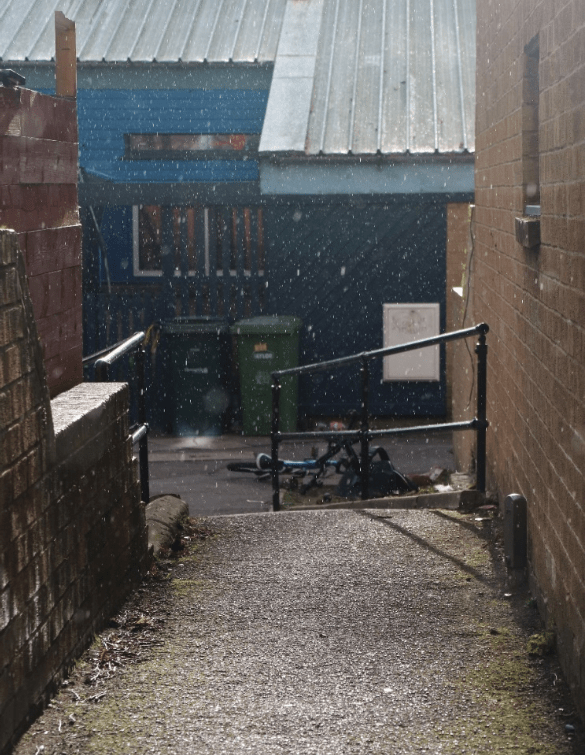
Figure XIII. Alley leading to roof with bicycle (middle), and raised fence (left), Spires Lane.77
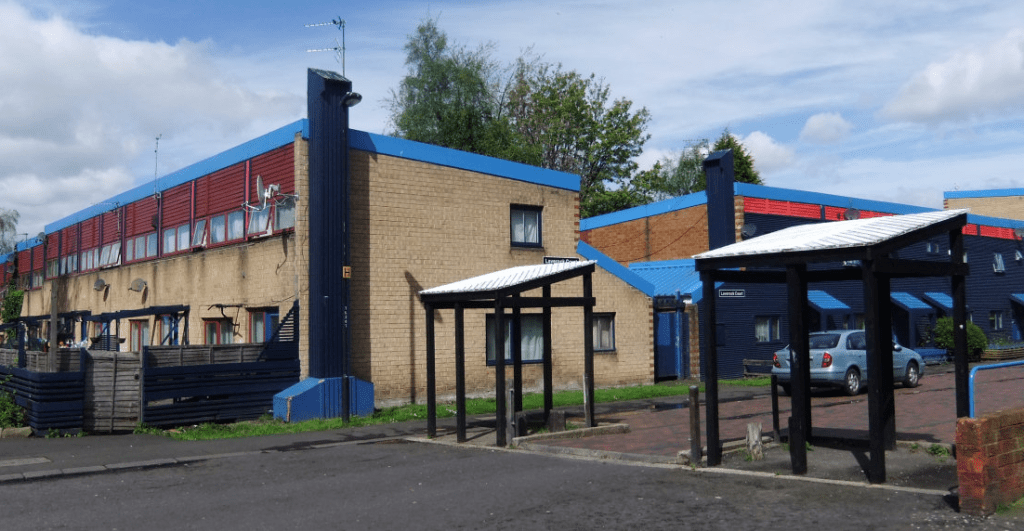
Figure XIV. Two ‘Shelter Things’ on Laverock Court.78
A letter written to Erskine from 1972 noted that:
The rainwater pipes especially in public areas are subject to vandalism… concrete plinths to which the foot of the pipes are attached only encourage children to climb onto them, these children then pull on the pipe and in consequence the top of the pipe is pulled away from the nozzle outlet on the eaves gutter.79
In conducting the walking interviews, one of the most common memories the environment would induce in participants would be ‘we used to climb on this’. Despite the estate’s loss of trees and structures over time, Byker today still invites the prospect, with its bright colours and unique street furniture, and so invites the memories too. Climbing memories are special, as Alan identifies, because climbing is an activity that necessitates engaging intimately with an environment. Climbing rewards the attentive climber with access to a space from which you can feel safe and secluded – even hidden – whilst simultaneously being central and overlooking others, which are environmental characteristics that children often value.80 In this way an environment creates a set of challenges for young people, which is magnified when together in groups: ‘Do you think you could hang on that upside down?’, ‘I bet you couldn’t climb up there’, ‘watch this jump’. By this mechanism, the Byker environment shaped its young people into a generation of ‘climbers’, as Alan defined it. At the same time Alan’s description of ‘going in’ to Byker is telling of its insular design that would ultimately leave its children disconnected from the wider city. He lived in Byker in a Victorian terrace that had not been demolished on St Peter’s Road, yet he clearly conceived of New Byker as a place apart – somewhere that had to be entered.
We all used to climb round here and play round here and play ‘Tuggy on High’ and that round here… You had to climb up high [mimes the climb] so nobody could tug you and if you got down and they tugged you then you were out [laughs]. The mad games we used to play… (Lisa, F, 1990s)
The act of the walking interview was an excellent tool for eliciting climbing memories, where the space itself provided the prompt for recollection and even recreation. Adults rarely wander around a place like children do, but the interview provided a facsimile of that experience where there is no clear destination or purpose of direction. The possibility of playing with or exploring the place in more unusual ways becomes more inviting in this context and climbing up walls and onto roofs less unthinkable.
Roof spaces, like abandoned buildings, can be attractive to children because they also qualify as liminal spaces. In contrast to a rubble heap, however, they are vacant but still owned, and this is another example of where the contrasting environmental values of adults and children came into conflict. All the participants who described roof-climbing knew that it was ‘wrong’ and that they risked getting told off for it, but the rewards – to them – were worth it. Parents were concerned that children would damage the roof, injure themselves, or make annoying noise, but these were not considered ‘problems’ in the same way by the children. Indeed, the ‘improper’ use of Byker’s environment was a fundamental pillar of its appeal, and a core memory for many of those interviewed. As such it is little surprise that the slow removal of climbing structures like shelters and trees – and the increased policing of the space with fences, anti-climb paint, and CCTV cameras – reduced the desirability of the outdoors to children over time. This can be attributed as part of the reason why those interviewed who grew up in the 1990s and 2000s described climbing in terms of individual events rather than as a general culture:
One time we climbed up there, yeah, cos’ it’s like big steps all the way up. So yeah we just climbed on the roof, just to see, you know? Just to look around. I remember we all thought we’d got seen so we ran down and [John], me friend [John], he cut himself on the fence. Cos’ there was this big fence because it was abandoned. (Andy, M, 2000s)
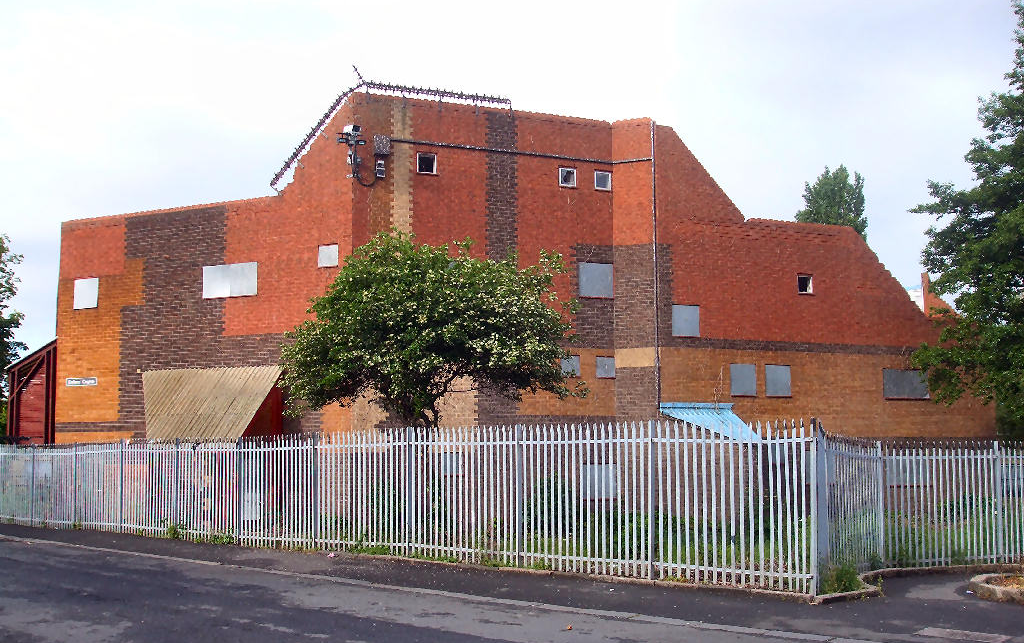
Figure XV. Bolam Coyne in 2008, the building Andy described climbing.81
This demonstrates the shift in understanding that took place amongst Byker’s kids whereby the act of climbing moved from something that the environment invited to something it discouraged. The nostalgia of older participants for the more climbable era of their youth is therefore a manifestation of personal and community memory acting to shape the present and future of the estate. This may be understood as a practical example of the ‘nostalgic progressivism’ concept I outlined in Chapter One..
This said, it must also be acknowledged that the challenges of nostalgic memory as a source still remain, namely in that there is a strong tendency for individuals and a community to ‘universalise’ childhood experience in recollections. For example, many participants talked about how they no longer saw contemporary children climbing as they did:
It wouldn’t cross their minds to try I don’t think, to try and climb up a roof or go sledging down something in a black box somewhere or you know… everything’s a bit more organised for them and a bit more thought about a bit more. I do not think they think to ask permission more than I would have done. Which is quite different. (Shelley, F, 1980s)
This framing of change in children’s behaviour is founded in the truth of decline in outdoor free play but does not encapsulate the full story. Evidently, climbing has not (and really cannot) be totally wiped out as a practice, as evidenced by the presence of anti-climb measures across the estate today. Fences, spikes, signs, CCTV, and anti-climb paint are the environmental manifestation of the barriers put in place over time that have contributed to less climbing, alongside cultural barriers. These preventative measures also show us that whether they climb or not, it certainly does ‘cross the minds’ of certain children to try.
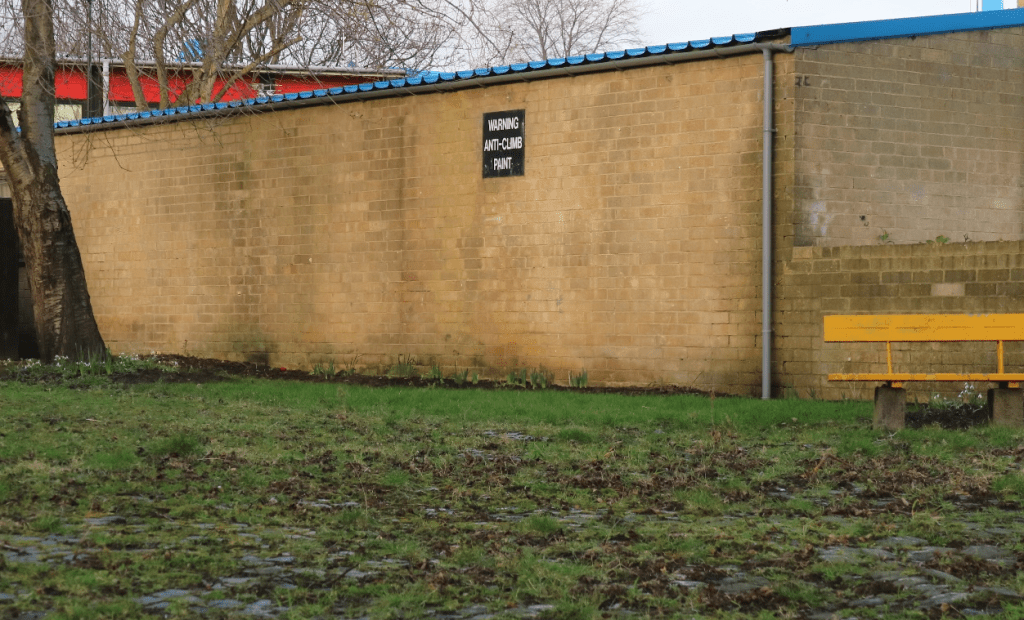
Figure XII. ‘Warning. Anti-Climb Paint’.82
Whilst it is the case that everyone I spoke to described climbing memories, it was noticeable that boys recollected a greater sense of ownership over the ‘best’ climbing spots than girls. For example, whereas Alan described how he and his friends ‘had’ certain spots where they could sit ‘for hours’, Shelley described climbing as a briefer and more contingent activity because boys had an assumed right to the space that girls didn’t.
Now just on the back of [St. Peter’s Church]… there was this big tree, and there was no phones and we just used to sit and talk and make stories up and tell each other, and we would be there for hours. (Alan, M , 1980s)
Me and Tina would climb up this big tree, like shimmy along the branch. Yeah, I think and then go down. You would like sneak down ‘cos them [parents] sitting in the garden would shout if they saw you. So, yeah. I think there was just complete freedom to do whatever you wanted to do. (Shelley, F, 1980s)
The contradiction in Shelley’s assertion of ‘complete freedom’ alongside getting shouted at for climbing a tree reveals that general structures of feeling about a childhood can be complicated by looking at specific stories from it. Freedom, although greater in many aspects than in later decades, was not total – especially for girls. Indeed, Thomson’s work on post-war generations tells us that British children’s independence had already been in decline for decades prior.83 Memories of being shouted at and chased did not necessarily clash with the concept of freedom in the minds of participants because they were viewed as unserious. By this I mean that getting told off (or the danger of it) was often ‘part of the fun’. However, it is also true that rule-breaking in earlier decades contributed in part to more policing and restrictions over climbing in later ones. Another activity whose popularity prompted adults to alter Byker’s environment to discourage it was den-building.
3.3.2 Dens and Weather
From the inception of New Byker there was a tension between the desires of its adult and child residents. In their consultations with Erskine’s team, residents wrote that they wanted to extend fencing to include shrubbed areas flanking the footpaths. The architects wrote in response: ‘we feel visually this would be a pity, but if it means that beds get well maintained, it is probably worthwhile’. The opportunity for more privacy was quite readily taken by residents. However, sometimes the architects elected not to change things, and to carry on as planned. Justifying the level of enclosure of private gardens or yards, they continued to find ‘the general standard of privacy and enclosure reasonable. It was discussed with the tenants at the time.’ The front garden fences were not in all instances re-designed, and play spaces were still constructed in other parts of the estate. The result was an environment of compromise between planners and adult residents. Children – considered but not consulted – found ways to occupy this environment in ways unexpected to both adult parties. Often the liminal in-between spaces that many young people found interest in were those that had been comparatively overlooked in the design process.
When they built this they put a lot of greenery in and bushes everywhere. But there’s not as many these days they seem to be a lot lower than what it was, but when they first put them in, we just hid stuff in them constantly. (Susan, F, 1980s)
There used to be a little industrial area just outside of the estate… and every now and then out the back there’d be these big bins, and there’d be stuff that they just would put out and me and Carl would, like, nick all of it… and if we didn’t know what to do with the contraband that we’d nicked out of the bins we’d put them in our den that we’d built. And it was just something in the bushes that you’d, like, find a hollow and you’d hollow it out even more and then you’d just sit in there and just play. (Shelley, F, 1980s)
Old Byker’s de-industrial half-life, in the form of industrial units on New Byker’s periphery, provided Shelley with the materials for den-building. As the years went on and this latent industry declined so did the available material. At the same time the cutting back of bushes observed by Susan limited their usefulness as sites for den construction by curtailing their ability to provide privacy. These two factors that conspired to give Byker fewer enticing places for den building came from very different sources. The closure of peripheral industrial sites was part of a long-running trend on Tyneside accelerated in the national context by Thatcherism and a broad neoliberal shift away from a manufacturing to services economy. Conversely the uprooting and cutting back of bushes was a local issue largely brought about by the cost of their maintenance to the council and complaints from residents about young people using them to hide scrap for dens and fires. As dens do not necessitate the use of scrap, I would argue the local environmental factor was the more crucial in this case.
Eventually when the estate was all built. The wall completed and then landscaped it was absolutely beautiful. Honestly, it was lots of green shrubs around, you know? Yeah. Lovely scenario. If you look, you know, we’ve still got trees and that but, I mean, it’s not the same. (Bill, M, 1990s)
Bill’s memory for Byker’s greener past is interesting as he was a child of the 1990s, growing up at a time when cutbacks had already begun. In part, his feeling draws upon a collective memory of New Byker’s inception and, in part, it reflects a time of slow transition from abundance in den-building sites to scarcity. Bill’s note that Byker has ‘still got trees’ demonstrates the importance of a qualitative analysis of human-environment interaction. The quantity of trees and shrubs around was not as significant as the management of them in their qualitative value to young people.
Thickets of leafy shrubs provided interest to some of Byker’s children largely because they opportunity for creative independent play and, crucially, privacy. When those same shrubs were thinned or cut back, they longer did so. ‘Sarah’ gave me a similar example:
There was this big playing field where everybody played, right here before they built the motorway, and this is where we’d stand. And it’s a little bit, like, secluded, so it was a good place to hide away down here. (‘Sarah’, F, 1980s)
The field in question had been slated to become a motorway from New Byker’s inception. Indeed, it was the reason for the Byker Wall’s existence as a shield against it. When the large road was built (whilst not an officially designated motorway) it divided the neighbourhood and produced noise and air pollution. In the in-between period after The Wall was constructed but before the road was built, children occupied that unclaimed land. Because the temporary green space was never intended to be a public space it was not well integrated into New Byker’s plan and therefore became the ‘secluded’ place that younger and older children could use to ‘hide away’ for a brief time before construction began.
Sarah’s assertion that ‘everybody’ played on the field, and that of ‘complete freedom’ that many participants recalled, is however in conflict with other stories they told of breaking rules and being told off. This was especially true for girls who had more parental and social expectations around their behaviour. With football for example it was very clear that, by-and-large, the boys played whilst the girls watched. Whilst it could be said with a cursory assessment that both girls and boys took part in football, a more granular analysis shows they did not have equal experience.
When I look back it was idyllic because we had our freedom, whereas I wouldn’t let my grandchildren do half the things I did. I mean climbing on roofs or climbing trees and things like that: ‘boys should do that’ or ‘girls should do that’. They should be put into certain dangers so that they can learn. But you know the way the law is now you cannot do that (Val, F, 1980s)
It was very, very rare. You saw a lass at a match… The girls got dolls and prams to play with. We got things that you would call boy stuff: footballs, bats, tennis rackets (Michael, M, 1980s)
In 1984 the National Playing Fields Association described the adventure playground movement – a posterchild for post-war British childhood playscapes – as having been ‘dominated by boys’.84 The nostalgia shown by many of the women interviewed for a more egalitarian time is complicated by such details. The concept of ‘everyone knowing everyone’ and playing out together irrespective of gender (or indeed race, class, etc.), was not the case. However, that does not mean there was no truth to these testimonies. Indeed, this research also finds that there was an increased segregation of boys’ and girls’ play from 1980 through to 2010. Toy culture provides an example in the national context. In the decades leading up to the 1980s, influenced by second-wave feminist movements across the country, Britain saw a push toward gender-neutral clothing, toys, and activities for children. However, with the explosion of children’s TV advertising and the birth of the ‘pink princess’ and ‘blue action man’ tropes of the 1990s much of toy culture again adopted more segregated gender stereotypes. As Sweet discovered, in America the 1975 Sears catalogue used gendered marketing for less than 2% of its toys, whereas that figure had risen to 50% in 1995.85 In Byker specifically, the testimony I heard suggested that the younger a participant, the more likely it was that they had spent a period of their childhood playing only or largely with others of their gender.
I had more [friends who were boys] when I was little, but then you just kind of separate out don’t you? And then you become interested again. (‘Rebecca’, F, 2000s)
Rebecca’s more atomised childhood experience is one narrativised by older participants as a prime example of degradation from an earlier more social form. However, this change in the commonality of intermingling was brought about by environmental changes that, particularly from the perspective of adult residents, were desirable for the purposes of ‘refining’ the neighbourhood. As the ‘secret’ spaces where undesirable forms of play took place were curtailed, the estate could be seen to be being brought closer to its original concept; a more settled environment where spaces for children’s play were better designated and controlled. However, environmental and testimonial clues tell us that perfect separation of space by function (play, work, transport) was not achieved. Indeed, nature was constantly at work to frustrate or enhance human designs. In particular, the factor of weather stood out as especially significant for this thesis as a natural force with a unique quality to radically alter the environment:
You got up in the morning and if you weren’t at school it was just like ‘get out the house’ go out and play… If it was raining, you put your wellies on… and you went out and you got wet. If it was snowing you went out and you got cold, you come in, got warm, went out again. (Val, F, 1980s)
Many participants of earlier decades described a culture of playing out whatever the weather, including some children of the 1990s. This did not mean that weather was irrelevant to the children, rather that it was not perceived as an obstacle. Instead, rain, wind, and snow could provide opportunities for new forms of exploration and play. Snow most obviously alters a landscape, but rain and wind also do so in the form of puddles, slides, kites, fallen branches, floods etc. Importantly weather also facilitated new sensory experiences that do not strictly fall into the category of ‘play’: leaning into the wind, the sounds and smells of a thunderstorm, or the cold and quiet wonder of snowfall. Such strong sensational memories were often sparked in the walking interviews by a turn in the weather.
When it was raining and windy like this you’d still just go out. We would go out in every single weather type. (Dan, M, 1990s)
Again, the tendency to universalise childhood experiences of the community is present in these testimonials, but that it was at least not uncommon to go out unsupervised in ‘bad’ weather is the key point of interest here. By 2000 new parents were hesitant to allow it – bad weather increasingly seen as another reason (on top of the more significant factors discussed at length in this thesis) to restrict their children’s independent mobility on grounds of health and safety. Most of all this could be seen in the remarks of participants who grew up in earlier decades and had since become parents:
Doesn’t really happen these days… the school closed due to snow and we’d just be out playing for as long we could, and you might not even have a pair of gloves. (Michael, M, 1980s)
We used to like going down to the river, er, swimming, even though it was probably stinking. Remember coming home from the river once just soaking wet, ‘cos you would just go in with your clothes on… You would be out all day, I wouldn’t dream of letting my kids do that! (Amanda, F, 1980s)
Participants of later decades did not describe playing out in rain, wind, or snow with as much persistence as their parents’ generations. In part, this is because they were not allowed to. In many cases parents of the 2000s successfully protected their children from dangers they risked themselves when they were younger. After all, the river Ouseburn that Amanda described playing in was (and continues to be) quite polluted and by playing out in the snow without gloves Michael was tempting frostbite. The trade-offs were that by imposing restrictions parents limited opportunities for Byker’s young people to exert the independence and creativity often necessitated to endure or overcome obstacles and hardships. To replace those opportunities, Byker residents turned towards new toys, games, and technologies alongside reliance on private garden space and timetabled sports and activities. For example Bill told me about a summer activities club that parents set up during the 1990s:
Trips in the minibus, we hired it and we’d all get a lovely day off to Whitley Bay… we had a big trampoline brought in just out there. (Bill, M, 1990s)
Such trips and activities were remembered fondly by participants, but cost parents time and money to orchestrate in replacement for forms of play that had previously been ‘free’ in both senses of the word. Adults were driven by the environmental changes around cars and landscaping discussed in this chapter to replace their children’s unsupervised outdoor play with supervised play. Also, in part, cultural attitudes had changed following stranger-danger and anti-social youth fears. The Ouseburn did not get more dangerous over this period (rather less) but still it became seen to be more dangerous. The weather (though of course fundamentally variable by its nature) did not significantly worsen, yet it came to be perceived as a greater obstacle. In the context of growing suspicion and wariness of ‘the outdoors’, once minor obstacles compounded existing fears. Over the studied 30 years the cultures of parenting and community had changed in Byker, and a new identity of what it meant to be a ‘child of Byker’ was forming.
3.4 Conclusion: Children as Sociological Explorers
In Deindustrialisation and the Historical Sociological Imagination, Strangleman utilises Thompson’s analysis of industrialising societies to better comprehend de-industrialising ones.86 By emphasising Thompson’s attention to the real-life experiences of industrialisation and his understanding that individuals could only utilise their own past knowledge to comprehend and navigate these changes, Strangleman highlights the limitations of the tendency to view the past as discrete time periods, which can obscure the processes of transition.87 With Byker the destruction of the Old and construction of the New could make this trap all too easy to fall in to. However, as this chapter has shown through its analysis of children’s intimate negotiations with changing space, from the very beginning New Byker was an environment of transition and change. Old Byker’s half-life, new national developments, local economic, social, and infrastructural change, and the opinions and actions of its citizens all shaped New Byker. Byker’s children – those residents least expected to be bound to the past – found their daily lives entangled with industrial legacy through environment and culture. Furthermore, some children acted as key sociological explorers during this period, forming and binding new communities and finding environments of play in a world of ever-tightening restrictions on their mobility.
The testimonies in this chapter have elucidated key forms of interaction between environment and child in a de-industrial, North East, 1980-2010 context. The use of demolition and construction as sites for exploration, sliding down rubble heaps, and setting fires. Building dens and gathering materials from legacy light-industrial sites on the fringes of the estate. Hiding away and making use of land scheduled to be developed or otherwise left untended by the adults. Fighting, playing pranks, and other forms of behaviour that often turned dangerous or anti-social. Utilising the geography of the old street-pattern for wheeling downhill. Climbing on rooves and trees and taking advantage of the opportunities for environmental transformation brought on by weather. These are instances where Byker’s environment invited children to explore new forms of play, but at the same time these alternative utilisations of space often came into conflict with the adult world, and this is when measures like taller fences, spikes, and CCTV cameras were taken to curtail activities like den-making, climbing, and setting fires. As fears for and of children grew across the period, the scope of outdoor play testimonials reduced. Beyond these localised changes, national trends were also making themselves felt in Byker, as rising car numbers, stranger-danger fear, street drink and drug culture, local shop closures, and a growing safety-conscious culture of individualism made it no longer conscionable for parents to let their children play as freely as prior generations. All these factors eroded community cohesion, reducing child mobility, which in turn reduced social connectivity in a vicious cycle of restriction and isolation.88
Whilst the reasons for decline in outdoor play in this context are therefore clear, the testimonies herein have also demonstrated that all the forms of outdoor play discussed in this chapter persisted throughout the period – though evolved. Participants across the decades expressed similar childhood values and desires towards things like secrecy, novelty, danger, and ownership. In a changing environmental, economic, and social landscape, these desires were met in different ways, increasingly through technology and timetabled activities as part of a national ‘inward turn’ in child-rearing approaches away from public space and toward private ones. In an urban context of little garden and yard space this left many with few places to turn. Erskine’s green, low-rise, and car-lite modernist design for New Byker might have been expected to become a posterchild neighbourhood that resisted the national and regional trend of decline in outdoor interaction and social atomisation. A key reason it didn’t was its failure to comprehend and integrate children as equal users of the entire space, imagining they would stay confined to designated playground areas, upsetting residents when they didn’t, and then not maintaining those areas over time or converting them into car parks. It is somewhat ironic therefore that New Byker so resembled a giant playground. An environment that beckoned to be explored but increasingly told children that they should not.
<- Chapter 2 – Chapter 4 ->
References
1 Michael Dradge, ‘Byker: Surprising the Colleagues for 35 Years. A Social History of Ralph Erskine’s Arkitektkontor AB in Newcastle,’ Twentieth Century Architecture 9 (2008): 150.
2 Mats Egelius, ‘Ralph Erskine : Byker Redevelopment, Byker Area of Newcastle upon Tyne, England, 1969-82,’ Global Architecture 55 (1980): 40.
3 Robin Abrams, ‘Byker Revisited,’ Built Environment 29 (2003): 117.
4 Dradge, ‘Byker: Surprising the Colleagues for 35 Years,’ 156.
5 Peter Malpass, ‘The other side of the wall,’ Architect’s Journal (May 1979): 964.
6 Ibid, 966.
7 Sirkka-Liisa Konttinen, ‘Carville Road at Night (Byker),’ photograph, 1971. Tate Gallery Archive.
8 Louis Holland Bonnett, ‘Byker 1970,’ JPG map, February 2024, Digimap Ordinance Survey Collection.
9 ‘Where to Live in Byker?,’ Byker Community Trust , accessed 25 March 2024, https://bykercommunitytrust.org/properties/.
10 Louis Holland Bonnett, ‘Byker 1980,’ JPG map, February 2024, Digimap Ordinance Survey Collection.
11 Alison Ravetz, ‘Housing at Byker, Newcastle upon Tyne,’ Architects’ Journal 15 (April 1976): 7; Portmeiron is a village in Wales built in the 20th century to resemble a Mediterranean village.
12 Mary Comeiro, ‘Design and Empowerment: 20 Years of Community Architecture,’ Built Environment 13 (1987): 61.
13 Elain Harwood, ‘Post-War Landscape and Public Housing,’ Garden History 28 (2000): 114; See also Dan Kerr, ‘We can still learn from Byker’s inclusive design ethos,’ RIBA Journal (October 2019).
14 See the child’s absence from such assorted works as: Heidi Svenningsen Kajita, ‘Urgent Minor Matters: Re-Activating Archival Documents for Social Housing Futures,’ Architecture and Culture (2022): 483; Malpass, ‘The other side of the wall,’ 964; Rosalind Kain, ‘Is Byker Heritage? : a Study of the Residents’ Value of Byker’s Post-War Architecture and Their Support for Its Conservation,’ (PhD diss., University of Newcastle upon Tyne, 2003); Peter Blundell Jones and Eamonn Canniffe, Modern Architecture Through Case Studies 1945 to 1990 (Elsevier, 2007); Mats Egelius, ‘Ralph Erskine : Byker Redevelopment, Byker Area of Newcastle upon Tyne, England, 1969-82,’ Global Architecture 55 (1980); Robin Abrams, ‘Byker Revisited,’ Built Environment 29 (2003).
15 Dradge, ‘Byker: Surprising the Colleagues for 35 Years,’ 152.
16 Ibid, 154.
17 Ibid, 154; Nageen Mustafa et al., ‘An Exploration of the Historical Background of Criminal Record Checking in the United Kingdom: From the Eighteenth to the Twenty-First Century,’ European Journal on Criminal Policy and Research 19 (2013): 23.
18 Louis Holland Bonnett, ‘Byker 1980,’ JPG map, February 2024, Digimap Ordinance Survey Collection.
19 ‘Where to Live in Byker?.’
20 Ralph Erskine and Lars Harald Westman, An Ecological Arctic Town, 1958, Gouache and Pencil on Print, ArkDes Collections ARKM.
21 ‘Where to Live in Byker?.’
22 Dradge, ‘Byker: Surprising the Colleagues for 35 Years,’ 161.
23 Robin Abrams, ‘Byker: An assessment,’ Landscape Design 142 (1983): 10.
24 Abrams, ‘Byker Revisited,’ 126.
25 William Cronon, ‘The Trouble with Wilderness; Or, Getting Back to the Wrong Nature,’ Environmental History 1 (1996): 76.
26 MacPherson, ‘Regenerating industrial riversides in the north east of England,’ in Urban Waterside Regeneration: Problems and Prospects, ed. K.N. White (Harwood, London: 1993), 32.
27 Hattersley, ‘Byker threatened,’ Building Design 141 (1999): 4.
28 Abrams, ‘Byker Revisited,’ 128.
29 Ibid, 129.
30 Tony Henderson, ‘Awards for iconic flats; New life for 1960s and ’70s landmarks,’ The Free Library, accessed 27 March 2024, https://www.thefreelibrary.com/Awards+for+iconic+flats%3b+New+life+for+1960s+and+%2770s+landmarks.-a0288222027.
31 Louis Holland Bonnett, ‘Society Digimap: Byker,’ Digital map, March 2024, Digimap Ordinance Survey Collection.
32 Peter Blundell Jones and Eamonn Canniffe, Modern Architecture Through Case Studies 1945 to 1990 (Elsevier, 2007), 172.
33 Stephanie Schoeppe et al., ‘Socio-Demographic Factors and Neighbourhood Social Cohesion Influence Adults’ Willingness to Grant Children Greater Independent Mobility: A Cross-Sectional Study,’ BMC Public Health 15 (2015), 2.
34 Sarah Moser, ‘Personality: a new positionality?,’ Area 40(2008): 383.
35 Martyn Hammersley and Paul Atkinson, Ethnography: Practices in Principle (Routledge: London, 2007), 64.
36 Wajcman, Feminism Confronts Technology, 51.
37 Ibid, 53.
38 Heidi Svenningsen Kajita, ‘Urgent Minor Matters: Re-Activating Archival Documents for Social Housing Futures,’ Architecture and Culture (2022): 491.
39 Katie Schmuecker, ‘Social Capital in the North East,’ Institute for Public Policy
Research North (2008): 6.
40 Gary Pattison, ‘Planning for decline: the “D” ‐ village policy of County Durham, UK,’ Planning Perspectives 19 (2004): 312.
41 Ibid, 329.
42 BFI Player, Byker Song, https://player.bfi.org.uk/free/film/watch-byker-song-1974-online.
43 Sherry Lee Linkon, The Half-Life of Deindustrialization: Working-Class Writing about Economic Restructuring (Ann Arbor: University of Michigan Press, 2018), 95.
44 Mah, Industrial Ruination, Community, and Place, 201.
45 T. Strangleman, ‘Deindustrialisation and the Historical Sociological Imagination: Making Sense of Work and Industrial Change,’ Sociology 51 (2018): 476.
46 Sarah Glynn, ‘Good Homes: lessons in public housing from Byker,’ in Byker: Newcastle upon Tyne (2011), 6.
47 Rosalind Kain, Is Byker Heritage? A Study of the Residents’ Value of Byker’s Post-War Architecure and Their Support for Its Conservation (Thesis: University of Newcastle upon Tyne, 2003).
48 Richard Collier, ‘“Rat Boys” and “Little Angels”: Corporeality, Male Youth and The Bodies Of (Dis) Order,’ in Contested bodies (Routledge, 2003), 31.
49 Abrams, ‘Byker Revisited’ Built Environment 29, no. 2(2003): 126.
50 Nicola Crosby, ‘Crime Report 1998 to 2002,’ Tyne & Wear Research and Information (Newcastle-upon-Tyne: 2004), 10.
51 Raymond Williams, Marxism and Literature (Oxford: Oxford University Press, 2017), 30; Linkon, The Half-Life of Deindustrialization.
52 Louis Holland Bonnett, photograph, Byker, December 2023.
53 RAC Foundation, ‘Car ownership rates per local authority in England and Wales,’ RAC Foundation, 26 December 2012, https://www.racfoundation.org/assets/rac_foundation/content/downloadables/car%20ownership%20rates%20by%20local%20authority%20-%20december%202012.pdf.
54 Abrams, ‘Byker Revisited,’ Built Environment 29 (2003): 128.
55 SiteLines, ‘Byker Redevelopment,’ Newcastle City Council, https://sitelines.newcastle.gov.uk/SMR/16463.
56 Louis Holland Bonnett, photograph, Byker, December 2023.
57 Sayette et al., ‘Alcohol and Group Formation: A Multimodal Investigation of the Effects of Alcohol on Emotion and Social Bonding,’ Psychological Science 23 (2012), 869.
58 Susan Brownmiller, Against Our Will: Men, Women and Rape (New York: Bantam Books, 1975), 194.
59 A. O’Gorman, Drug problems and social exclusion: The development of heroin careers in risk environments (Middlesex University: PhD thesis, 2011), 1-3.
60 Peder Clark, ‘Ecstasy’s Risks and Pleasures in Britain, 1985–2000,’ (Edinburgh: Centre for the Social History of Health and Healthcare, 2024), II.
61 Abrams, ‘Byker Revisited,’ 126.
62 Glynn, ‘Good Homes,’ 6.evidence
63 Abrams, ‘Byker Revisited,’ 117.
64 Newcastle City Council and Northumbria Police, Newcastle Drug Market Profile: Project ADDER Analytical Hub Report, February 2023, 107.
65 Kenneth Silverman, Drug Abuse Treatment Intervention: A Behavioral Economic Analysis, (Cambridge, Mass: National Bureau of Economic Research, 1998), 3.
66 Office for National Statistics, The nature of violent crime in England and Wales: Trends in Violent Crime
How Safe are Our Children, Kidscape (1993), 1.
67 Nicola Crosby, Crime Report 1998 to 2002, Tyne and Wear Archives, 1, 10.
68 Nick Morgan, ‘The heroin epidemic of the 1980s and 1990s and its effect on crime trends – then and now: Technical Report,’ Home Office, 2014.
69 Nick Morgan, ‘The heroin epidemic of the 1980s and 1990s and its effect on crime trends – then and now: Technical Report,’ Home Office, 2014.
70 Franziska Till et al., ‘Social Identification in Times of Crisis: How Need to Belong, Perspective Taking, and Cognitive Closure Relate to Changes in Social Identification,’ Journal of Applied Social Psychology 55 (2024): 40.
71 Mary Cooper, ‘Motorways and Transport Planning in Newcastle,’ SOC’EM Report (Newcastle-upon-Tyne: 1975), 18.
72 Saran Michelle Mallinson, Dispersal: a barrier to integration? The UK dispersal policy for asylum seekers and refugees since 1999: the case of Iraqi Kurds (Thesis: University of Warwick, 2006), 266; Matthias Flug and Jason Hussein, ‘Integration in the Shadow of Austerity – Refugees in Newcastle upon Tyne,’ Social Sciences 8, no. 7 (2019): 212.
73 Ibid, 195.
74 Ibid, 195.
75 Carol Stack, Call to home: African Americans Reclaim the Rural South (Basic Books: New York, 1996), 198.
76 Although it must also be noted that the children of Old Byker were certainly no strangers to rooftops.
77 Louis Holland Bonnett, photograph, Byker, March 2024.
78 Louis Holland Bonnett, photograph, Byker, March 2024.
79 Dradge, ‘Byker: Surprising the Colleagues for 35 Years,’ 156.
80 Teresa Aslanian and Anne Turid, ‘Climbing, Hiding and Having Fun: Schoolchildren’s Memories of Holistic Learning in a Norwegian Kindergarten,’ Nordic Studies in Education 40 (2020): 268-285.
81 Patricia Payne, ‘Bolam Coyne Northeast Aspect in 2008,’ photograph, Historic England Archive, Reference DP152710.
82 Louis Holland Bonnett, photograph, Byker, December 2023.
83 Mathew Thomson, Lost Freedom: The Landscape of the Child and the British Post-War Settlement (Oxford: Oxford University Press, 2013).
84 Krista Cowman, ‘The Gendering of Activism in the British Adventure Playgrounds Movement,’ Journal of Social History 53 (2019): 236.
85 Sweet, Boy builders and Pink Princesses, 36.
86 Strangleman, T. (2016). ‘Deindustrialisation and the Historical Sociological Imagination: Making Sense of Work and Industrial Change’, Sociology, 51(2), 469.
87 Ibid.
88 Stephanie Schoeppe et al., ‘Socio-Demographic Factors and Neighbourhood Social Cohesion Influence Adults’ Willingness to Grant Children Greater Independent Mobility: A Cross-Sectional Study,’ BMC Public Health 15, no. 1 (2015), 2.
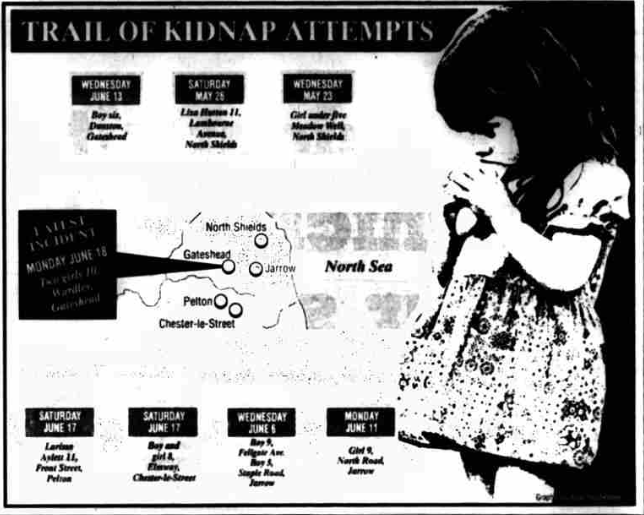
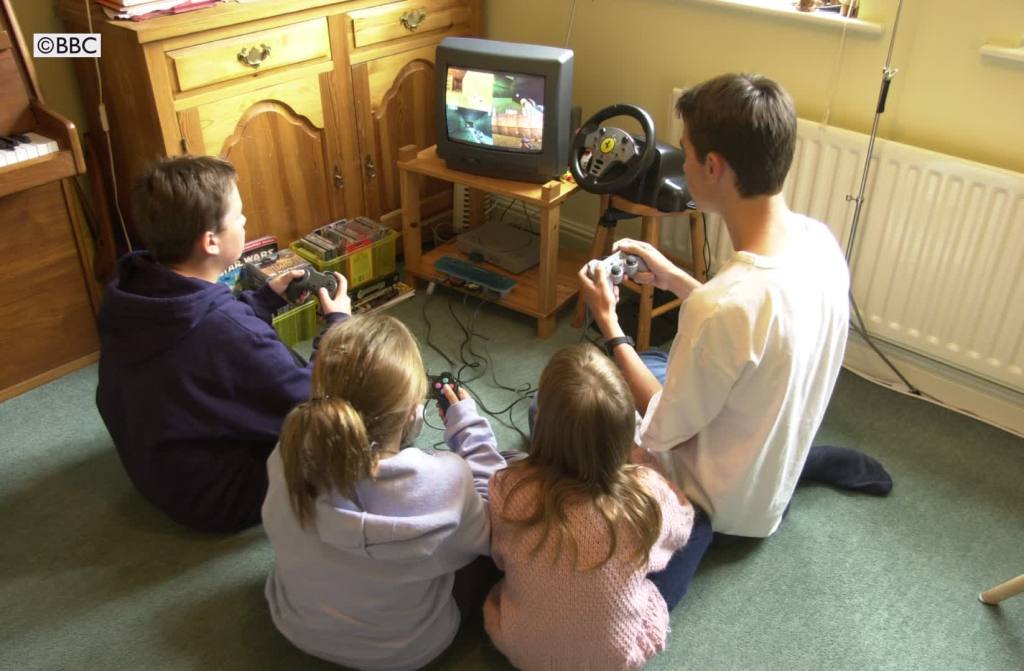
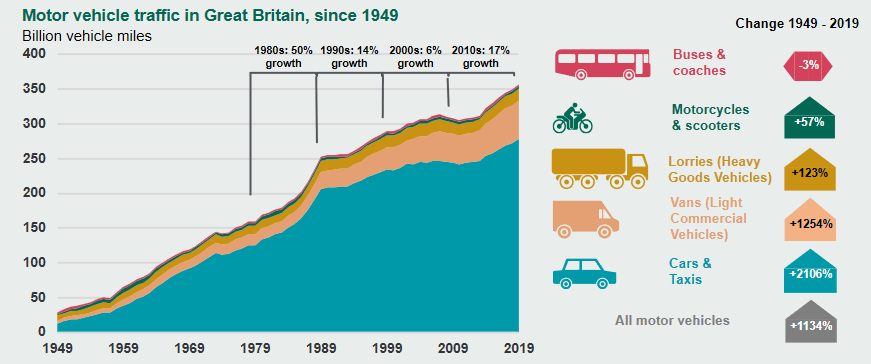
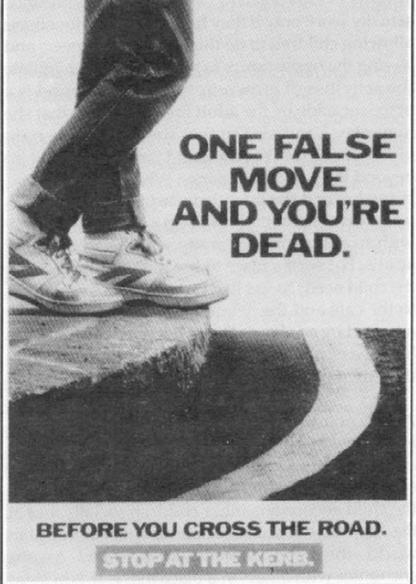
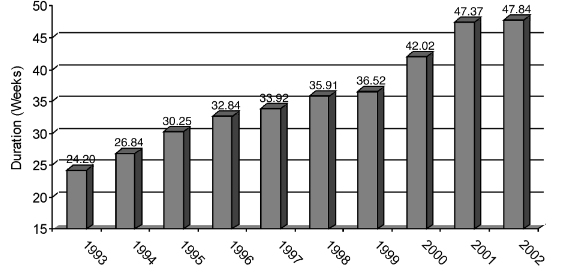

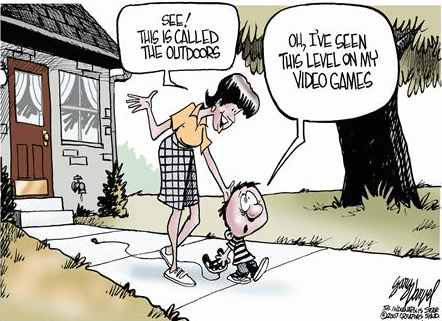
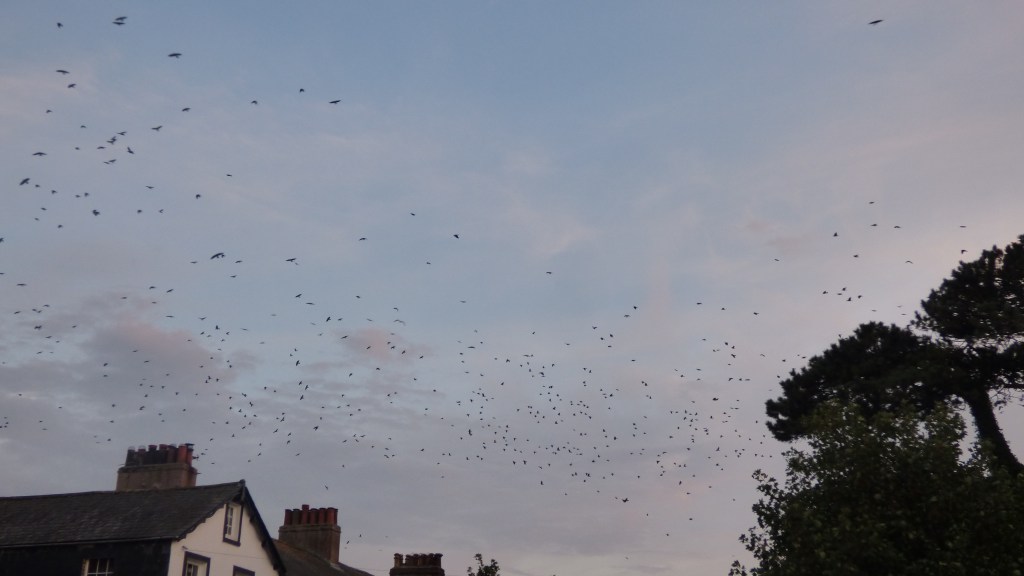

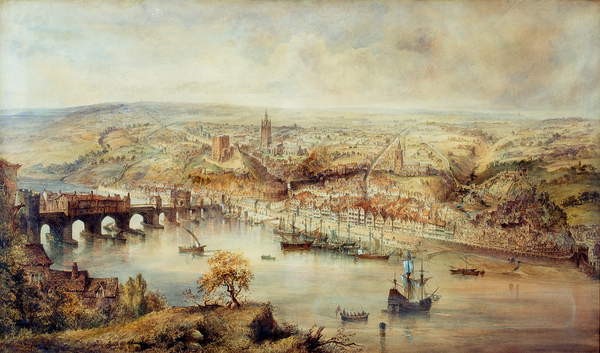
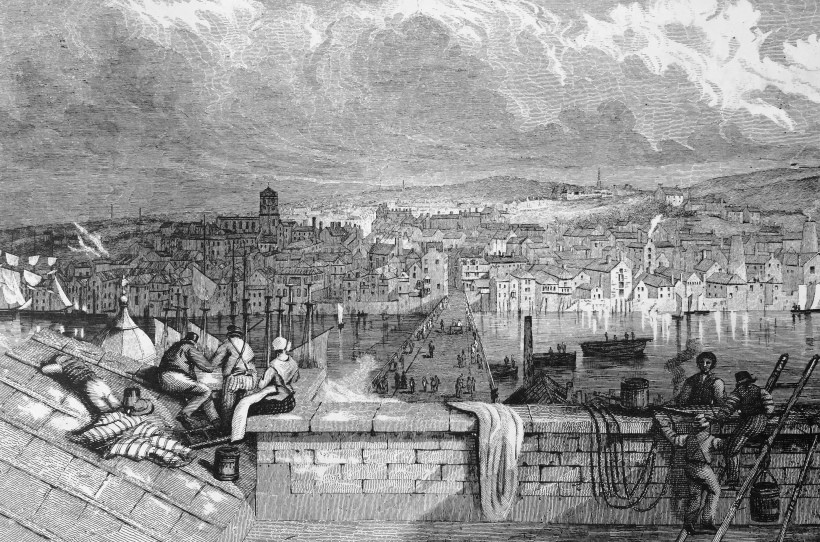
 Dr Louis Lorenzo
