Tag: Social

  • The Differences Between Utopias, Dystopias, and Heterotopias

    Utopias, dystopias, and heterotopias, as concepts in both the literary and historical senses, are ultimately all created to serve the same purpose; to critique contemporary society. By asking you to imagine a different world, they allow ‘cognitive estrangement’ from reality, offering you an outside platform which grants perspective on your own everyday experience. This central similarity between these forms means their differences are more intriguing, as the utilisation of their distinct psychological frameworks is indicative of how a given society views its present and future. In this article I will explain the different perspectives that utopias, dystopias, and heterotopias take on human nature and the systems they describe that reflect those perspectives. Ultimately, I demonstrate utopia’s purpose as an opponent to test society against, dystopia as a threat for society to fear, and heterotopia as an expression of postmodern moral relativism.

    Utopia as a concept is far older than dystopia or heterotopia. The term was officially coined in Thomas More’s eponymous text of 1516, but the idea stretches further back at least to the mythical city of Atlantis first mentioned by Plato in the 4th century BC. These early utopias are distinctive because they set unattainable societal goals, or at the least ones that appear insurmountable to their contemporary audiences. Importantly also these utopias are described as potential rivals against Plato and More’s contemporary societies, they exist far away, but in the same world at the same time. The audiences of these texts are encouraged to compare their own society to the fiction and thus develop criticisms of reality. The utopias are portrayed as physical rivals but more importantly as conceptual rivals to contemporary ideology. Indeed, Utopia was always intended primarily as a ‘new instrument of thought’ rather than a literal model. Since More’s work fewer and fewer utopias have been positioned as a physical rival, because the conceptual rivalry is the real focus of utopian thought.

    A key element of utopia is that it is difficult to achieve. Utopias require active and ‘radical change… of physical, social, economic, and psychological conditions’, a concerted overhaul of reality. However, ever since More’s Utopia and up until the 20th century, people have viewed utopia as an increasingly achievable goal, explaining how advances in technology and reason will assist humanity in achieving this; the “New World” of the Americas in particular became a site for many literary and literal utopian endeavours. However even with modern technology utopia stands out because of its complexity as a project which requires great resources and cohesion. This is unlike dystopia and heterotopia which both invite you to believe that they are highly plausible eventualities, something that can be fallen into rather than created.

    Today people generally agree with this idea and see utopia as being as unreachable as Plato saw Atlantis, but this is based in a common misconception, that utopia describes a “perfect world”. This is not quite the case, utopia is not a promise of perfection but rather of ‘perfectibility’, that society is constantly acting to diminish the evils that plague it even though its citizens ‘remain flawed by nature’. Conversely it is also true that dystopia is not a fully imperfect world and has elements of hope to contrast those of despair. However, although utopias and dystopias do not include fully monolithic societies, they do offer the idea that such a thing is achievable. Both offer a universal idea for what ‘human nature’ consists of and ascribe to the idea of a ‘herd mentality’ which theoretically can be used to shape society into either form. A heavy emphasis on social control is required by both utopian and dystopian concepts precisely because they are not describing purely perfect or imperfect realities; their ‘realistic estimate of human behaviour’ means that they must have robust procedures in place for maintaining themselves both physically and ideologically. Dystopias differ from utopias however because they are not designed as societies to be tested against, but ones to be heeded as warnings, a dark reflection of reality. If utopia is the carrot, dystopia is the stick.

    Contrary to initial supposition, the physical attributes of utopia and dystopia are some of the least important aspects of those societies in terms of differentiating them. Many utopias and dystopias exist in a very similar environment, which can be interpreted in multitudes depending on the view of the creators of the imagined society. Generally, these worlds are divided into to two varieties, the technological and the natural. Utopian visions of technological societies begin with Atlantis and lead up to the modern day with a film such as Her, dystopian visions include the island of Laputa from Gulliver’s Travels or the world of Do Androids Dream of Electric Sheep? On the other side natural utopias begin with Arcadia and lead up to the eternal gardens of Metropolis, dystopian visions including The Drowned World or Ridley Walker. These examples demonstrate how the same idea of place can be both utopia and dystopia, and indeed texts such as Gulliver’s Travels do explore the view that the same place could serve as both concepts from the perspectives of different people. For heterotopia however, the physical elements of the imagined society are considerably more important. This is because its theoretical framework rejects the utopian and dystopian principals of ideological certainty in favour of immeasurability. It passes no judgement on broader concepts which results in the physical details of its existence being what defines it.

    To understand why heterotopia is different like this, we must understand its inception out of the real-world events of the 20th century. Initially dystopia, “utopia’s twentieth-century doppelganger” was born in the context of the destruction wrought by the first and second world wars, alongside the great depression and other such calamities. It is a concept more of ‘a utopia that has gone wrong’, rather than a deliberately malicious creation. In this manner it far better reflected the historical realities of the time, in which people saw a decline in the “progress” of the past decades. Dystopian visions, based on societal inequality and division, were devised deliberately as direct responses to utopian visions built on co-operation and cohesion which were seen to have failed. However ultimately people found that dystopia, despite its promises, was not brought about in the manner it was thought to and thus the later 20th century notion of heterotopia was born in line with the many other post-modern theories.

    Heterotopia is described as the only one of these three concepts that “truly exists”, a society that is neither good or evil, but is merely there. Indeed, whilst utopic and dystopic fiction follow traditional methods of mythical storytelling by clearly marking themselves outside of the audience’s space and time, heterotopic fiction often does not. Utopias and dystopias are set at a time or place different from our own because they want to indicate that their description is not yet a reality but could be if people acted upon them. Heterotopias can or might be set contemporaneously because they are not describing anything which they inherently want achieved or prevented.

    This is not to argue that utopia and dystopia are attempts to escape from reality because they are set outside of contemporary time, exactly the opposite is true. Utopian and dystopian visions are in fact more applicable to reality than heterotopic ones despite their greater removal from it. By necessity of design ‘genuine’ utopias and dystopias have far clearer concepts and moralities which allow them to make direct criticisms and endorsements of practices analogous to contemporary society. This has been true ever since More’s Utopia in that ‘it is almost the definition of utopian work that it should be contagious’; such narratives make a person consider “how can I make this happen?” or “how can I stop this from happening?”, imparting a sense of urgency and agency. More’s text itself has remained influential for so long precisely because of its continued relevance and in how it ‘elucidates the relationship between liberal and totalitarian politics’. Conrariwise, heterotopia is steeped in such ambiguity that it is far harder to draw simple directives from it.

    However, it must also not be misinterpreted that heterotopia is simply the grey-area middle ground between utopia and dystopia, in fact it is a rejection of such concepts outright. Both utopia and dystopia argue for a world that sits on a moral scale which can be adjusted between better and worse; there is the possibility of change. Heterotopia argues that there is no scale, that things don’t get “better” or “worse”. In this respect heterotopia is a more pessimistic narrative to adopt than dystopia, because it suggests that there is little point in attempting to change the future, whereas dystopia acts as a prerogative to do so. This moral relativism is also integral to a further way in which heterotopia diverges from utopia and dystopia, in the importance it places on individual factors over systemic. Utopias and dystopias are based on the concept that overarching superstructures and ideas have the power to dictate the direction of society, heterotopias contrarily suggest that no one force has the ability to gain dominance over others or drive change in a particular direction.

    The value in assessing these forms of imagined society is that they tell us about the people and culture which created them. Ultimately all utopias, dystopias, and heterotopias are created with similar intent, but their method varies to cater to their contemporary audience. Utopias worked as imagined rivals to spur on development, but when people believed they might genuinely achieve utopia and found it crashing about them, dystopia was born as a warning to overambition. Finally, heterotopia has been created as a response to the non-formation of either dystopia or utopia. It is a relativistic framework for understanding change as neither inherently leading to good or ill.  

    Author/Publisher: Louis Lorenzo

    Date of Publication: 08th of May 2019
  • Devoted Admirers and Bitter Enemies – Assessing our current understanding of T. Dan Smith Part 3: Sources

    If you are unfamiliar with the history of T Dan Smith, it is advised that you read part 1 (‘Local Hero or Corrupt Councillor?’) and part 2 (‘Which Way to Utopia’) before reading this.

    Thomas Daniel Smith will always exist as a controversial figure, a polariser of public opinion. For the people of Newcastle-upon-Tyne his legacy is unavoidable, it is spread all over the city in the form of vast swathes of concrete, often ill-repaired and forgotten, which speak of a separate world from that of the Victorian terraces and Georgian streets. For some, his imprisonment on charges of corruption in 1974 was a justice well served to a politician who had taken advantage of the city to better himself and those close to him. For others, and for Smith himself, he had been pilloried by a political establishment who saw him as a threat to their own authority and made the scapegoat for higher ranking officials who were the truly corrupt forces at play. As he put it, he had to be disposed of because he ‘wasn’t one of them’. The three sources I investigate herein have been chosen to help me examine the character of T. Dan Smith in public life and understand how the public perception of him has been informed by the media that portrayed him. Primarily however I examine the man’s vision and assess whether his passionate talk of creating a ‘new Brasilia’ was merely a show to cover his untoward deeds or whether it did truly represent a devotion to positive change. Ultimately, I will conclude that these sources indicate that he did.

    The earliest of my three sources dates from 1969, before allegations of Smith’s involvement in corruption came to the fore. It is a booklet distributed by the Northern Economic Planning Council (NEPC) which sets out its vision for north-east development over the next 12 years up toward 1981. Smith was the chairman and head of the NEPC at this time and he wrote in the foreword to the document that it should be ‘given the widest possible circulation within the region’. It is a statement of desire for the future and I will be assessing it to determine exactly what Smith envisioned he could achieve in the region if his tenure had not been cut short by a jail sentence 6 years later. It also shows us what Smith though most important to communicate to the people of the region.

    The second of my three sources dates from 1971, three years before Smith would be convicted on charges of corruption, however it does still originate from a time when Smith was embroiled in allegations of corruption brought against him. The source itself is a correspondence between Smith and Henry Parris (Smith’s friend and a lecturer in politics at Durham university) and it follows straight after a 1971 corruption trial for which Smith was found not guilty. Parris’ letter to Smith also includes an attached newspaper article from the guardian which he explains is from where he learned about Smith’s trial. I will be using this source to assess public attitudes towards Smith before he pleaded guilty to corruption and to examine how he was depicted in the media during this tumultuous time.

    My final source dates from 1987, after Smith had been released from jail and somewhat receded from the public eye. It is a documentary film produced by Newcastle-based studio “Amber Films” which includes interviews with Smith and with several other persons from his history. From this source we get to assess Smith’s responses to the allegations made against him and how his legacy was remembered publicly after his spotlight had since faded.

    The NEPC booklet does not provide an optimistic view of the future for the north-east, indeed, it is resolved to a process of damage mitigation; using phrases such as ‘the region cannot hope to halt net outward migration’ and ‘heavy job loss… will almost certainly continue into the mid-1970s’. At initial observation this does not align well with T. Dan Smith’s notion that he could turn Newcastle into the ‘Venice of the north’, as he would sometimes claim. However, reading further into the NEPC’s policy proposals reveals that this is not the case. This is because the document outlines a strategy of concentrating all resources towards certain key areas of economic activity within the region at the expense of others; Newcastle being the foremost of these chosen areas. In astonishing brusqueness, as this document was made widely available to the general public, it pronounces that ‘There is no point in pretending that all the communities which now exist in the region will be capable of surviving’ and states that ‘this policy would accept… a gradual rundown of some of the less favourably placed communities’. The spines around which these ‘growth areas’ will be built were the proposed ‘growth corridors’; an idea based on the conclusion that roads are critical to the economy and that investing in road infrastructure will bring wealth to the area that surrounds them. This came to Smith through his city planner Wilfred Burns who took much inspiration from modern American cities. This is why most of the “new towns” built during this period, such as Washington and Meadowfield, were deliberately based around ‘motorway interchange points’. Comparing the map showing proposed ‘growth corridors’ against a concurrent plan for road extensions reveals how exactly these two plans align. Indeed, the ‘main growth corridor’ aligns exactly with the line of the A1 motorway.

    This document reveals the harsher side of Smith’s visionary rhetoric. Within this document genuine and practical belief is shown in the ability of Newcastle to foster ‘seeds of future growth and prosperity’ but this is acknowledged only at the expense of other areas in the region. What this does help us acknowledge however, is the practicality at the heart of Smith’s vision; he does not outline a perfect scenario and nor does he claim to hold all the answers, but he does want to attempt an ambitious strategy for turning the fortunes of the region around. This is not a document produced by a man who does not understand the realities of his situation and is a demonstration of Smith’s unreservedness in communicating to the people of the area what he intends to realistically achieve.

    It is interesting therefore to see in the newspaper article attached to the letter sent from Henry Parris to Smith how the media of the time portrayed this unreserved vision. What is immediately communicated through this source is the real respect and influence he had garnered for himself despite the allegations brought against him. He is described as the man who ‘virtually invented regionalism’ and the article plays up his “rags to riches” tale, a man ‘unfettered by formal education’. The context of this article within this correspondence via letter also enforces the conclusion that Smith was well thought after, a foreword stating that he had received ‘hundreds of messages’ of support. Smith’s determination to carry on with his work is also evident here, which he states very plainly in both his newspaper interview and his personal reply to Parris: ‘I am planning my diary again with confidence’. It is interesting and slightly sad to note this optimism in the knowledge of his imprisonment that would follow this correspondence only 3 years later.

    However, there is a clear subtext to pick up when assessing this source which does imply that Smith had his detractors at this time, which he certainly did. A fault of this source is that it does not fully represent the other side of the argument as it only includes comment from those predisposed towards Smith: his friend and a newspaper which broadly aligns with himself politically. Nonetheless when Parris writes that ‘I felt I could not remain silent’ or when the paper writes that Smith commanded over a ‘reluctant Newcastle-upon-Tyne’ it is made clear that Smith was not universally admired. Indeed, overall across all of the three primary sources I examine the picture developed of T. Dan Smith is a mixed one, a man who attracted ‘devoted admirers and bitter enemies’. 

    Certainly the 1987 Amber documentary brings the conflicting elements of Smith’s career to the fore, using its two narrators as points from which to argue the two sides of the story; one a detractor and the other a supporter. The film shows a society which finds it difficult to come to grips with Smith’s character, a man who cannot be simply labelled into the category of hero or villain. In particular its interviews with members of the general public of Newcastle prove enlightening; an ambivalent atmosphere flows through all of these conversations which seem to both condemn and praise at the same time. One man states: ‘He did a wonderful job for the town, but unfortunately he was found out’ and another: ‘to me he’s a criminal… but now he’s more or less hailed as a hero’. The interviews with Smith himself show a very different character to that seen in the newspaper and the NEPC document. These detail him as a bold and harsh character, not afraid to offend in order to get things done. Now, after his time in jail, the man set before us is defensive and calculating, carefully choosing his words to justify and explain his former selves. In regard to the public opinion of himself, he says that people seem to ‘reflect the society that was able to convince them of what ever they want to be convinced of’, in other words, he feels the public have been misled as to his role in the wider corruption scandal involving the architect John Poulson and the conservative home secretary Reginald Maudling. His view is now that he was made a scapegoat for ‘bigger fish’, and although he did plead guilty to charges of corruption he now claims to be innocent.

    Certainly, his decision to appear on such a program does lend a legitimacy to his assertions. We see him now, still living in Newcastle, in one of the very concrete towers he laid the foundations for. He lives no ‘life of luxury’, as one of the citizens claims, he appears as he proclaims himself, cast out. Overall the feature does portray Smith in a sympathetic light and does not take such a balanced view as it wishes you to believe it is taking. It is another example, as with the newspaper, the letter, and the NEPC booklet, of people being swept along in the wake of T. Dan Smith. Through all of the sources his personal drive and commitment appears infectious on those around him, a naturally likeable character.  

    What these sources all indicate is that T. Dan Smith did have a genuine vision and love for his home city. As to the extent of his involvement in the corruption scandal I do not believe these sources provide enough information to make an informed assessment of that. What they do show is that across time, from his heyday to his downfall to the present, he remains a man who can inspire passion in those around him.

    Author/Publisher: Louis Lorenzo

    First Published: 3rd of August 2018

    Last Modified: 3rd of August 2018

  • Which Way to Utopia? Assessing Our Current Understanding T. Dan Smith Part 2: Historiography

    If you are unfamiliar with the history of T Dan Smith, I recommend that you read part 1 (‘Local Hero or Corrupt Councillor?’) before reading this.

    For this article I have chosen eight pieces of historiography surrounding the life of T. Dan Smith to review. Due to the relatively small amount of published material on T. Dan Smith I believe these to be sufficient to fully cover the historiography.  Primarily, I will be assessing how attitudes towards Smith’s legacy have evolved over the years, relating to his charges of corruption and his personal vision for the city of Newcastle-upon-Tyne. I highlight a clear transition in the historiography, which progresses from the notably negative appraisals of the early 1980s towards the far more positive revisions of later years; all culminating in Chris Foote-Wood’s 2010 text which boldly proclaims Smith as ‘NOT GUILTY AS CHARGED’. I will finally evaluate whether the historiography overall has provided a conclusive narrative on the figure of T. Dan Smith, and decide that there are still many unanswered questions surrounding his character to be explored.

    The earliest major text to be released about T. Dan Smith is his own: “An Autobiography”, which was released in 1970 before any corruption charges were brought against him. In contrast to later sources Smith’s own text carries a far more nonchalant tone, not cast in the harsh light of criminality. Indeed, Smith gives the impression of a man stepping back from ‘my public life’; by its very nature an autobiography indicates a conclusion, a summary of one’s achievements in the assumption of the best being behind you. One consistency with later sources is the emphasis placed on Smith’s working-class youth and the impact of the Second World War (WW2) on Smith’s life (perhaps because the later sources had no other source material to work with apart from Smith’s recollections). What Smith emphasises is his love of the radical politics of the post-WW2 era which gave birth to the national health service, and his disappointment in how quickly after the fact politicians turned instead to ‘petty things’. Certainly Smith casts himself as somewhat of a visionary, someone who had brought us back to ‘those radical days of 1945’. He regards the brutalist architecture executed under his stewardship, a factor so often used against him in later evaluations, as a prime example of this future-facing attitude, describing the buildings as being of ‘the highest standard and best design’.

    In 1975 a small article was released from an Australian university interested in local government studies which discussed Smith’s political career. However, it makes no reference to the corruption trial that had taken place only one year hence. Furthermore, the article is particularly positive, saying that Smith ‘engendered an optimistic and dynamic attitude’ in the city council. If nothing else, this article shows the unusual impact Smith had on the political sphere in his time; few leaders of local councils are written extensively about at all, never mind from across the globe.

    After this point no major evaluations of T. Dan Smith are released until, in typical form, two come very close together in the early 1980s. These are by far the most condemnatory texts on Smith to be released. The first of these, “Nothing to Declare”, primarily focusses on John Poulson, but the text devotes an entire section to Smith. It casts him as a young visionary socialist with good intentions who lets himself get corrupted by Poulson and the system at large. It proclaims that ‘by the end the vision was gone, replaced with tawdry self-interest’. In the context of itself the text builds a strong case against Smith, using extracts from letters sent between Smith and various other figures as evidence. In the most damning of these correspondences Smith writes that a potential employee must ‘be unaware of any tie between J. G. L Poulson and me’. However, the provenance of these extracts is often unclear and always appears mixed in with passages of hearsay and speculation which somewhat degrades the argument. Smith is quoted as having said ‘I support the building of council houses, but that does not mean I want to live in one’ but no source is provided. Indeed, later in life Smith did live in a council house. There is a distinct sense that the main desire here is to neatly slot Smith in to the overall narrative on Poulson presented, describing Smith as Poulson’s ‘chief lieutenant’, Poulson of course being the ‘arch corruptor’.

    The second of these texts, “Web of Corruption”, places Poulson and Smith in the exact same relationship, even using the term ‘lieutenant’ in just the same context. However, the differences between these two texts are more pronounced than may initially appear, because although they hold similar sentiments towards Smith, they are marketed towards different audiences. Web of Corruption is a text aimed toward a far wider audience than Nothing to Declare, the large red font over the bright yellow cover immediately catching the eye. Its attacks on Smith are a viscious spectacle, describing him as a ‘con’ who was nothing more than a ‘moderately gifted amateur’. It paints a vivid image of a ‘socialist hero’ who has fallen from grace to become ‘unemployed but almost friendless, isolated but not ignored’. This text more than any other demonstrates the public appeal of Smith’s character and case, a man who had lived such a public life now finding his fame turned against him. Rather hypocritically the text goes on to criticise Nothing to Declare for sensationalism, describing it as looking for ‘another Watergate conspiracy’. Contrarily I believe Web of Corruption to be a far more sensationalist piece, looking to attack anyone associated with the Poulson scandal. No references are provided and in all the text is more interested in human tragedy over hard evidence.

    In contrast to these highly critical texts, the later 1980s saw a selection of material which did not cast Smith in as much of a devilish tone. Two documentaries produced at similar times both seek to somewhat revaluate his character. They do not claim that he was innocent of corruption but do begin to frame this affair as a case not so firmly closed. The first of these, a 1986 British broadcasting corporation (BBC) production entitled “T. Dan Smith”, describes him as a good man manipulated by private business into doing bad things. The key difference here is that it does not describe him as being “corrupted”, he himself has not turned onto a dark path; instead others have manipulated him. The film also gives more time to his achievements, casting him as the ‘pioneer and prophet’ of local government and giving him the title of ‘a modern crusader’. This together with the second of these documentaries from Amber Films gives the impression that, after enough time had passed, the public were willing to reassess Smith’s character.

    The 1987 Amber Films production, “A Funny Thing Happened on the Way to Utopia”, takes a similar position to the BBC film; although where the BBC film takes a more neutral stance, A Funny Thing is quite sympathetic towards Smith. The style of the production as half documentary half drama points, in the same fashion as Web of Corruption, to the popular appeal of T. Dan Smith. His story is exciting and his personal involvement as both a character and an interviewee highlights his own desire to be fictionalised. A Funny Thing takes great interest in the conspiracy surrounding the idea that Smith was made a scapegoat for higher powers, such as Reginald Maudling and the privy council, an idea that Smith is happy to engage with in proclaiming that he had been ‘fitted out’ because he ‘wasn’t one of them’. There is talk of a ‘power above parliament’, a dark underworld which still remains uncovered. What strongly comes across in the interviews with Smith is how incredulous he feels in how he has been treated by the media, angry at an injustice done against him. Overall the film does not acquit Smith of guilt but makes no compromise in eulogising his vision for the city as a ‘new Brasilia’, although concluding that the result of his work did not match his ambition.

    In 1993 a thesis entitled “The New Brasilia?” takes a further step toward favouring Smith. The thesis does not tackle the allegations of corruption but does seek to assess whether Smith’s vision for the city was ‘harmful or beneficial’, and then to conclude if he did ‘realise [his] goals’. It also goes somewhat into the state of Tyneside before Smith took over in 1965, noting that unemployment at that time was twice the national average, a statistic which Smith helped reverse. In its conclusion the thesis is surprisingly positive, describing Smith’s assessment of the issues that Newcastle faced as ‘basically correct’ and his solution as a ‘relative success’. The New Brasilia decides that, in the context in which it was carried out, Smith’s redevelopment was good for the city in its ability to stimulate the local economy and deal with traffic problems, and that his vision was sound.

    Ultimately, we are brought to the 2010 text “Voice of the North”, which inverts all assessments of Smith thus far. The text frames itself as a “myth buster”, carefully going through all the allegations made against Smith and rebuffing them. It seeks to reinstate Smith as the proud figure of north-eastern regionalism he once was before the 1970s. The text goes through many of Smith’s achievements which are not discussed in any of the previous sources, such as his opposition to modern developments on the picturesque Grey street and to the bulldozing of the holy Jesus hospital which was shockingly described by the northern architectural association (NAA) as ‘not of the first importance’. It also goes to lengths to disassociate Smith from many of the concrete edifices so often linked to his name, pointing out how many of these were built after his tenure. Most strikingly of course, the text absolves Smith of his crimes entirely, favouring the view that he was ‘ground down’ into confessing his guilt by the press, the public, and other politicians. In regards to the specific case for which Smith was charged I find the argument convincing that he was indeed not guilty but overall I do not find myself persuaded as to his innocence in other matters, and indeed upon the book’s release there was resistance to this notion. Although I would regard this as the most historiographically sound of the sources I have reviewed I do believe it’s take on T. Dan Smith to be slightly too reverential. It is understandable why this may happen as a reaction to the previously overly-negative material, but a more balanced view would be appropriate.

    Across these eight pieces of historiography a clear progression is visible surrounding our appraisals of T. Dan Smith. In entirety this has been a trend towards the positive, both in terms of his vision and his charge of corruption. In all it is clear however that no conclusive narrative has been produced on the figure of T. Dan Smith, and questions over his innocence and his intentions still remain.

    Part 3 will look at the primary source material we have available about Smith and will ask whether it is substantial enough to come to some judgements about his case and character.

    Author/Publisher: Louis Lorenzo

    First Published: 21st of May 2018

    Last Modified: 1st of June 2018 (Grammar Corrections)

  • Local Hero or Corrupt Councillor? Assessing Our Current Understanding T. Dan Smith Part 1: Introduction

    This article will initially seek to introduce you to T. Dan Smith and the debates that exist surrounding his political and personal careers. It is deliberately short and omits much fine detail however this is in service of its central aim: to peak your interest in this topic and spark some enthusiasm for the mysteries presented herein.

    To summarise: Smith was born in 1915 to a working-class family in the city of Newcastle-upon-Tyne in the north of England. His parents were communists, and in his youth, Smith joined the revolutionary communist party himself. He was a conscientious objector to the second world war and honed his skill for oration during this time whilst making impassioned speeches which criticised the British state. At the back of all his speeches he would always spot the same man, whom he would later discover was an MI5 operative tasked with watching him.

    After the war he moved away from communism toward the labour party and rising through the ranks eventually found himself elected as leader of the city council in 1959. His time in office is controversial. As such I will present to you here the two narratives you will generally encounter when looking at Smith, the positive and the negative.

    The Positive

    T Dan Smith had a vision for Newcastle as a city reborn, the ‘Venice of the north’, and he hired planners and architects from around the world to build his new utopia. Newcastle became the first city in the UK to clear all its slums, and in their place tall towers were erected alongside modern blocks of offices and flats. Many of these were efforts of much-needed social housing, including the famous Byker wall. The whole road network was redesigned in tandem with the pedestrian footways; the entire structure planned to completely separate pedestrians and cars through an intricate network of tunnels and “sky walkways”. Smith also oversaw huge investment into local arts institutions, as well as the creation of the city’s first university and a profitable shopping centre. Few cities in the modern day see such investment. He is known as ‘the inventor of regionalism’ for his refusal to move to a better paid job in Westminster in favour of standing up for his home region, little wonder he was known as ‘the voice of the north’.  He was wrongfully accused of corruption, taken advantage of by the truly corrupt forces above him in higher government who didn’t like that he was a strong independent voice for the north that didn’t play nice with the political establishment.

    The Negative

    T Dan Smith almost ruined the city of Newcastle. The elegant Georgian streets were demolished in favour of monstrous grey blocks of concrete. The skyline was now dominated by towers which gave no effort to integrate themselves with the existing landscape and walkways which lead to nowhere. The greatest insult of all being that all this was done for his own personal gain. By hiring his own firms and those of his friends with government contracts, Smith made money hand-over-fist through underhand deals and unethical accounting. His contact with the notoriously corrupt architect John Poulson only implicates him further. He lied to the people of Newcastle for his own gain and his 1974 jail sentence of only 6 years was criminally short. He may have claimed he was a socialist, but when the money was in front of him he preferred to line his own pockets.

    Guilty or Not Guilty?

    So which narrative is correct? At this current stage, this is an unsolved mystery. You know as well as I. At the time the general opinion in the public and the media was that he was guilty. Having previously been a media darling, Smith found his popularity turned against him. However, over time that opinion has slowly began to change, and recently a book was published which proclaimed smith ‘not guilty as charged’. The case is far from closed. Is it not fanciful to believe that smith was framed by MI5 as he claims? But is it not also naïve to dismiss this claim, given we known this was a scandal which went deep into the heart of government?

    His guilt is not the only question however. How about his legacy? Built corruptly or not, were Smith’s modernisations the right thing to do for the city? It’s hard to argue that the grey blocks as they stand today are particularly aesthetic, but it wasn’t Smith that dictated the architectural style of the time, these buildings were built everywhere. It’s also true that Smith never got to finish his vision for the city, would the whole network have worked better if it had been completed?

    There are so many more questions to answer and mysteries to unravel. For example: why did Smith plead guilty in court but protest before and after that he was innocent? Answers are intended to be found! Part 2 will be my assessment of all the material produced about Smith thus far, and my argument for why there’s still more to be done.

    Author/Publisher: Louis Lorenzo

    First Published: 21st of May 2018

    Last Modified: 22nd of May 2018 (Grammar Corrections)

    If you’re interested in learning more you can watch this fascinating documentary from Amber Films.

  • What Hong Lou Meng Tells us About 18th Century China

    In other circumstances it would be considered more practical to incorporate a study of a text such as Hong Lou Meng (‘A Dream of Red Mansions’) into a larger base of source materials, considering parallel works and other non-fictitious data. However, the insufficiency of information around vital areas that Hong Lou Meng covers, and the cultural significance that the text has held and still holds in China today, means that this is a pragmatic text to analyse individually.

    There are many Qing cultural practices that could be covered in this article, but many of these do not require assessment or critique as they are simple descriptions of process. For this article I have identified four significant elements of Qing society and culture that I believe Hong Lou Meng sheds a particularly revealing light on, factors that do require some exploration to fully understand. These are:

    1. Class conflict and changing social hierarchies

    2. The positions of women and men in society

    3. The effects of the expansion of China’s economy and population

    4. The legacy and future of fiction writing in China

    Through looking at how Hong Lou Meng addresses these facets of Qing culture and society we can learn unique things about them that may not be evident from analysing only non-fictitious sources.

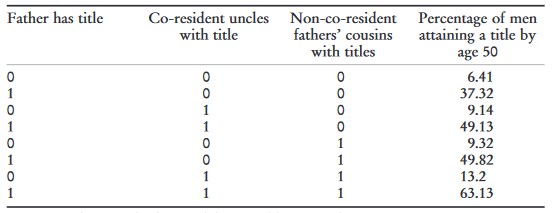
    Although the central thread of the novel is centred around the love story between Jia Baoyu and Lin Daiyu, and it’s tragic ending, many scholars have concluded that this affair only serves as an ancillary tale to highlight a wider issue that Cao Xueqin is addressing in his text, class conflict. Specifically, the decline of the four ‘wealthy’ families described in the novel serves metaphorically to describe the decline of the whole Qing dynasty. Speaking from personal experience, Cao Xueqin reveals a social struggle which pits the defenders of a declining feudal order against the proponents of social change. This reflects the social upheaval that China faced during the Qing reign, the most obvious and visceral examples of such rupturing events being the Opium, Taiping, and Dungan wars of 1839-42, 1850-64, and 1862-77. The Taiping war in particular involved opponents of the Qing state who were seeking to totally redefine the moral and social order of China, but with any conflict issues of social status come to the fore as the populace turns to questioning why it’s leaders allowed the conflict to take place. However, there are many other, less physical, examples of social disparity that Hong Lou Meng covers more closely, such as issues of corruption, greed, and hypocrisy from the “landlord class”. These were issues that contemporary Chinese commentators were especially vocal on. Hong Lou Meng reveals to its readers the true extent of the disconnect between the worlds of rich and poor; portraying the vast and intricate compounds of the elite families as dream-like experiences when compared to the “real world”. This theme of the dream runs through the novel and reinforces the text’s criticisms about the falsity and illusion of the elite lifestyle, maintaining a veneer of grandeur which hides a hidden moral and economic deprivation. The family name ‘佳’ (‘Jia’) is a homophone for the word ‘假’, meaning false. This concept is allegorized by Leng Tzu-hsing in chapter 2 when he states: ‘a centipede dies but never falls down’. Additionally, the ‘never falls down’ section of this metaphor touches on another criticism the book levies at elites, that they are “too big to fail”. This is inextricably linked with the civil examinations system which, despite its promise of equal opportunity, often produced a self-perpetuating system of ‘elite reproduction’. In this system, those who already had ties to elite groups were more likely to attain the same honours.

    Figure 1. Predicted probabilities of attaining a title by age 50 sui according to the characteristics of kin, Liaoning, 1789 – 1909.

    Source: Campbell and Lee, “Social Mobility from a Kinship Perspective: Rural Liaoning, 1789-1909” (2003).

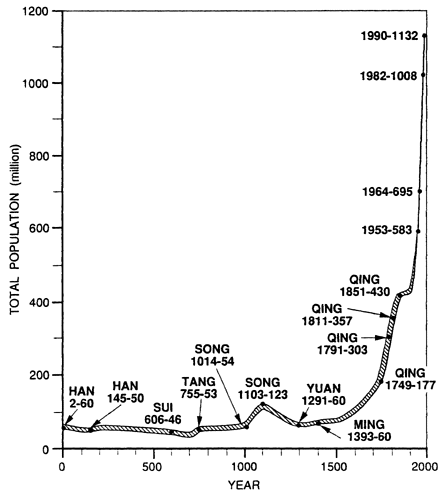
    Hong Lou Meng’s vast cast of characters, which, despite the novel focussing on the upper classes, are predominantly poorly treated slaves, reinforces these criticisms of existing social hierarchies. Only 50 of the 400 named characters could be described as ‘elites’. This may also be a commentary on China’s population growth during the Qing reign, the crowded and confusing cast of characters reflecting commentary on the real-world population boon. This expansion of population came together with expansion of the economy, which also benefitted from increased internal and external trade, including a crucial injection of silver from western nations. What many complained about at the time, and what Hong Lou Meng also laments, is the fear of global capitalism corrupting traditional Chinese morality and way of life. It implores its readers to take a disdainful view of material value in favour of more ethereal goals. In many ways this takes against the Confucian world-view in favour of Buddhist and Taoist philosophies. This immateriality once again ties in with the running themes of falsity and illusion.

    Figure 2. Population of China from 0-2000AD.

    Source: Vaclab Smil, “China’s Environmental Crisis,” (1993).

    The central relationship of Hong Lou Meng exists between Jia Baoyu, Lin Daiyu, and Xue Baochai. Through their interactions, Cao Xueqin explores notions of gender and sexuality. In this region particularly, Cao Xueqin’s text is transgressive. By having Jia Baoyu fall in love with Lin Daiyu instead of the “model woman” of Xue Baochai, Cao Xueqin is criticising his society’s views on women and what their purpose in society should be. However, the competition between Daiyu and Baochai is not one of intelligence against beauty or independence against subservience as you may expect. Both women are strong and attractive female characters. So why is it transgressive for Baoyu to fall in love with one instead of the other? It is because this goes against the Confucian social expectations; Baoyu is expected to marry Baochai but he does not love her. The Confucian principles of Qing society are not interested in such a disorganised principle of “love”, it is a rebellion of disorder and illogicality. Louise Edwards has argued that this form of ‘proto-feminism’ is not as transgressive as I have indicated, she states that it is only young women who are portrayed sympathetically and that their acts of strength are always in some way to benefit the existing patriarchal system. However, although I do not disagree with Edwards’ arguments, I do find it unlikely that an average reader of Hong Lou Meng, both under the Qing and today, would read this into the novel. Therefore, I still think it holds a transgressive message for many people and does question the positions of women and men in Qing society.

    On a meta-narrative level, Hong Lou Meng cannot be taken purely as a novel that remains independent of its context. It is clear that Cao Xueqin was aware of the legacy of novels within which he was writing and how his text differed from, and lay in continuity with, its background. In many ways, Hong Lou Meng is playing with and parodying Ming texts such as Suihu zhuan, Shi diantou, and Wuse shi, particularly in relation to its stone imagery. This association with the Ming fits with Cao Xueqin’s desire to go back to that time which he sees as simpler and less corrupted. His using of Ming fiction tropes suggests an identification with these older literary traditions and his parodying of them suggests that somehow these traditions have been corrupted. Interestingly, the tale of Hong Lou Meng itself lies at this intersection between dynasties, as it is unclear when the story is exactly set. This ‘timeless nature’ of the novel allows Cao Xueqin to escape being directly critical of the Qing regime, which had a history of harsh censorship and literary inquisition. This timelessness serves the double purpose of also playing on traditional Ming fairy-tale-style storytelling techniques. The prolific use of poetry in the text also reveals the significance of this artform to Chinese culture. By the context and the way in which Hong Lou Meng is written, the literary culture of the Qing is revealed to us.

    There is much more that Hong Lou Meng can reveal to its readers, both outside and inside of the areas I have discussed herein. Indeed, the often-overlooked field of arts-based historical research, still today holds many secrets that could grant invaluable insights into the past.

    Author/Publisher: Louis Lorenzo

    First Published: 04th of December 2017

    Last Modified: 04th of December 2017

  • The Generalising Crisis of the 17th Century

    ‘The mid-seventeenth century experienced a “general crisis” in which a wave of economic, social and political upheavals swept over many parts of the northern hemisphere’ (Parker, 2001, p.20)

    To accurately assess this statement, it is necessary to first define the term ‘general crisis’. For the purposes of this article the definition used herein has been devised from a plain amalgam of ‘crisis’ and ‘general’. Crisis being defined as ‘a decisive stage in the progress of anything… applied esp. to times of difficulty’ and general as ‘approximately universal within implied limits’. Therefore, we define ‘general crisis’ as:

    “A period of decisive change that affects a significant proportion of the global population, commonly caused by times of difficulty.”

    By this definition, the ‘general crisis’ theory is not controversial, it is commonplace. Difficulty resulting in change is what you may simply term, “history”, and by extension, historiography itself, the study of change. Certainly the 17th century is no exception to this rule and Parker’s own contribution illustrates this convincingly. His figures on state-breakdowns, popular revolts, wars, and mortality rates are both global and numerous and his use of historiographical metrics gives a clear framework for what is meant by ‘general crisis’. Indeed, this clarity is what makes Parker’s argument superior to the efforts of many who preceded him, including the efforts of two highly influential crisis historians; Eric Hobsbawm and Hugh Trevor-Roper. Hobsbawm’s crisis emphasises trade depression and methods of production whereas Trevor-Roper’s describes a societal and political crisis based on unwieldy bureaucracy. These are fine premises but lack precision, never fully circumscribing ‘general crisis’ in the manner Parker manages. Their lack of empirical clarity has been widely criticised, particularly Trevor-Roper, who was heavily belied in a responding review. Therein, J.H Hexter asserts that ‘Trevor-Roper paints his picture… with such bold strokes and so broad a brush that he occasionally obscures rather than clarifies’.

    The Problem with The Crisis Theory

    However, no matter if we accept the crisis theory, we cannot avoid the debates’ wider issue for which I conclude that the term must be abandoned. Why do we find so many articles on the crisis that begin with a definition rather than a proposition? It is because the ‘crisis’ is no one instance, it is a theoretical grouping of events, the problem being that these events aren’t known quantities. What counts as the ‘general crisis’? Everybody will inevitably reach unique conclusions on this matter because there are no boundaries to choosing what constitutes ‘general crisis’. As we have seen, historians may include whatever they please.

    This results in a debate which keeps returning to definitional matters, an intellectual vacuum in which agreement is unattainable as we continue to talk at cross purposes. The ‘general crisis’ debate is therefore detracting from other possible 17th century discussion, generalising all debate on the period under the uncertain theme of ‘crisis’. To learn further from the 17th century then, we must change the game, because currently we’re all playing by different rules.

    The 17th century is unique in befalling this ‘generalising crisis’ because it lacks identity. The century has ‘Renaissance and Reformation on the one side, Enlightenment and Revolution on the other’, appearing inconspicuous in comparison to its neighbours. Naturally, we wish to seek what defines the 17th century as well. What the ‘general crisis’ theory did, and why it became so popular, was give the 17th century an identity. Unfortunately, this identity was not one that grew from the history, but was imposed upon it. Eric Hobsbawm devised the crisis to suit a Marxist historiography, the purpose always being to “show” a transition from a feudal to a capitalist economy. Such histories encourage cherry picking evidence to serve a conformation bias. This may have been inconsequential had it remained within Marxist historiography, but its subsequent envelopment of 17th century writing has led to an eternally skewed approach to the century, we lack the balance of differing approaches. The reality has become that we are writing within a framework that was purposefully designed to limit our scope.

    That said, this does not mean we may simply discount all generalist historiography. Contrariwise, most of this work is valid in identifying important 17th century occurrences and their origins. The problem lies only in how these events are then interpreted as we attempt to integrate them into a flawed theorem.

    New Approaches to the 17th Century

    Understanding this, we can examine further these ‘economic, social and political upheavals’ and explore several ways in how we can better understand the 17th century without this ‘generalising crisis’ obscuration.

    Looking through prior crisis articles we find the important economic events of the 17th century to be: the trade depression of the 1620s to 1650s, the “tulipomania” of the 1630s, the economic independence of colonies, the multiplication of costly offices, and the thirty years’ war, due to estimates being as high as 50% for national expenditure upon it. A generalist historian must value these factors on how they conform to their crisis thesis, but we can assess them purely on individual merit.

    To begin, we consider how these are exclusively European occurrences, not global. Further to this, we notice that these problems stem categorically from imperialist nations. The ‘tulipomania’ contained to a Dutch economic bubble, the expanding office bureaucracy concentrated within Britain. An increased independence of European colonies factoring toward a European trade depression. The thirty years’ war being motivated by imperialism as much as devoutness. Abandoning a generalist perspective reveals not a ‘Crisis of the European Economy’ generically, but an issue within European empire specifically. We see the economic costs of maintaining empire; particularly how increased economic independence of colonies leads to a long-term desire for political independence, as with North America. We also see a short-term impact of economic depression, all of which can be exacerbated by large-scale war, as with the thirty years’ war.

    Hobsbawm’s article comes almost to this conclusion, describing how ‘large and expanding markets’ brought economic downturn, but his focus on ‘crisis’ leads him toward the irrational conclusion of ‘transition from a feudal to a capitalist economy’. He misses the angle on empire, the maintenance of it, and the effects of war upon it. It becomes evident that allowing economic independence for colonies, especially during wartime, can hurt your economy even more greatly than may first appear. For Britain particularly, this helps us understand the economic roots of the decline of empire in the 20th century. Britain may well have handled its colonies with greater tact during the first and second world wars had it been aware of the consequences that may occur from neglect during wartime. As it was, we see events such as the Bengal famine of 1943 leading to an increased desire for political independence in colonies, one that felt additionally earned due to their efforts in the world wars.

    Politically, the 17th century was defined by a weakening of nobility as a result of a consolidation of power toward the crown as well as an expanding bureaucracy, as before mentioned in economic terms. Despite seeing this across the ‘northern hemisphere’ in both the east and west, and contrary to a generalist view, we only find political crisis on account of this in the west. Quite adversely, the Tokugawa period in Japan (1600-1868) and the Ming dynasty in China (1364-1644) have been determined to be unusually stable leaderships, the Ming dynasty especially, described as ‘one of the greatest eras of orderly government and social stability in human history’. What can we learn from this? We learn that political events cannot be a central factor toward causing crisis. The multitudinous revolts, breakdowns and wars cannot have been politically driven, at least in majority, otherwise we would have seen greater political instability in the east than we do. However, we do still see a degree of volatility in the east, an example being the Shimabara rebellion of 1637-8, so we must search for other factors that may have caused this.

    Social factors haven’t been explored as thoroughly as others when it comes to the general crisis. This is most likely due to the locality of social trends of the time. Very unlike the globality of politics and economy in the 17th century, social movements were far more localised, with only a handful of countries having postal services. Thus, social factors don’t fit well into the ‘general crisis’, because they weren’t very general. However, it is still clear to see the dominating social force in Europe in the 17th century: Religion. The thirty years’ war is a prime example of this but we can also point to the rise of religious polemics like Jonathan Swift, the glorious revolution, the eighty years’ war, and the abolition of the edict of Nantes. Here we do spot a consistency with the east, despite rebellions being rare the Shimabara rebellion of 1637-8 was directly a result of religious tension. Additionally, this was a European-exported tension as the conflict was between the Tokugawa Shogunate and the Roman Catholics. Also in the east, we see the rise of the Sabbatean movement. One conclusion here may be that Europe managed to export its religious troubles to the east and this is why we see some social parallel between the two continents.

    Centrally, this article explores the benefits of approaching the 17th century without thinking of ‘general crisis’. There is a far richer history to be found if you are prepared to cast the century in different lights, the surface of which we have not even scratched in this article. You may disagree with some, or many, of my conclusions, and that’s great. There is no lens through which you must view the 17th century, approach it in a manner which is logical to your interests.

    Author / Publisher: Louis Lorenzo

    First Published: 05th of April 2017

    Last Modified: 05th of April 2017

  • The 17th Century Economic and Political Crises Compared

    The problem with the debate around ‘the general crisis of the 17th century’ arose as soon as the phrase was put to paper, it’s the same problem that plagues debates over ‘brexit’, the central term is nebulous. Historians must decide for themselves what ‘general’ refers to, which causes great conflict like that we see between Hobsbawm and Trevor-Roper. It’s inevitable you will produce different paintings when you aren’t working from the same palette. We will hardly, therefore, draw fair conclusions by simply comparing the two articles, we must look for more useful approaches to this debate. Historians such as Roger B. Merriman have answered this by drawing the conclusion that the crisis did not exist, if there is no central understanding of its existence, how can it? However, this, although logical, is side-stepping the problem rather than tackling it, invalidating all previous discussion is counter-productive. Contributing constructively will be to accept the existence of a general crisis but to create a definitive core idea of what the crisis consisted of. This will allow fair debate and comparative historical writing on this topic. How will we achieve this? The answer is simple; by studying articles on the crisis and finding the key events that bind them together. Hobsbawm and Trevor-Roper are excellent initial candidates for this as they approach the debate from such antithetical positions that finding commonalities in their arguments is certain to reveal the core of this crisis.

    Hobsbawm’s Marxist interpretation is that the crisis is centrally economic whereas Trevor-Roper regards the crisis as primarily political, his viewpoint is concertedly ‘anti-Marxist’. These are such disparate standings that their articles seem bound to draw diametrically opposite conclusions. Indeed, Trevor-Roper’s article is even antagonistic towards the Marxist interpretation. However, their articles are not so divergent, in fact, they complement each other on the import of several key areas. These are: the expansion of empire in the 1500s, the multiplication of crown ‘offices’, the 1620 ‘decay of trade’ and the 30 years’ war (1618-48). These are our first key commonalities that we can use to definitively construe this crisis. So why, if the two articles agree on so much, would Trevor-Roper preface his article with a critique of Hobsbawm’s? Directly put, Trevor-Roper vehemently opposed how Hobsbawm utilised the crisis to justify the Marxist idea of inevitable progression from feudalism to capitalism. This anti-Marxism even went so far as to cause private hostility between Trevor-Roper and Hobsbawm. We can therefore safely write off Trevor-Roper’s initial attack on Hobsbawm as too personally motivated to be taken seriously as a critique. We can focus on what’s important accordingly; the arguments that the two historians forward regarding ‘the general crisis of the 17th century’.

    So how do they agree as wholly as is being implied if they attribute the crisis to different causes? Contrary to first impressions, these two lines of argument are not incompatible but work in tandem, there was both political and economic (alongside social and cultural) attributes to the crisis. Indeed, Hobsbawm himself recognises this commonality of purpose in a following article, remarking that their views “are complementary rather than competitive.”.  As is always the case with history there is a web of causation and no single factor lies withstanding from all others. The two historians are, of course, aware of this but in arguing the significance of their own chosen factor they have overlooked the importance of others.

    Both argue the importance of the expansion of empire during the 1500s. Hobsbawm describes it as “large and expanding markets… of the later 15th and 16th centuries” that had reached “the limits… of feudal or agrarian society”, and now, “when (they) encountered them, (they) entered a period of crisis”. These “limits” that Hobsbawm refers to are the limits of a feudal/manorial society that had little need for trade. In new, large empires, and with movements like the agricultural revolution which was facilitating trade, feudalism was proving ineffective and causing crisis as countries struggled to maintain the trade levels required to sustain themselves. Feudalism wasn’t an aggressive enough system, unlike the more competitive systems that would replace it. Trevor-Roper argues the same point: “The expansion of Europe (created) greater markets” and these “vast new empires (were) vaster than they (could) contain for long without internal change”. This is the same economic argument that Hobsbawm contends; that the economies of these countries had grown too large to be supported by a feudal system of commerce.

    Trevor-Roper furthers this economic point by adding a parallel political factor: “The political structures of Europe are not changed in the sixteenth century: they are stretched to grasp and hold new empires”. By ‘stretching’ he means a “multiplication of ever more costly offices (that) outran the needs of state”. The crowns of Europe were selling bureaucratic ‘offices’ in abundance and were letting the country pick up most of the cost, in Britain, 75% fell on the country: “this was an indirect, if also a cumbrous and exasperating way of taxing the country” Trevor-Roper argues “So ‘the Renaissance State’ consisted, at the bottom, of an ever-expanding bureaucracy which… had by the end of the sixteenth century become a parasitic bureaucracy.” These economic and political arguments are closely related; as the economy begins to hit its “limits” at the end of the 16th century it is pushing the crown to expand a “parasitic” bureaucracy which makes money for them in the short term. However, longer term it is further damaging the economy as the superfluous expenses continue to increase.

    Another significant factor the two historians point to is the universal depression of 1620, what Trevor-Roper refers to as the “decay of trade”. Hobsbawm describes it as “a general balance of rising and declining trade (that) would produce export figures which did not rise significantly between 1620 and 1660”. As you may imagine, this caused recession in the new societies of trade and empire and was caused by the debasement of currency in the early 1600s. This was the end of great economic expansion and it brought the frivolous expenditure of the 16th century into sharp clarity. The rise of puritanism during this time clearly shows that people were sick of the “gilded merry-go-round”, this is when the weight of the crown offices and the limits of feudalism began to show themselves, having been previously masked by a boom economy.  

    Both also concur over the significance of the 30 years’ war. Trevor-Roper arguing that the war “undoubtedly prepared the groundwork for revolution” and Hobsbawm that it “intensified the crisis”. The war made the illnesses of Europe’s economy acute, estimates are as high as 50% for national expenditure on the war, from all parties. It’s also important in how it diminished the influence of the pope, allowing puritanism to spread at an unusually fast rate and animosity toward traditional structures of power with it. It’s noteworthy that both historians don’t place as much emphasis on the war as you might expect. They present it as a more minor force that furthered the ‘greater’ change brought by political and economic factors. This can certainly be attributed to the fact that it neither falls strictly under economic or political history, but military history. As such the effects of the war in causing the general crisis are somewhat overlooked. However, the fact that it’s in both articles yet in neither historians’ chosen field proves its significance.

    In the interests of brevity, we will not discuss factors that Hobsbawm and Trevor-Roper have not spoken on: the expansion of the middle class, intellectual revolution, famine, disease, and many others. What’s clear is that more research needs to be done into these factors that straddle the multitudinous accounts on the crisis. But here we have the start, it’s not so that Hobsbawm and Trevor-Roper disagree, whatever their own thoughts on the matter. The political and the economic crises, specifically linked to the expansion of empire and the multiplication of ‘offices’, are two sides of the same coin and two of these ‘base factors’ that can be used to build a cohesive understanding on this crisis. They work alongside factors such as the decay of trade and the 30 years’ war to create separate crises in different countries which produce a sum-total of general crisis in the 17th century.

    Author / Publisher: Louis Lorenzo

    First Published: 05th of April 2017

    Last Modified: 15th of May 2017 (Grammar Corrections)