<- Chapter 3 – Conclusion ->
- 4.1 Introduction: The Village on the Hill
- 4.2 Destruction
- 4.3 Construction
- 4.4 Conclusion: Continuities of Experience in Adaptive Environments
- References
4.1 Introduction: The Village on the Hill
Chopwell is a former pit-village of 2,500 people situated high on a hill overlooking the Derwent valley.1 Due to its proximity to urban areas like Gateshead and processes of suburbanisation that will be examined herein, the late-20th and early 21st centuries saw it take on many of the characteristics of a dormitory town, meaning I describe its character as semi-rural. Growing up in Newcastle, I knew the village better than most other villages surrounding the city because of Chopwell Wood, the largest woodland in Tyne and Wear criss-crossed with walking and biking trails, and a pop-up Christmas-tree business come winter. The wood sits to Chopwell’s east, is far larger than the village itself, and spans over and down the hill towards the River Derwent to the south. The site is ancient but was almost entirely felled for construction timber for ships and buildings in the 17th and 18th centuries and was then replanted as a plantation woodland in the late 19th and early 20th centuries.2 The timber from the forest (primarily planted as larch) was used by Chopwell Colliery during this time and the forest became open to the public after it was taken over by the Forestry Commission (FC) in 1923. A report in 1951 revealed that it was popular with locals, stating that ‘the amount of trespass is great’ (trespass being a civil offence which the FC did not prosecute against in Chopwell at this time).3
The great majority of trees seen today in Chopwell Wood are coniferous larches planted after the second world war but, particularly following the closure of Chopwell Colliery in 1966 and an overall decline in the timber market, the second half of the 20th century saw the wood start to transition toward becoming a site for recreational and conservation purposes. Mirroring a similar process which the FC had used to open Kielder (the North East’s and England’s largest forest) as a ‘Forest Park’ in 1956, the 1960s and 1970s saw a small number of new broadleaf trees planted or allowed to grow.4 In 1990 the site was designated a Plantation on Ancient Woodland (PAW), meaning a new official policy was adopted to preserve native species and to ultimately ‘restore’ Chopwell ‘to ancient semi-natural woodland’.5 As of 2019, the wood was 68% coniferous to 32% broadleaved, but that ratio will continue to shift as the plantation trees reach maturity and are felled.6 The Forestry Commission’s post-war work ultimately led to Chopwell receiving ‘Woodland Park’ status in 1994.7 This was not an uncomplicated process however as three years prior, in 1991, the Friends of Chopwell Wood community group had been set up in response to – under a Thatcherite push for privatisation – the FC considering selling off the wood.8 This was also evidence of a growing sense of local ownership and investment in the wood alongside growing distrust of the FC, which had a notable history of clashing with grassroots conservation movements over commercial incentives, notably on Dartmoor from the 1940s through to the 1970s.9
Indeed, during my interviews the wood emerged as a key feature and source of pride for the community. However, when my research began, I quickly realised that whilst I had visited the wood quite often, I had never walked around Chopwell’s streets. In contrast to the environment of the wood the village is of nineteenth century industrial character, having expanded massively to serve the Consett Iron Company in the 1890s and 1910s.10 The universality with which the Victorians applied this terraced industrial pattern of development and Chopwell’s hilltop position meant that – stepping off the bus – I immediately saw echoes of Byker in the village. Whilst I would soon discover the many differences between the two places, my first thought was that Chopwell felt like a glimpse into what Old Byker would have been like today, had it not been largely demolished. As time went on however, I realised that Chopwell’s broader environment meant that it offered its children experiences that Byker, Old or New, did not. Similarly, certain forms of play and environmental interaction available to children in Byker were not so accessible to Chopwell’s young people. Drawing out the similarities and differences between these two North East communities is particularly interesting therefore because of the ‘village in the city’ ethos with which the walled community of New Byker was designed. As a more traditional village with a similar industrial heritage, Chopwell therefore represents an apt comparison for exploring childhood experiences of, and relationships with, play in de-industrial environments of the 1980s, 1990s, and 2000s.11
The little academic interest paid to Chopwell is more representative of most de-industrialised North East communities than Byker. This is understandable as where Konttinen’s photography and Erskine’s architectural ambition thrust Byker onto the world stage as a place of change and interest, Chopwell’s fate of managed decline was unremarkable. Additionally, most historical works have tended to favour higher-profile urban forms of de-industrialisation over rural examples. As Jim Tomlinosn notes, and the evidence of this chapter supports, this is partly because processes of de-industrialisation often manifested environmentally differently in rural areas, often leading to expansion through new housing developments in contrast to the popular image of urban demolition associated with the ‘de-industrialisation’ term.12
Most historical works to mention Chopwell have done so only in passing as part of larger histories of the North East, mining, and working-class life; for example Robert Gildea’s writing on the 1984 miners strikes mentions the village briefly.13 However one chapter in Chopwell’s history has attracted greater interest from academics: the village’s early 20th century involvement with the British communist movement. Lewis Mates has written about Chopwell earning the moniker ‘Little Moscow’ in the 1920s largely due to its miners’ banner featuring Marx, Lenin, and Keir Hardie.14 Separately, Mates has also written on the 1926 general strike where the union flag at Chopwell town hall was taken down and replaced with the soviet flag, further cementing the village’s reputation as a Communist enclave.15 Appropriately for this thesis, Thomas Linehan has also uncovered the story of Chopwell’s children in 1927, 200 of which boycotted their school’s celebration of ‘Empire Day’ in favour of their own ‘Red Empire Day’ which saw ‘stirring speeches, banners, red flags and heartily rendered revolutionary songs’.16
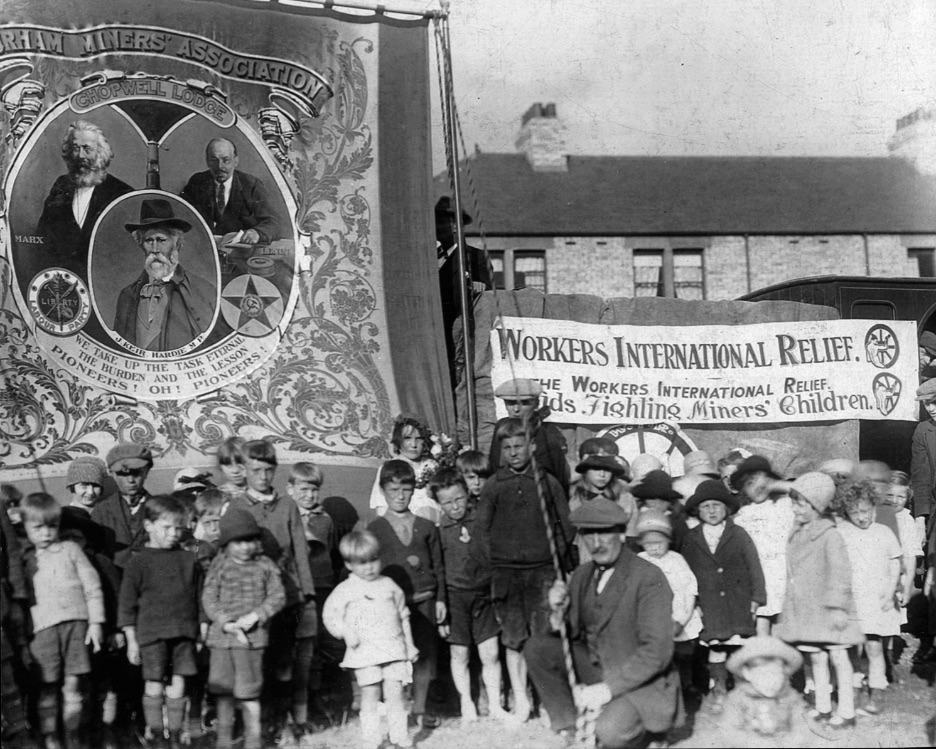
Figure I. Children of ‘Red Chopwell’ pose with the banner.17
Kevin Morgan recounts the local legend that, during the 1920s, the government positioned a ship in the North Sea, guns pointed at Chopwell, under the belief that if a Bolshevik revolution were to erupt in Britain, it would originate there.18 There is no evidence this ever happened, but the existence of the myth offers a glimpse into the village’s distinctive character and its sense of exceptionalism. The allure of this radical aspect of Chopwell’s past has captured the interest of locals and academics alike and gives some explanation as to why other periods in the village’s history have been less studied. Increasingly over the 2000s and 2010s community groups were formed that aimed to celebrate and rejuvenate the village and they often pointed to Chopwell’s communist history as an eye-catching example of its exceptionalism. Indeed, as is typical of most British communities, local historians and groups have written more about Chopwell than academic historians, and some of the participants I interviewed were members of local interest groups.
4.1.1 The Participants
The oral testimony in this chapter will provide insight into the recollections of daily life for those who grew up in Chopwell during an overlooked period in its history. It will explore how children shaped and were shaped by their environment during a period of industrial decline and regeneration in a rural/semi-rural context. Mirroring how I approached Byker, firstly this chapter will contextualise the research undertaken with a brief history of play in ‘Old Chopwell’, ideas of which were so often called upon in the interviews I conducted. Then it will use the gathered oral testimonies to define and assess the stories of Chopwell’s children as they grew up in a rapidly changing world of new technological, economic, social, and environmental realities.
To allow for comparison with Byker, this will be done under the same structural format using the themes of ‘destruction’ and ‘construction’. This framing draws out narratives of change during the period in terms of ‘loss’ and ‘gain’, which reflects how the participants talked about their community’s past. Within this bisected structure, the destruction and construction sections will divide their analysis of the oral testimony and historical material into five key topics, again as in the Byker chapter. On the theme of destruction, these are: suburbanisation, the negative effect of increased cars, antisocial behaviour, and fragmentation of the community. On the theme of construction two key sites of play are identified: the Derwent River and Chopwell Wood, that are used to talk about risk, temporal and spatial restrictions, and nature as central to the formation of a new Chopwell identity. I also explore how the concept of ‘inhabiting’ space, and how changes in environment, community, and parenting practices led to younger participants describing more contingent, less immersed or ‘inhabited’ experiences of Chopwell’s outdoor environments.
I asked for volunteers who had grown up in Chopwell between 1980-2010 and conducted interviews with fourteen residents between 10 March 2023 and 20 August 2023. I talked to fewer people than in Byker because there was a smaller pool from which to source willing participants (2,500 population compared to the Byker estate’s 9,500) and to keep the scope of the thesis manageable.19 To gather testimony, I postered noticeboards in local shops, at the community centre, and in The Bank community café. Recruiting through local Facebook groups once again proved the most effective method, mostly the ‘Chopwell Regeneration Group’ (CRG) page, which connected me with a number of people interested in Chopwell’s heritage and future. The CRG comprises a group of people actively invested in the improvement of Chopwell and raises money to fund projects, most notably ‘The Bank’ community café (in the old Bank on Derwent Street). The interviews were arranged according to the needs of each participant, with three being conducted online, and the rest conducted in-person at people’s homes, cars, and around the neighbourhood in walking interviews. My place in this process was as more of an outsider than I had been in Byker. I’m local to the North East, and had visited Chopwell Wood before, but far less than I had Byker and I knew nobody in the village. As a child of the city, the semi-rural character of Chopwell was especially unfamiliar to me. The extent of children’s ranges of play, for example, felt enormous compared to the Byker testimonies and my own experiences of growing up in Newcastle.
Participants explained to me various aspects of the village’s geography, history, and terminology. For example, ‘The River Streets’ or ‘The Streets’ is the term used for the old Victorian centre of Chopwell, as compared to the newer developments around it which were developed with a far more suburban style of street pattern. Indeed, in the beginning being so unfamiliar with the locality was a barrier at times, halting conversation to ask participants to define terms. In other ways however, my unfamiliarity meant participants were forced to consider their community and upbringing from an outside perspective; for some, this was an enjoyable exercise in introspection that brought out interesting reflections. As Sandra Marie Borger has also explained, ‘outsider’ status can lead to participants viewing the interviewer as more neutral, which can foster openness and reduce assumptions about what is ‘given’ knowledge.20 Without shared connection to the place, it was the case, as in Byker, that personality and the building of relationship between interviewer and interviewee played an important role in making participants feel comfortable enough to talk openly about their past.21
In the semi-structured interviews I approached participants with the same set of questions I had used in Byker on themes of play, safety, community, and technology. Within these themes I asked participants about de-industrialising playscapes, games and pranks linked to particular environmental features or events, perceptions of safety and negotiation of restrictions, communal child-minding, the social role of shops, animals, nature, and weather, differences in gender activities and parenting; den making; vandalism; drugs; and technology. Interviewees were also asked to consider how growing up in Chopwell has changed since they were young and – for those participants that were parents – how they raised their children in comparison to how they were raised. Conversation often progressed onto topics outside of my pre-set list of questions, and following Valerie Janesick’s ‘creative practice’ approach to interviewing, I was happy to allow participants to talk about what seemed important to them about growing up in Chopwell, ‘creating room to discover meaning’ and allowing new ideas I had not yet considered.22
The self-selecting sample I worked with represented residents who strongly identified with Chopwell and felt connected to its past. It necessarily does not, therefore, represent newer arrivals to the community with whom established residents often felt disconnected themselves. All the participants gave permission for their testimony to be used for research purposes, though four did so under condition of using their first name only. In total, seven women and seven men were interviewed. Because those that came forward to speak with me were those with the most interest and investment in talking about Chopwell’s history, this equal split suggests that gender was less significant in Chopwell than in Byker in the feeling of connection to, and ownership of, place. One contributing factor to this may have been the differing impacts de-industrialisation wrought on the two communities. In the 1980s Byker saw many new families move into the area to replace the old families that had been compulsorily removed. In Chopwell, the village’s population continued a slow decline as unemployment drove people to seek work elsewhere. Those families that remained to become participants in this thesis became a group of residents with some of the strongest connections to the place, inculcating a lasting sense of belonging that decades later would influence their decision to respond to my call for an interview. Of those interviewed, one was a child of the 1970s, six of the 1980s, four of the 1990s, and three of the 2000s.
| PARTICIPANTS, CHOPWELL | |||
| Name | Gender | ‘Child of’ Decade | Interview Format |
| Ruth Armstrong | F | 1970s | In-Person |
| Dianne Henry | F | 1980s | Walking |
| Lloyd Hardman | M | 1980s | In-Person |
| Lynn Huggins | F | 1980s | Walking |
| Paula Stonebanks | F | 1980s | In-Person |
| Richard Judd | M | 1980s | Online |
| Ronnie Stuart | M | 1980s | Walking |
| Ann | F | 1990s | Online |
| David | M | 1990s | Online |
| Jude Murphy | M | 1990s | Walking |
| Sarah | F | 1990s | Walking |
| Billy Robinson | M | 2000s | Walking |
| John | M | 2000s | In-Person |
| Julya Scott | F | 2000s | In-Person |
4.1.2 ‘Never Thought We Were Hard Done By’: Play in The Streets of Old Chopwell
To better understand the changes in Chopwell childhoods over the 1980s, 1990s, and 2000s, I conducted an interview with Ruth Armstrong, a child of the 1970s. Drawing a dividing line between ‘Old’ from ‘New’ Chopwell, however, proved to be a considerably less useful way of understanding its history than it was for Byker. Instead, Ruth’s interview served to highlight continuities: the ways in which de-industrial half-life lasted longer and stronger as a presence in children’s lives in Chopwell than it did in Byker. A key reason for this was – far from being demolished and rebuilt – in 1964 Chopwell was one of 121 towns and villages in County Durham designated as ‘category D’, meaning it was earmarked by the council to be demolished and never rebuilt.23 Several neighbouring villages within walking distance of Chopwell were also categorised, including Blackhall Mill, High Spen, and Hamsterley.
This policy was unique to County Durham during this period and identified settlements deemed economically unviable because of the decline of the coal mining industry that had been so central to the North East’s economy since the late 18th century. However, the policy largely failed in its stated aims as only a few villages were demolished before the idea was abandoned in 1977. In Chopwell the designation was removed earlier in 1972. As Gary Pattison argues, a major factor in the failure of the policy was the resistance that planners faced from residents, finding that the social cohesion and emotional attachment to place in these working-class communities was stronger than they anticipated.24 Because the designation also meant a ban on any new investment Category D villages saw almost no change in their built environments during the 1960s and 1970s apart from demolition or dilapidation, and communities like Chopwell were brought together in defiance of the order, relying on a social support network formed by and around the coal mining industry.25
This meant much of the testimony Ruth gave me described a childhood in the 1970s that, despite the closure of the mine, still participated in many of the ways of life typical of a mining community. Furthermore, the slow pace of environmental change in Chopwell meant that Ruth’s testimony was more continuous with the 1980s participants than Pauline’s was for Byker. Indeed the village had changed little enough by 2010 that it famously was used in a Hovis TV advert to double for ‘the 1970s’, which partly depicts a woman’s childhood playing in The Streets and green spaces.26 Key differences did begin to emerge however towards the end of the 20th century based fundamentally in a change in the community’s function as it shifted away from an early 20th century traditional working-class culture built around industry and toward a far more atomised commuting and retirement community in the neoliberal era (by 2006 over half of Chopwell residents were over 60).27 The council started to develop small pockets of new housing along Mill Road toward the end of the 1970s, primarily bungalows that catered to older demographics. This leaves Ruth’s testimony, therefore, as a source describing the last years when Chopwell’s community was almost purely comprised of traditional working-class mining-community families.
To explore this history, I focus on what, in terms of the built environment is Chopwell’s central focus: ‘The Streets’. These are a collection of colliery housing terraces, each bearing the name of a river, and around which Chopwell’s newer housing developments are clustered. These streets – similar to those that were demolished in Byker – continue to hold a symbolic centrality within the village, serving as a reflection of more recent transformations in the community as well as a symbol of its industrial past. Their story therefore is an excellent catalyst around which to build up a history of the village at large.
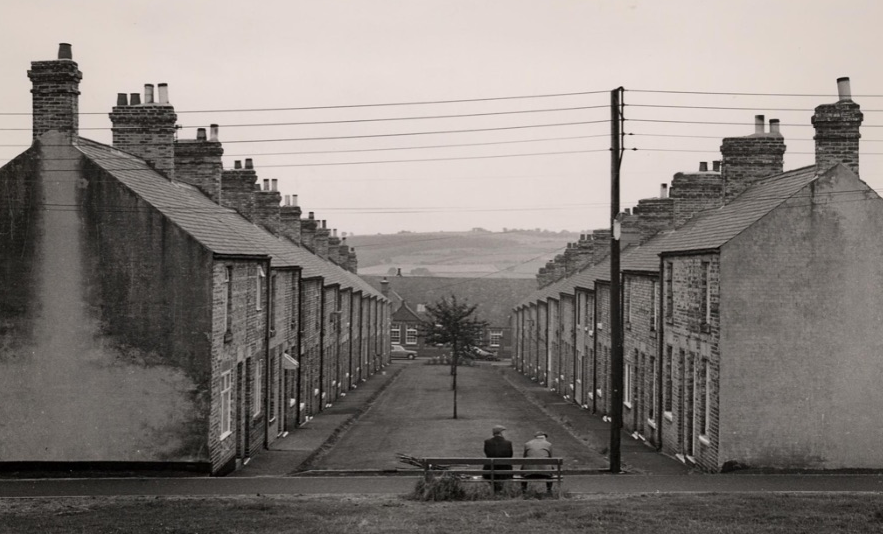
Figure II. Wansbeck Street, The Streets, 1981. School at end of street, bench, newly planted trees.28
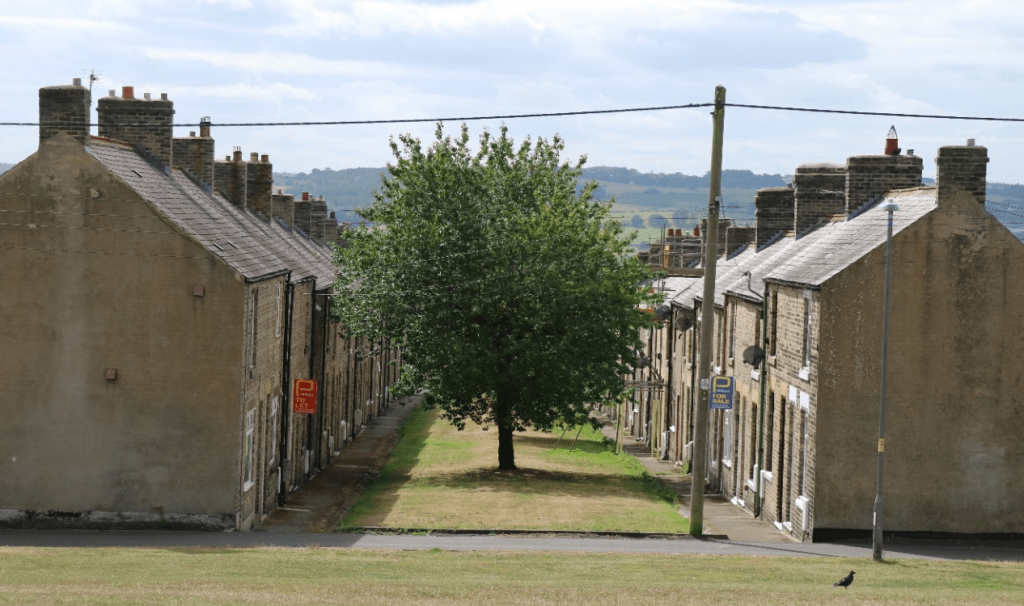
Figure III. Wansbeck Street, The Streets, 2025. School at end of street now demolished, bench removed, ‘to let’ and ‘for sale’ signs.29
The importance of The Streets to Chopwellians’ conceptualisations of their community became increasingly evident as the interviews progressed. Every participant mentioned them, with two key narratives emerging. The first was rooted in a community memory of the village’s industrial ‘heyday’ before the Category D designation and the closure of the pit in 1966, popularly remembered as a time of near full male employment in the coal-mining industry and strong working-class community cohesion. This period of Chopwell’s past predated all the participants I interviewed, but the pit’s industrial legacy left lasting reminders in both landscape and memory, from the memorialised colliery wheel in the centre of town to the old coal ‘tubway’ lines cutting through Chopwell Wood, which ceased operation in 1961.30 The function of this memory to participants, as in many de-industrial communities, was to serve as a source of pride for their heritage and also an example of the level of success (chiefly economic and social) they would like Chopwell to achieve in the future.
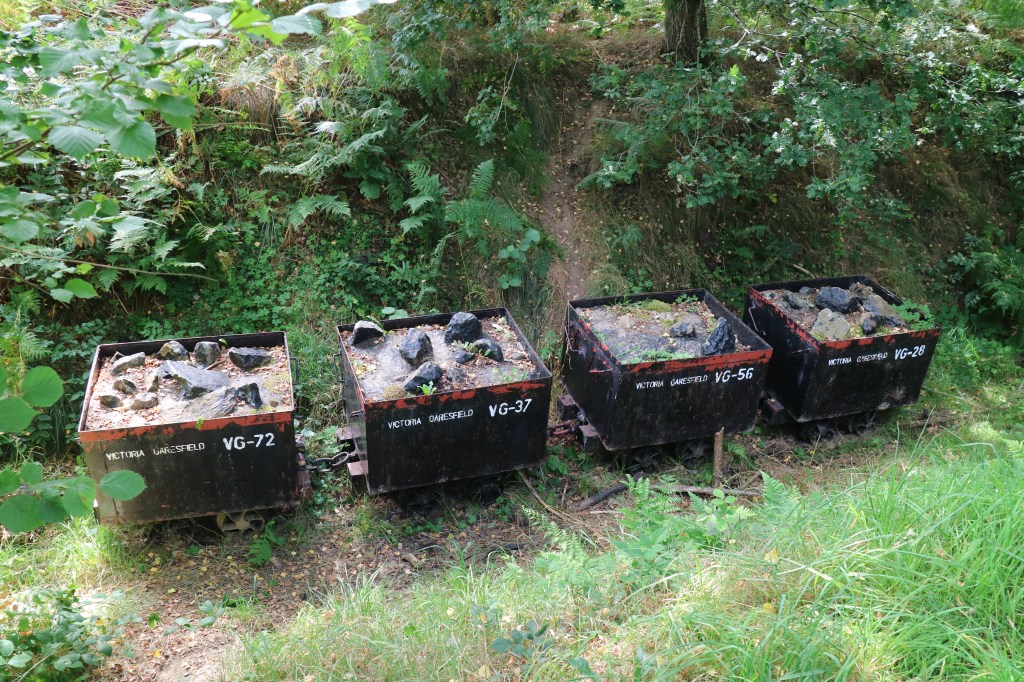
Figure IV. Preserved tubway wagon in Chopwell Wood.31
The second narrative, directly linked to the ‘heyday’, emerged following the designation of Chopwell as a ‘category D’ village and closure of the pit.32 With the lynchpin of the village’s economy gone, many of the shops in and around The Streets soon became vacant, people moved away, and their houses were sold off to absentee landlords.33 Participants talked about how things ‘went downhill’ as ‘problem’ tenants were introduced, the housing stock was inadequately maintained, commuting became more prevalent to work at nearby employment centres like Consett and the Team Valley trading estate, and a prevailing sentiment emerged that Chopwell had been forsaken, symbolised by the declining condition of the The Streets.34 The sense of being ‘unwanted’ was further exacerbated when the village was reallocated to fall under Gateshead Local Authority instead of County Durham in 1974.35 For the participants I talked to, however, this feeling of mistreatment did not dishearten but rather emboldened their sense of pride in the community. For example:
People talk it down a lot. Some people just say basically that it’s, you know, a bit shit. But I don’t think it’s that at all. We’ve got all this green space, and the history is really fascinating with the pit and, you know, Lenin Terrace and all that. I think some people just don’t really realise what we’ve got here. (Ann, F, 1990s)
Lenin Terrace is one of several council-built streets in Chopwell named after prominent socialist and communist figures in the 1920s that helped the village earn the moniker ‘Little Moscow’ during the 20th century.36 Other street names include Marx Terrace, E.D. Morel Terrace, Owen Terrace, and Dalton Terrace.37 Aside from their radicalism, the construction of these terraces also demonstrates there was a strong faith within the local community during the 1920s in the longevity of the coal industry, and the associated secure employment and tightly knit communities that came with it.
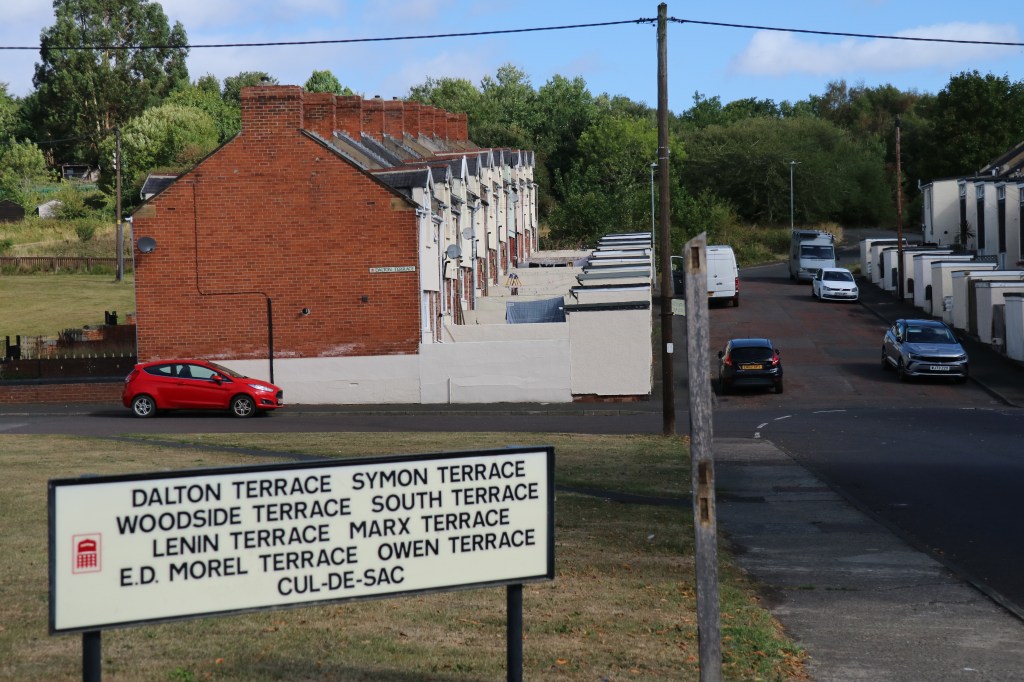
Figure V. The section of Chopwell built in the 1920s with its many socialist street names.38
Like the environmental reminders of the village’s industrial heritage that linger in its de-industrial half-life, these street names help to keep Chopwell’s radical political past alive in memory, alongside more modern reminders like The Red House micropub (opened 2018).
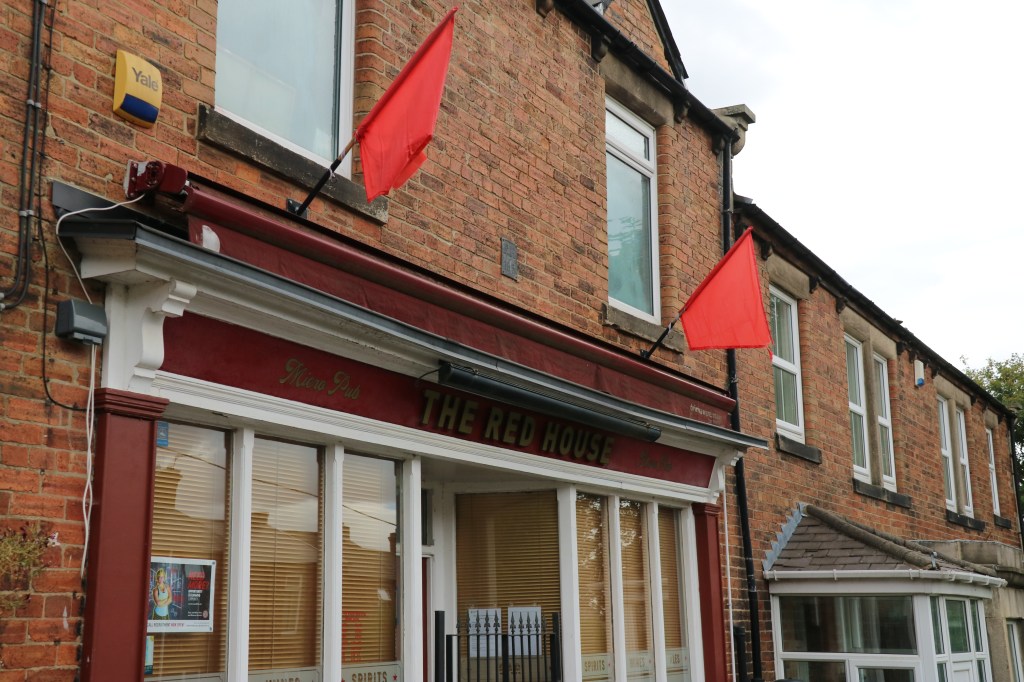
Figure VI. The Red House.39
Ann’s positive take on her community’s history is typical of the interviews I conducted, in that she held pride in it but noted that others felt less so. Because of the participants for this study being self-selecting, this was a likely outcome, and indeed everybody I talked to had good things to say about Chopwell and overall enjoyed living there, despite acknowledging aspects of the village that had declined over the years, such as feelings of community cohesion and the closure of local shops.
Due to the category D designation, Ruth’s childhood growing up in and around The Streets in the 1970s occurred within a context of there having been no new building in the village for many years. As such, there was no concept of an ‘Old’ or ‘New’ Chopwell. Only slowly over the next few decades as new housing developments were built did that idea emerge, with the newer areas being built for a wealthier demographic. For example in 2005 houses on the old river-themed terraces sold for around £45,000 (and indeed still do in 2025), whereas less than 100 metres away houses on the newly-built West Meadows estate sold for £220,000, attracting a new demographic of commuters and retirees.40 Increasingly The Streets of Old Chopwell came to be seen as more of an undesirable area in the community and as such, even amongst the participants in this study who grew up long after the closure of the mine, the idea that Chopwell – and its historic centre in particular – ‘isn’t what it was’ was very present, built on a reservoir of enduring communal memories that harkened back to the relative economic stability of the industrial era.41 Indeed, it was far more common for participants in Chopwell to invoke the community’s industrial heritage, even though they had not lived alongside the mine themselves, than in Byker. The in-place and walking interviews I conducted made it clear that in part this was environmentally stimulated because whilst Byker was ‘remade’ for a new era, Chopwell was left to fall into decline, and thus many more environmental vestiges of industry were left behind to act as cues 60 years later for topics of conversation in my interviews.
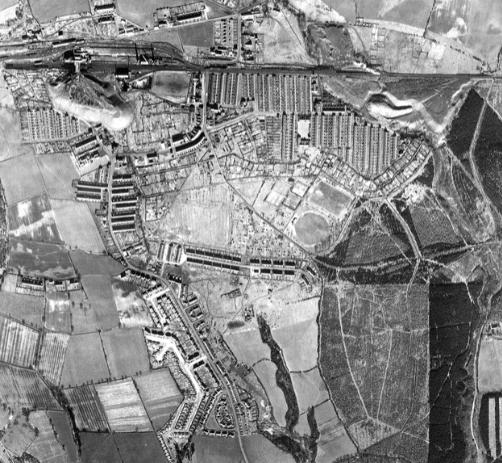
Figure VII. Chopwell from above, 1950.42 Note the parallel lines of ‘The Streets’ and ‘J’ curve of Derwent Street (Centre-North). Chopwell Wood (East). Postwar detached and semi-detached development (South). Mining industry (North-West).
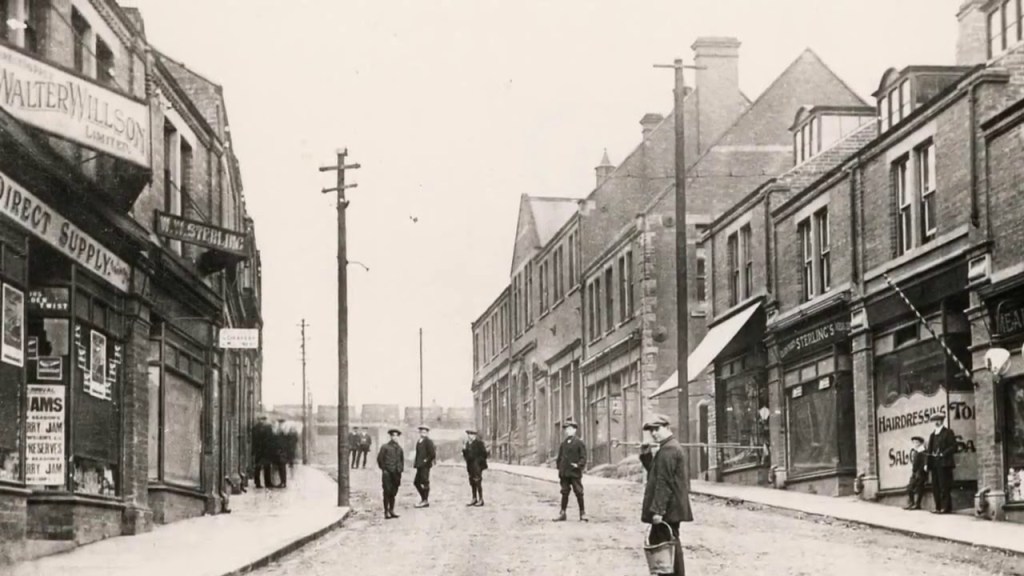
Figure VIII. Derwent street c.1915. Freight train visible in the background.43
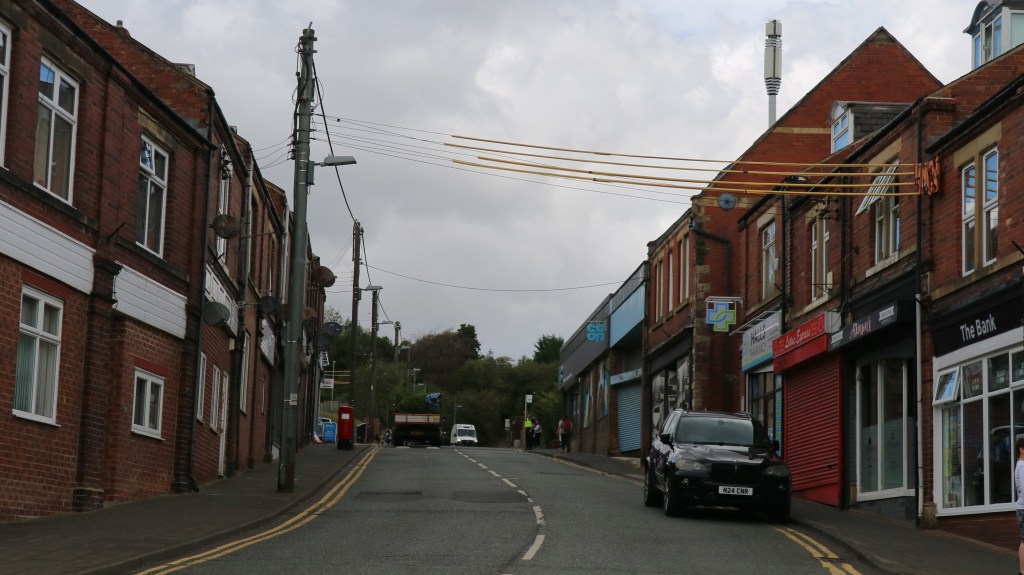
Figure IX. Derwent Street 2025, rail line in background now a green space. Shop fronts (left) converted into housing. Electricity pylon moved into pavement away from the road.44
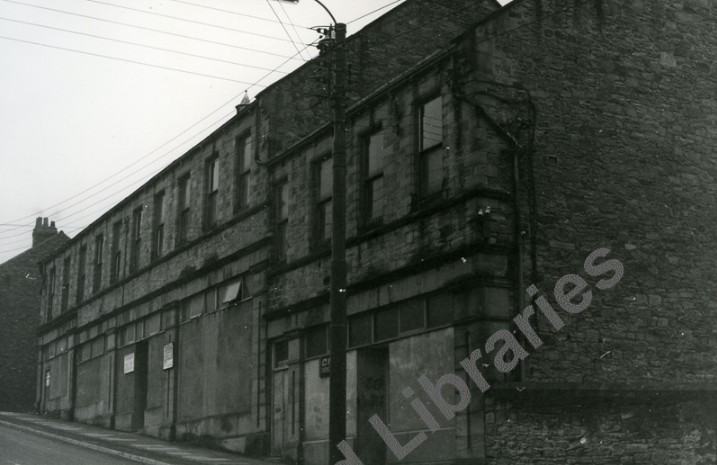
Figure X. Derwent Street in 1977, shop fronts boarded up.45
During Ruth’s childhood the different housing clusters around Chopwell still largely constituted of families that were their originally intended occupants:
The Streets were for the pitmen, they were the core of it. The ‘Colliery Streets’ we called them. Nowadays they say ‘River Streets’, but not when I was a bairn… Then over there, the west side, they had the nicer houses. They were for those who were a bit better off, you know? People like the carpenter or a shopkeeper maybe. (Ruth, F, 1970s)
This recollection points to the prosperity that full employment had brought to the village, with services to suit the waged population. The change in terminology from ‘colliery’ to ‘river’ streets hints at the processes of de-industrialisation and ruralisation that have occurred in the Chopwell community’s understanding of itself during Ruth’s lifetime. Though Ruth grew up after the closure of the colliery, not enough time had passed for its absence to fundamentally alter the demographic makeup of the community or its identity as a coal-mining village. Since The Streets had been built Chopwell’s singular function as a village catering to the needs of the mine were reflected in its physical layout, carrying a distinct class-based dimension that persisted long after it closed.46 For example, at the village’s founding the streets of Ramsay Road, Greenhead Terrace, and Clayton Terrace at the higher northern section of the village were designated for the bosses’ residences – a few houses segregated from the rest of the community by the railway and which benefitted from fresher air, a nicer view, and the prevailing wind blowing the village’s smoke and dust away from them. One hundred years later the West Meadows development in the 2000s was built a little downhill in the same area, which similarly catered to wealthier buyers except at a much bigger scale, separated from The Streets by a band of greenery that once was the rail line.47
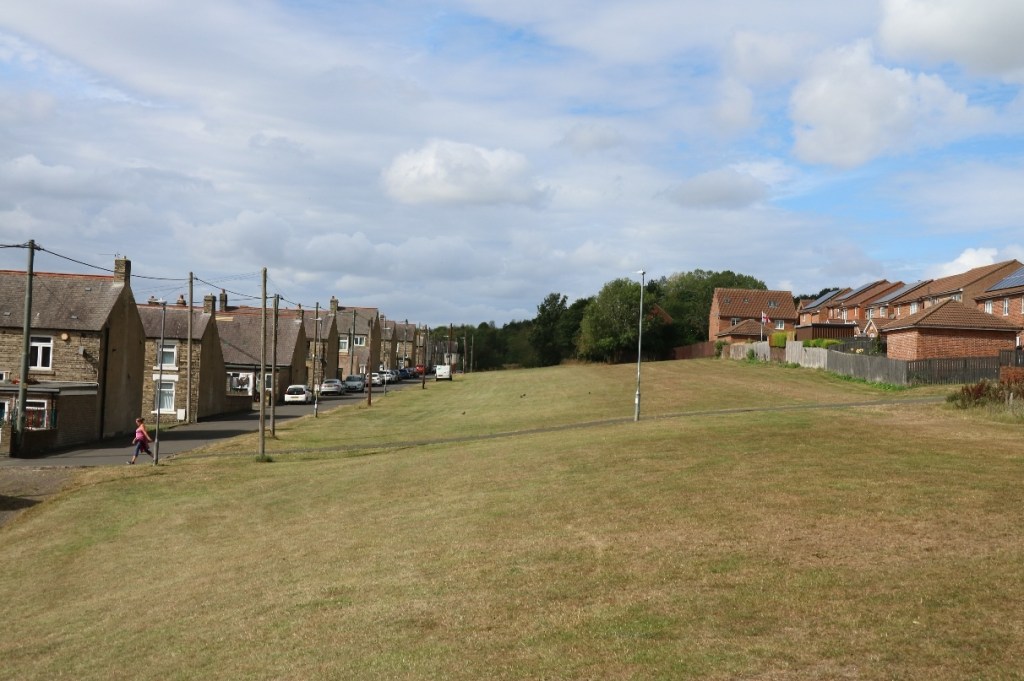
Figure XI. The divide between The Streets (left) and West Meadows (right).48
In later interviews I recognised Ruth’s characterisation of The Streets as the working-class heart of the village; ‘forsaken’ but holding a symbolic role as a site that embodied Chopwell’s resilience. Although class was not generally overtly mentioned by later participants, the communal sense of loss and nostalgia for Old Chopwell that I frequently encountered more obviously called on working class aspects of the community’s history than in Byker. Partly this is attributable to Chopwell’s memorable communist history, partly to the efforts of Chopwellians themselves, and partly to the ever-present environmental cues that helped to instil and perpetuate a powerful collective memory of the village’s industrial heritage.
Community spirit and cohesion are recurring themes in narratives of de-industrialised working-class communities, often emerging in response to economic adversity and social fragmentation.49 Ruth’s recollections of growing up in Chopwell during the 1970s – the village’s first decade of de-industrialisation – frequently centred on this idea that ‘the community looked out for each other’.
We didn’t – nobody had any money really. But you know we never thought that we were hard done by… We didn’t go hungry, we kept a big garden. Lots of people did. We were happy playing out. (Ruth, F, 1970s)
Ruth’s use of the collective ‘we’ acknowledges the shared nature of economic hardship in the village. Her reference to reliance on home-grown food underlines this point whilst also being an example of an aspect of Chopwell’s traditional working-class culture that faded in importance in decades after.50 Allotments had arisen as a working-class practice (in rural communities especially) as a means of subsistence and maintaining living standards amidst a context of population growth, enclosure, and declining rural industries in the 19th century. They were also often encouraged by land and business owners because they were seen to align with and encourage Victorian-rooted values of industriousness, social order, and respectability.51 The practice of cultivating large gardens and allotments was a feature of Chopwell’s de-industrial half-life and, notably, was absent from the testimonies of participants who grew up in the 1980s and 1990s as increasing economic precarity and a growing necessity for dual-income households curtailed the time and resources available to maintain substantial plots. The growing availability and accessibility of cheap processed foods also quickened this trend, with Chopwell residents drawn to the nearby town of Consett and the MetroCentre (the UK’s second largest shopping centre) which opened a 20-minute drive away in 1986.52
The decline of allotments is also demonstrative of a change in social expectations away from the more collective Victorian idea of ‘respectability’ and toward neoliberal concepts of individual self-worth. Ruth’s Chopwell was still quite self-contained, one where people needed to rely on the village’s people and land to support them. This was reflected in her experience of growing up where ‘you never went out of Choppy, you had things to do on The Streets’. Later participants placed more emphasis on Chopwell Wood and travel to surrounding communities as important environments of their childhoods. This was because, as cars brought new mobilities and the community-tightening influence of the pit faded, its horizons broadened. Ruth’s childhood by contrast was the most self-contained of the Chopwell participants, more similar in scope to how Byker participants described growing up in the 1980s. There was no wall around Chopwell, but the villages relative physical isolation and de-industrial half-life and hardship kept social bonds strong.
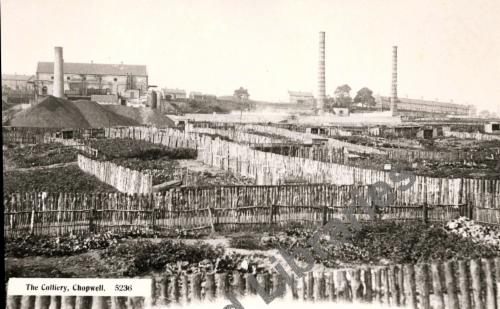
Figure XII. Chopwell colliery at its full extent in 1950, allotments foreground. Bosses Ramsay Road housing terrace top right.53
Ruth’s testimony did not focus on hardship however, preferring instead to talk about the ways ‘we were happy playing out’. All participants of later decades had stories of playing out in places like The Streets, Chopwell Wood, and the Derwent River, but Ruth’s 1970s recollections were set apart by the level of independence she was afforded. She told me that she ‘would just leave the house… no need to ask or get permission like it would be [now]. I’d go knock round at my friend Kerry’s and if she was free she’d come out. I had a big group of friends so there was always somebody’. Whilst this level of independence increasingly came to be seen as a lack of oversight, this was considered safe and normal at the time because – as in Old Byker – the community at large could be trusted to keep passive watch over its children.54 However in a rural context where sites of play include a large and completely unsupervised woodland this explanation is not totally sufficient. Ruth’s remark that she had ‘a big group of friends’ partly explains this as it shows that the community had a lot of children in it who knew one another, and thus a critical mass available to keep watch on each other. It is also simply the case that rising threats of stranger-danger and cars that came to be at the forefront of parents’ minds in the 1980s had not yet become prevalent. Certainly, Ruth’s recollection fits within nostalgic narratives prevalent across the North East that glamorise post-war working-class life, but the decline of free outdoor play is a real trend that the historical evidence in this thesis supports and seeks to understand.
Ruth’s testimony reveals a Chopwell in the 1970s that, despite the closure of the pit, provided a childhood still very much shaped by it economically, environmentally, and culturally. The village’s social structure allowed informal oversight of children and practices such as relying on home-grown food that stemmed from 19th century industrial traditions were still practised – although rapidly declining in a community caught between its industrial past and an uncertain post-industrial future. The slow dereliction of The Streets at this time symbolised decline in the community at large and influenced Chopwell’s future environmental changes as new developments were built apart from them. Compared to Byker, Chopwell’s slow environmental change allowed for a more gradual evolution of childhood experience between the 1970s and 1980s, yet even here the encroaching pressures of economic precarity, and shifting social norms began to erode the communal structures that had long defined village life.
4.2 Destruction
4.2.1 ‘Nothing To Do’: De-Industrialisation and Suburbanisation of Play in Chopwell
The play environments available to children in Chopwell during the 1980s, 1990s, and 2000s were shaped by a complex interplay of continuity and change. Unlike Byker, where the built environment was dramatically transformed by Erskine’s redevelopment, Chopwell’s housing stock was not demolished following the closure of the colliery. This continuity allowed for a degree of intergenerational consistency in childhood experiences, particularly in relation to outdoor play. Forms of destruction and ruination affected the village in less obvious ways, as social and demographic shifts that accompanied de-industrialisation led to decline in maintenance of buildings, occupancy of shopfronts, and population. A 2006 Gateshead Council report illustrated this dynamic well, finding that ‘more facilities and activities for young people’ ranked third among residents’ priorities for improving the village, after concerns about private landlords and the general upkeep of communal areas.55 This concern reflected decline in the village’s social infrastructure, particularly as it pertained to children and young people. Indeed, processes of social atomisation observed in this thesis increasingly led to the two opposing but intertwined perceptions that certain children were at danger in Chopwell’s outdoor environments and presented a danger themselves, including to other children. The number of children in Chopwell steadily fell over these decades as declining birthrates coincided with economic stagnation that prompted families to leave and few new to move in and replace them.56 In the context of a national turn towards more timetabled, supervised activities for children this meant the semi-rural community of Chopwell struggled to provide a variety of facilities and activities for them.
Chopwell Wood and other natural spaces did provide environments that facilitated many forms of childhood play during this period (which will be explored in part 4.3), but green spaces did not provide all the variety of activities many residents desired. Whilst green space was far more available to Chopwell kids than Byker kids, they also had fewer shops, fewer public transport options, fewer ‘things going on’, and fewer other children to play with than their Byker counterparts. Increasingly throughout the decades, this lack of variety in places and activities available to young people often resulted in a complaint common to Britain’s rural youth: that there was ‘nothing to do’. This tension between abundance and absence – of space but not stimulation – was a recurring theme in oral histories from the period. For example, John (2000s) told me that:
It did feel I remember a bit barren. Like I didn’t appreciate a lot of things I do now and, you know, the buses weren’t great.
[Interviewer] Did you spend more time playing outdoors or indoors do you think?
I’m not sure to be honest. Probably it was quite seasonal, like in the summer I’d be out a lot more. But a lot of the time on a day like this I’d be home from school, and I’d go on the PlayStation. (John, M, 2000s)
In contrast Richard (1980s) talked about ‘playing out in all kinds of weather. It was an opportunity, that’s how we saw it’, although he did also acknowledge that ‘we had to make our own fun… it’s not like the city. It’s not like there’s always something going on’. The loss of cultural and recreational places in Chopwell since the closure of the mine was swift, with the King’s Cinema closing two months after the colliery was shut down in 1966.57 The building then carried on as a bingo hall before that also closed in 1984.58 The Top Club (the village’s working men’s club) stopped operating in 1974 alongside the Methodist youth club (1976), Chopwell Hotel (1978), and many other small shops and businesses, their functions replaced only partially by the community centre which opened in 1975.59 Destruction in this context did not provide many physical ruins to play amongst as the redevelopment in Byker had. Instead, it created a lot of empty buildings and empty spaces that either became green space or ‘development opportunities’ for house builders.
From the 1980s onwards Chopwell’s spatial and social boundaries began to transform as new housing developments emerged, blending the village with neighbouring settlements like Blackhall Mill and Hamsterley. Urban de-industrial communities like Byker exist in an enclosed environment and as such must be redeveloped inside-out to take on new environmental character. In contrast de-industrialisation brought new suburban-style development to the semi-rural community of Chopwell, expanding its physical size and changing the character of the community from the outside in. Paula remarked that ‘Chopwell was its own place back then’ (in the 1980s), feeling that in the years since it has lost its distinctiveness. Lloyd similarly recalled ‘that was when village life was village life’. In essence, the feeling of older participants was that they had been witness to a process where Chopwell moved from being a true rural community to the semi-rural one I have described in this thesis.
The new developments were increasingly designed to attract commuters and introduced suburban-style housing with cul-de-sacs, gardens, and off-street parking; features that contrasted sharply with the interconnected grid of terraced housing in The Streets.60 This expansion altered not only the physical layout of the village but also its social fabric, contributing to a sense of fragmentation and loss of identity. Whereas Ruth had described a very close-knit community in the 1970s, Sarah (1990s) talked about ‘strangers’ and that ‘my mam and dad would sometimes tell me to avoid certain [rougher] kids’. When I asked Billy (2000s) if he felt he knew everyone in the community growing up he said ‘definitely not’. This was not due to an increase in Chopwell’s population, as despite new housing developments a significant decline in birth rates and density (number of residents per house) meant the population peaked during the 1950s before declining and staying relatively stable from 1970 onwards at around 2,500. 61 Instead, this was evidence of fragmentation in the community.
Fragmentation came alongside a diversification of the community. Ann bought a newbuild house in Chopwell in the 2010s after growing up in the village during the 1990s and told me how she had worried about who her new neighbours would be:
I was worried ‘cos there were lots of new people, not just Chopwell people. (Ann, F, 1990s)
This testimony reveals the point the village had reached by 2010 where people living in Chopwell were not necessarily considered ‘Chopwell people’. The village was expanding and becoming less familiar, the depth of kin relationships was gradually diminishing, and naturally as new people arrived, others departed. There was a trend amongst the testimonies whereby the younger participants more often described an expectation in their childhood that they would move away from the community, probably for work or study, and not return. There was also an aspect of this tied to the community’s de-industrial legacy whereby traditional working-class Chopwellian families were more likely to stay put. For example, Richard said his own child had moved away for university but that ‘some of her friends have never left Chopwell to do anything. They got work in the family trade and I think they’re just happy to stay’.
This suggests that as Chopwell entered the 1990s and 2000s experiences of childhood began to diverge more and more depending on whether you grew up in one of the older or newer areas. Children of long-standing families had stronger ties to the village and potentially better job prospects in family firms. Though far fewer in number than in Chopwell’s ‘heyday’, small businesses that remained or were founded anew provided a basis for continuity in the community and were in trades like farming, vehicle repair, scrap and recycling, and roofing.62 As such, children of families with working-class heritage were more likely to stay in the village (acknowledging that we are talking here about the remaining families after many had moved away entirely in the years following the closure of the pit). Newer families’ children, by contrast, pursued careers that took them away from the village. As Richard put it: ‘she loves the area, but she won’t return’.
The detached style of the new build developments meant that although Chopwell’s population did not much change between 1980 and 2010 it did spread over a wider area which impacted its children who were often limited by parents (especially at younger ages) to just their own street or set of streets. This added an additional barrier into a landscape where children were facing several other restrictions on socialisation and play. The commonplace assumption participants expressed that they would move away from the village when they were older is evidence that children recognised a shortage of opportunities and ‘things to do’ for them in Chopwell. This was also the case in Byker although, unlike in Byker, this was quite contentious with older residents who did not want to see the dissolution of their community. For example, Ann (1990s) remembered thinking that ‘it was inevitable that I would move away. We talked about it all the time’. Richard (1980s) told me that he had never wanted to move away but had known plenty of others who did: ‘It’s sad but it makes sense. Even when I was a kid Chopwell had quite a bit going on actually. More than other places. There was the pub, there was still the bank, the post office, you know butchers, grocers…’. During a walking interview Lynndescribed how the shops brought the community together and gave the children something to do:
‘I think all the locals felt attached to it… I’ve got memories about how – well – there used to be a line of shops just here and I was in and out all the time. Mam might send us along for something or we’d save up for things: sweets and that. It was just a reason to be out.’ (Lynn, F, 1980s)
The rise of supermarkets, retail parks, and the prevalence of cars during the 1990s hastened the decline of Chopwell’s high street and the opportunities for interaction and activity that had provided to children. All the participants recognised this but also conceded that they mostly shopped outside of the village today, some encouraged by a free bus that runs to a nearby supermarket in Consett. The testimonies gathered reveal that this increased reliance on travelling out-of-town for shopping and other activities, alongside a thinning population, were two central factors leading to reduced outdoor play over the period, even though plenty of open green space was available.
In Old Chopwell during the post-war years children had had ‘more to do’ not only because most operated under fewer restrictions on where and what they could play, but also because the village’s social and economic structures expected children to ‘help out’ by offering labour to their parents in forms such as shopping, carrying and fetching, delivering messages, working on the allotment, and indeed earning wages.63 This industrial vestige declined throughout the 20th century, particularly post-war, but still held a significant presence in 1970s and 1980s (de)industrial communities in a way it no longer did by the 1990s and 2000s.64 De-industrialisation accelerated this change in the context of a rising culture of individualism. The testimonies of younger participants in particular reflect a change the village underwent between 1980 and 2010 which though not immediately apparent was, in some respects, far more transformational than that which Byker saw: a change in its function from a self-contained community to a commuter one. New commuter-oriented developments helped to entrench the car in the community and reduce the safety of street play too, driving young people to more at-home activities.
4.2.2 ‘Latch Key Generation’ to ‘Car Key Generation’
The rise of the motor car in Chopwell between 1980 and 2010, driven primarily by national factors but encouraged by local ones, significantly shifted the spatial and social dynamics of childhood.65 While the village’s core physical environment, centred around The Streets, remained largely unchanged throughout this period, the increasing presence of cars altered how children interacted with their surroundings and how parents perceived safety. Newer housing developments built to cater to cars compounded this effect by creating suburban-style environments that encouraged car use and discouraged street play.66 This transformation was not immediate but gradual, unfolding across decades and reflected in the oral testimonies of the participants. For example, Lynn recalled feeling free to walk long distances growing up in Chopwell in the 1980s:
I think because of the wood maybe, we all walked a lot… All over we’d literally walk in a group taking up the whole road and if you needed somewhere for a date you would go for walks so you didn’t need to go out the village to do everything. (Lynn, F, 1980s)
Lloyd similarly described a loose set of boundaries: ‘we would go as far as our legs would take us, there wasn’t that fear that there is now… you did not have these joyriders doing 80 miles an hour along Lead Road’. These recollections reflect a time when cars did not dominate the village’s geography so much that rural roads had become perceived as sites of danger by both parents and children, affording a greater range for roaming.
Inner-village streets were also described by participants as more often being used as sites of play in the earlier period of study. Dianne remembered The Streets as a vibrant environment to grow up in:
A lot happened on The Streets to be honest… we had little gangs depending on what street we were, so Trent Street I was on and we were the Trenters… It feels dead now in comparison. (Dianne, F, 1980s)
Ronnie also described a culture where ‘it didn’t matter what age anybody was, we all played out in the street here. Football, cricket, water fights… I remember one time making buggies… and there would be all ages’. The reference to buggies (homemade soap-box carts) mirrors Byker testimonies of racing downhill on wheels and demonstrates how this shared topographical feature led to similar play activities. In a relatively small community these accounts suggest that village streets and roads in 1980s Chopwell functioned respectively as important social spaces and walking routes for young people, where kinship ties and local familiarity created a sense of safety and belonging. However, this dynamic began to shift as car ownership increased. Rates of car ownership in Britain rose steadily from the 1970s onward but more slowly in rural areas, beginning to reach an equivalence with urban areas by 2000.67 Because Chopwell was a working class community in the North East – both factors that indicate low ownership rates – the number of cars on Chopwell’s streets were significantly below the national level in the 1980s before climbing to meet them in the 1990s and 2000s.68 In 2001 around 50% of Chopwellians owned a car; by 2011 it was 70%.69 To own a car increasingly was seen not only as desirable but necessary in rural areas, a point underlined by a 2006 Gateshead Council report which stated that four in ten respondents had ‘no access to a car’, a phrasing that suggests that, ideally, they should.70
The growing dominance of cars in the village introduced new risks and anxieties for parents in particular. Billy, who grew up in the 2000s, recalled a story that exemplifies this change:
‘My parents worked outside [the village], so I had this time after school… there was for a little bit where I got fascinated by the Hunter’s House because it was kind of spooky and I’d go out there all the time… It stopped when I was nearly hit by a car coming along the woods road.’ (Billy Robinson, M, 2000s)
The site of ‘Hunter’s House’ – officially Carr House – was a naturally attractive proposition for exploration to Billy as it was the ruin of one of Chopwell’s oldest buildings nestled within Chopwell Wood itself. The decision to stop going there, either from Billy or his parents, demonstrates how specific events as well as broader trends shifted the dynamics of exploration and restriction toward a focus on safety from the dangers of ‘the outside’. That both Billy’s parents commuted out of Chopwell to work is also evidence of the change in function of the community since the pit closed, which reshaped Chopwell’s social rhythms as well as its economy.
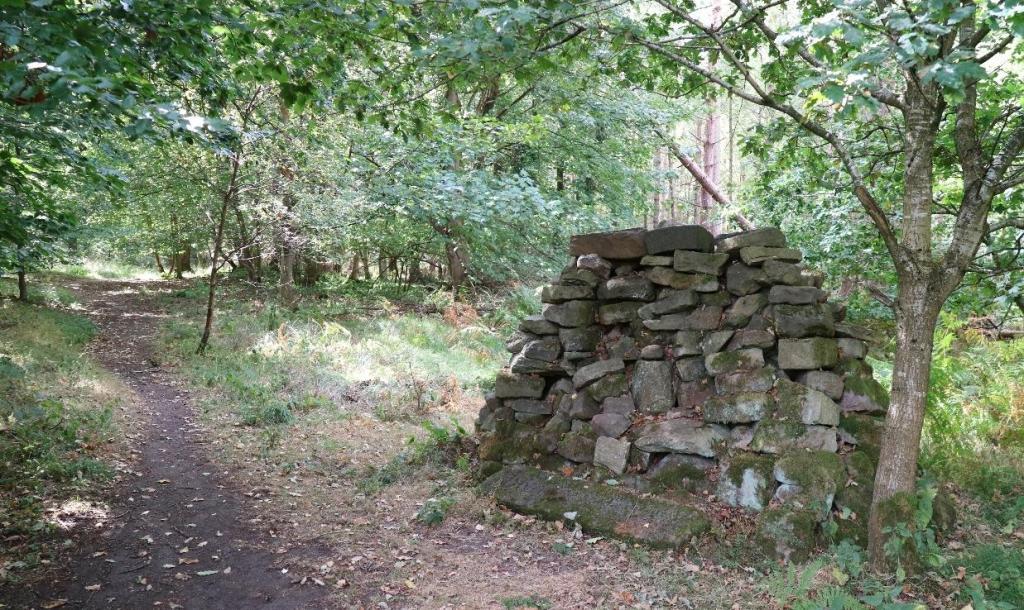
Figure XIII. The ‘Hunter’s House’ Stones. The mossy stone at the base reads ‘Digger’s Folly’. Note the mix of deciduous woodland (foreground) and plantation woodland (background).71
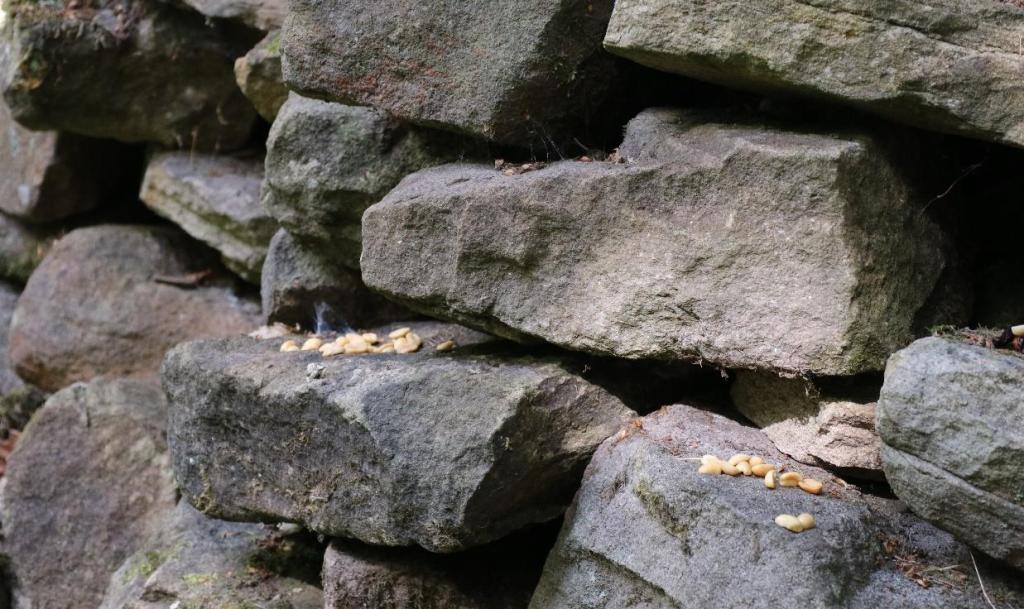
Figure XIV. An offering (for the animals or perhaps something else) left at the Hunter’s House Stones.72
Walking interviews with participants helped to highlight the changing nature of the rural landscape. For example, walking along River View Sarah (1990s) pointed out examples of flytipping as a common issue, with abandoned cars being one of the most frequent examples. Because these cars were in out-of-the-way places there was often evidence of play around these abandoned vehicles. Like the demolition sites of Byker, these spaces possessed the liminal ‘in-between’ quality that attracted both young people looking for privacy and, as Joanna Leah has observed, flytipping and other ‘risky activities’.73 Sarah remembered ‘messing about’ with abandoned cars and farm machinery growing up but admitted that ‘I wouldn’t let my [child] do it. I mean who knows what they get up to but I don’t think it’s safe’. Cars in this context both allowed people to dump things on the fringes of the village and became the dumped things themselves, reshaping the aesthetics and perceived dangerousness of Chopwell’s liminal spaces, as well as the function of the community and danger of the roads. This only further marginalised informal play spaces in favour of adult-centric infrastructure.
In the 1980s the term ‘latchkey generation’ arose to describe a cohort of kids who often returned to an empty house after school because both of their parents were at work.74 The impacts on the children have been variously ascribed, from inculcating independence and self-reliance to loneliness and a propensity for alcohol and drug abuse.75 Socially, this shift marked a move towards children’s autonomy increasingly being shaped by external systems rather than local community networks. However, whilst the need for dual-income households only increased over the 1990s and 2000s the concept of the ‘latchkey’ child quickly faded because – in the face of mounting health and safety fears – parents increasingly were required to step in to manage their children’s time, not least because 1993 amendments to the Children and Young Persons Act made it a crime to leave a child unsupervised ‘in a manner likely to cause unnecessary suffering or injury to health’.76 The Latchkey Kid became the Car Key Kid as they increasingly were driven to and from activities. In more rural areas, with amenities spread further apart, this switch was even more pronounced. For example, David (1990s) remembered that ‘my friend Adam his family didn’t have one so we were always giving him lifts’. Dianne (1980s) recounted how differently her child used the bus compared to how she had in her youth: ‘We didn’t think anything of it, but he’ll get annoyed about it… and for him there’s no chat with the bus driver, just scans his thing’. This demonstrates how technological changes during the period had often led to quicker and more impersonal interactions by eliminating the need for conversation. Changes in attitude between Dianne and her son also capture not only how Chopwell children grew less familiar with public transport, but how the erosion of the safety net of familiar adults that had facilitated childhood independence had become less reliable.
Jude offered a telling endorsement of Chopwell that reflected Chopwell’s turn toward car-oriented external amenities since his childhood:
I love living here like… it’s like rural, like you’ve got the wood and stuff and you’ve got like 20 minutes away from the MetroCentre, like it doesn’t take long to get into bigger places with more facilities. (Jude, M, 1990s)
Jude’s perspective on present-day Chopwell illustrates how the car has spatially redefined the village. The testimonies of participants have demonstrated how for many children its rise began to redefine the boundaries of childhood, reshape parental expectations, and transform the village’s social geography. National pressure and car-enabled local factors like the rise in joyriding and flytipping chipped away at many children’s independent mobility, reducing options for play and exploration and sometimes leading young people to seek thrills in more controversial or dangerous pursuits.
4.2.3 ‘We Did a Lot of Stupid Stuff’: Changing Perceptions and Functions of Drink and Destruction in the Community
A 2006 Gateshead Council focus group expressed concern about the visibility of youth drinking in the borough, noting that ‘too many young people [were] drinking on the streets and creating disorder,’ and calling for a ban on street drinking.77 The group also criticised the proliferation of alcohol licences among local shops, which they believed facilitated underage access to alcohol and contributed to public disorder. As Fiona Measham has argued, the liberalisation of licensing laws in the 1990s and the growing cultural influence of the nighttime economy spurred a rise in UK teenage alcohol-use as behaviours shifted away from milder forms of social drinking in places like pubs and toward ‘determined-drunkenness’ binge drinking.78 The normalisation of these new forms of drinking contributed to broader anxieties of the period around youth crime and public safety, leading Blair’s government to put £10 million into an anti-underage drinking campaign as part of the National Alcohol Strategy of 2007.79
However as Measham and this thesis has argued, the focus on this issue was as much of a moral panic as its contemporary ‘stranger-danger’, meaning that overrepresentation in the tabloid press in particular resulted in a warped public perception of the level of threat.80 Participants throughout the period of study recounted forms of play that often blurred and sometimes crossed a boundary between innocent and antisocial, as well as legal and illegal. Furthermore, as the social geography of the village changed over time, so too did expectations about what ‘acceptable’ behaviour meant. Indeed, several participants talked both about ‘trouble’ they had caused in their youth as compared to present day fears over antisocial and criminal behaviour from children. This was the result of a twofold process. First, as Chopwell became a more commuter-focussed village it also became ‘quieter’, and expectations from residents about tolerable behaviour changed accordingly. Second, youth drinking habits and behaviours did – for some – turn toward ‘determined-drunkenness’ and a greater degree of isolation from the wider community.81 Both of these factors were heavily influenced by the processes of de-industrialisation, suburbanisation, and social atomisation discussed in this chapter.
Particularly and expectedly when describing the later years of their childhoods, participants of every decade talked about how drinking and antisocial behaviour became entangled with their youth identities, peer relationships, and use of public spaces. In the 1980s, Dianne described drinking as a rite of passage and social activity that marked a transition into adolescence, recalling that ‘I was starting to get into music then… If a band ever came to play in [Chopwell] on a Friday or Saturday night there would be drink’. Richard remembered running ‘straight out the back door’ of the pub when the police came in one time. In the 1990s, Jude described how ‘even kids from other villages would come and we’d like club in and buy bottles of brownie [Newcastle Brown Ale]… then we’d sneak off somewhere like out to the edge of the village and drink.’ These recollections demonstrate how alcohol was woven into childhood culture in these decades and how liminal spaces at the margins of the village like back lanes and Chopwell Wood provided environments where young people could gather away from adult supervision.82 Jude’s mention of Newcastle Brown Ale also suggests a regional aspect to youth drink culture, where drink choice was formed by local identity and in doing so became a part of it. Julya reflected how drink culture intermingled with petty crime during the 2000s:
We did a lot of stupid stuff with drink… Mostly it was just sitting out on the edge of the village but especially if certain people were together they’d just wind each other up… Especially the boys, people would steal stuff, like from the allotments and from Greenhead [Farm]. (Julya, F, 2000s)
The progression of these accounts demonstrates changes in the acceptability of underage drinking over time. During the 1980s Dianne described drink as easily available to young people when bands came to town and Richard had drunk at the pub, suggesting that the village’s adult population had not posed a significant barrier to teenage drinking, or indeed even encouraged and normalised a culture of drunkenness. At the same time consumption was moderated because these instances of drinking (and instances of ‘high spirits’/‘antisocial behaviour’ that came alongside them) took place in venues with a degree of adult supervision and amidst the community. By comparison, Jude and Julya characterised drinking as a more taboo activity taking place at the margins that was less condoned by adults but more acceptable within youth-culture itself.
As seen in Byker, the environment where drinking takes place can be important to the function of alcohol in a community. For example, as Dunbar et al have argued, drinking in local pubs can lead to residents feeling significantly ‘more engaged with their local community’ than drinking in other environments, contributing to social bonding.83 All the underage drinking described by participants was illegal, but younger participants more often remembered drunkenness leading to other forms of destructive behaviour, such as stealing, partly because the physical and social environments in which they drank more easily facilitated those behaviours. The decline of communal institutions also played a role. For example, David (1990s) recalled that ‘there was only the youth club [at] the community centre. I enjoyed it, you know, when I was a little kid, but I grew out of it’. As formal youth spaces were shut down, lost their appeal, and/or failed to evolve with the needs of older adolescents, informal environments became the default. Particularly for older children – who generally had greater independence and fewer activities organised for them – drinking and forms of destructive behaviour like littering, stealing, and vandalising became associated with the kinds of liminal, edgeland spaces that all the participants in this study described playing in. This echoes Emia Fitzsimons and Aase Villadsen’s findings in youth studies, which suggest that the erosion of structured youth services in rural areas during the 2000s contributed to the rise of informal peer-led activities, often involving alcohol and risk.84
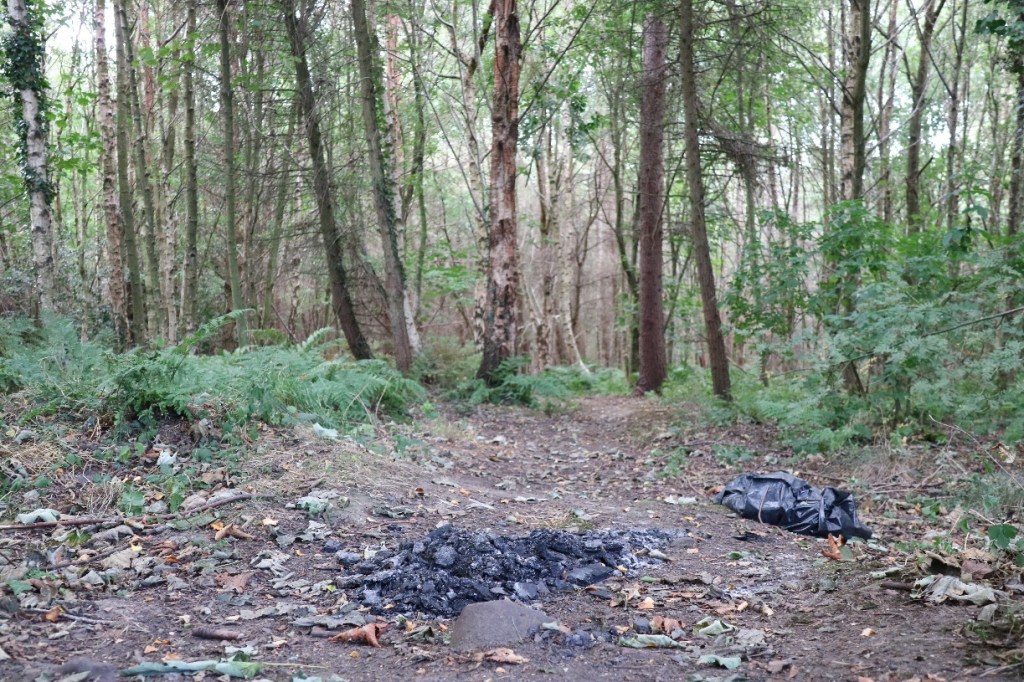
Figure XV. Remnants of a fire and litter at the edge of the Chopwell Wood.85
Dianne drew a link between forces of individualisation and fragmentation in the village (discussed in 4.2.1) and destructive behaviours:
I could have named everybody in Trent Street but now they’re all strangers… They got their fences up and the garden all bare… Some of the kids honestly with unsocial behaviour and nobody seems to know anybody. (Dianne, F, 1980s)
This reflection neatly demonstrates how de-industrial processes of social atomisation became linked with concerns about children’s antisocial behaviour. The ‘strangerisation’ process (as also observed in Byker) affected this twofold. First, it enabled binge drinking and problem behaviours in public spaces because Chopwell’s environment, through processes like the closure of local shops, no longer provided the same degree of community oversight. Second, the loosening of community ties meant a shrinking of the number of people residents knew well enough to challenge or feel unthreatened by. Combined with an increase in ‘determined drunkenness’, new forms of drug-use, and associated loud or violent behaviours, a perception grew that young people were becoming less regulated and more prone to aggressive or violent behaviour. In short, the difference was between having a group of friends being loud outside your house, as opposed to a group of strangers.
As the pit’s de-industrial half-life weakened, social institutions closed, and community links frayed, it increasingly became likely that a child neighbour could also be a stranger, leaving both parties feeling less sense of allegiance to one another. At the same time, anti-social or ‘mischievous’ (depending on how a participant framed it) behaviour has always been a facet of Chopwell life. Ronnie described how he and his friends in the 1980s would ‘always be getting into trouble’ by ‘jumping over the rooftops’, ‘pinching people’s bin lids’, and ‘playing games where we weren’t supposed to’. In the 1990s, Jude recalled ‘a game where you’d kick the bin lid off the top of the bins… and we used to shout something and then run.’ These acts were on the one hand playful and on the other hand examples of a culture of boundary-testing and public disruption that could easily be called anti-social. As in Byker, the language used by participants to describe their own actions generally romanticised the ‘trouble’ they got in to, casting it as more fun and socially acceptable than that of younger generations.
The perceived rise in destructive behaviours from children in the community were not only a result of changing expectations. Sarah described how decline in the village’s social infrastructure and cohesion made it difficult to challenge a new family:
This girl moved into the village I think on Wansbeck Street… she was a proper nasty piece of work… I remember going past their house and there was always just stuff, bottles and that out front and she was screaming and fighting with her mam. My mam just said ‘stay away’. (Sarah, F, 1990s)
De-industrial forces of depopulation in the village created space for new ‘problem’ families and children to move into Chopwell, almost always in The Streets, and intensified parental fear over unsupervised outdoor play. Lloyd’s description of the village as ‘a very clannish place’ in his youth supports much of the other testimony in this thesis that indicates a community in the 1980s that still maintained strong internal connections and a territorial suspicion of outsiders. As that continued to wane and new families started to arrive during the 1990s and 2000s, this insularity only intensified the tendency of the community to protect children by restricting their independence and marginalising those who presented ‘problem’ behaviours. For example, the same 2006 Gateshead council report in which Chopwell residents expressed concerns over youth drinking, also recorded requests from residents to the council to ‘try to get rid of the unruly elements who cause trouble’, with around 1/5th of housing in Chopwell being council housing.86
Existing residents took different approaches to those new arrivals depending on whether they moved into The Streets (often placed there by the council) or into a new housing estate. Neither group was necessarily accepted, but wealthier newcomers were not seen as a threat in the same way because they were less likely to publicly exhibit problem behaviours and lived physically further away, as evidenced by Ann’s comment about new residents not being ‘Chopwell people’.87 The family described in Sarah’s testimony, by contrast, had moved into The Streets themselves, seen to be the heart of the community. Fear of dangers presented from incomers contributed to the vicious cycle of falls in child mobility, leading to reduced social connectivity in a loop of restriction and isolation.88 What the testimonies and other sources herein also evidence is a fall in non-parental authority over children over the 30 years in question. Increasingly it was not expected that it ‘takes a village’ to raise a child as both governmental and cultural attitudes toward child-rearing encouraged individual family units to act as a single source of responsibility.89 Children therefore more often needed to be inside so parents could keep an eye on them, and it was less expected that other adults had the authority to tell other people’s children what to do. In this context alcohol and trouble making provided activities for young people growing up in an environment of informal networks, often marked by risk, rebellion, and a search for belonging.
4.3 Construction
4.3.1 ‘Anybody in the village would probablys have the same memory’: The River Derwent as a Site of Risk, Play, and Repository of Memory
Despite the destructive forces at work upon Chopwell between 1980 and 2010 of economic decline, social fragmentation, and erosion of communal institutions, participants in a 2006 focus group expressed a surprising optimism about the village’s environmental transformation. They described Chopwell as ‘nicer, greener and tidier’ than in the past, citing the development of two new housing estates and a popular new school with a gym.90 This told of the village’s emerging commuter demographic, many of whom lacked direct experience of Old Chopwell and moved to the village for its dormitory-town characteristics. Yet it also reflected deeper environmental change brought about by de-industrialisation, where economic destruction came alongside, and in some respects stimulated, a visible greening of the community. One of the most significant outcomes of this greening was the revitalisation of the River Derwent which had historically always been used by children for swimming and play but became increasingly safe for such activities following the closure of nearby industries, the implementation of environmental regulations, and the subsequent reduction in pollutants.91 This was reflected in participants’ testimonies which told a story of continual play in the river across generations, helping to construct and maintain a new shared heritage in the village based around experiences of nature rather than industry.
Lynn gave a literary framing to her memories of play in the Derwent in the 1980s:
I make it sound like Swallows and Amazons or something don’t I? That’s how I remember it. Just climbing trees, some of the lads would jump in the river and things and a lot of people learned how to swim down there. (Lynn, F, 1980s)
In her reference to Swallows and Amazons (a quintessential example of bucolic British unsupervised play, especially in relation to water) Lynn was clearly aware of the idealised vision of childhood she was presenting. The BBC did air a TV series based on the book in 1984, which may have helped to draw that connection in her mind.92 The river itself, a short walk down the hill from Chopwell, provided many different spots for swimming and play that were out of the way but not far from children’s homes. This position meant it was never considered ‘too far away’ by parents, even for some during the 2000s, to stop children going there in groups without adult supervision. What did change however was the age at which children were allowed to go. For example, Paula (1980s) remembered being allowed to go down to the river when she was ‘very young’: ‘I remember just going in with all our clothes on and walking home just soaking wet. You might be half dry by the time you got back’. By contrast John (2000s) was first allowed to go down to the river unsupervised ‘not until I was like secondary school age’, although he admitted he had done it already without permission. In Chopwell’s context where sites like the river Derwent and Chopwell Wood had begun to become the new ‘heart’ of village identity, it was very unlikely that parents would entirely forbid independent exploration and play in those environments. Instead, the prevailing health and safety culture manifested in John’s parents changing the parameters of his independent mobility without cutting it off entirely. The dangers of swimming were brought to the fore in the area in 2024 when two teenagers drowned in the River Tyne at the nearby village of Ovingham.93
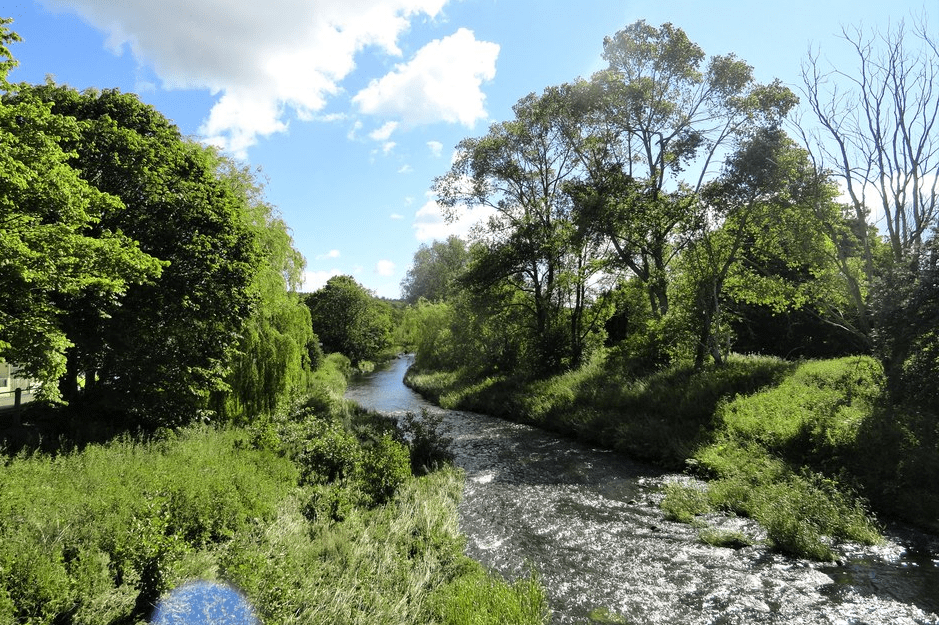
Figure XVI. The River Derwent at Milkwellburn, just down the hill from Chopwell.94
Risk is inherent in play, and although roads were the killer hidden in plain sight during this period, rivers were understandably feared. It is this risk, partly, that made the Derwent attractive to a child looking for a thrill. Ronnie remembered the communal and risky nature of river play:
We used to tie a rope round and swim out as far as we could then if you couldn’t make it the other lads would pull you back up… but one or two had close calls, I think. (Ronnie, M, 1990s)
Ann, who also grew up in the 1990s, reflected on danger that she didn’t perceive at the time:
I don’t know how we didn’t hit the other side when you were diving in at the high crags because it’s so narrow but when you were young you used to think it was deep as can be. (Ann, F, 1990s)
Getting to the spot with the ‘high crags’ required a walk through Chopwell Wood in the direction of the village of Lintzford that took around an hour compared to 20 minutes to get to safer swimming spots. This meant the fun that came from the danger of the crags made it worth the extra travel to get there. Indeed, moments of risk and danger came up commonly when talking about the river because they were exciting moments that were the most memorable. In the interviews I conducted I did not receive testimony of anybody getting injured or worse in the river, but it is likely that such incidents did occur. The fact they were not commonplace, however, demonstrates how children regulated each other’s behaviour, with older or more experienced children taking on parental-type roles in situations of potential danger. It also indicates that the dynamic between perception of danger and actual danger of the Derwent was inverse to that of the roads. Roads were seen as dangerous, but their danger was not fully comprehended; meanwhile rivers were seen to be similarly dangerous (or even more so) despite causing far fewer injuries and deaths. In 2024 for example, the same year as the tragic deaths of two teenagers in the River Tyne, c.200 people were killed or seriously injured on the roads around Tyneside.95 In part, of course, the perception of danger will have meant parents and children were more careful with the river and prevented accidents.
Both in risky and less risky sections, play in the river was generally described as a group activity as opposed to memories of Chopwell Wood which participants would sometimes describe exploring alone. For example, Sarah (1990s) described how ‘all of us went down to a place at Lockhaugh where the river there’s like a little dam and you could swim’. Ann told me about how ‘we all used to play round there in the river by the Windy Fields, just down the hill here… there was a nice hill for rolling down and you could even slide down on something, you know, straight into the water’. Many other participants mentioned these same spots and it became apparent that the communal nature of Derwent memories in Chopwell were not merely anecdotal but were rich in sensory detail and deeply autobiographical for participants. By this I mean that individuals used these shared memories to construct a narrative that situated their experiences within their community and environment. The function of the river in childhoods of this period was very important, therefore, because it helped young people to form narratives that became essential to identity formation – tied to sensory experiences of a familiar landscape.96 Julya, reflecting on the 2000s, summed it up by saying that ‘anybody in the village would probablys have the same memory of going down to the river to play’.
To some extent the significance of natural spaces like the River Derwent and Chopwell Wood in children’s lives was institutionally recognised in 2007, when the area was selected by the Department of Health as a case study in a report on nature and wellbeing. The report concluded that the natural features of the area ‘have been shown to have the potential to contribute to the government’s physical activity agenda, as such projects can encourage physical activity, improve mental wellbeing and enable the development of social networks’.97 Children were a key focus of the project, which involved organising primary and secondary school visits to the wood for children living along the River Derwent. A shared point of feedback between the children and adults who took part was that they enjoyed the level of independence the project/the wood afforded them, with the concept of being able to ‘run free’ highlighted in particular.98 This was not ‘running free’ as older participants in this thesis had described however, as it was still a timetabled, partially supervised activity. Nevertheless, the project’s recognition of the wood’s benefits for the community mirrored the sentiments expressed by residents, who saw these spaces not only as recreational environments but as integral to the village’s identity and continuity. This consequence of de-industrialisation brought significant challenges to Chopwell but it also partly facilitated a reconstruction of childhood geographies, and, hence, fits with the cultural expectation explored in Chapter Two that children’s natural home is in nature, not in an urban environment. As distance grew between Chopwell and its industrial heritage, play in the River Derwent took on new meaning as it became a site that anchored personal and collective memories across generations. In this way it served a similar function to the pit of Old Chopwell, the destruction of which had allowed natural sites like the river to be cleaned up of some pollution and become new sources of local pride.99 In this way, environmental change did not simply alter the physical landscape, it reshaped the emotional and social terrain of growing up in Chopwell.
4.3.2 Chopwell Wood and Beyond: Shifting Dynamics of Spatial and Temporal Freedom
Another environmental feature that functioned as a key anchor for childhood experience and memory across the decades was Chopwell Wood. However, the ways in which participants engaged with the wood and other natural spaces beyond, and the freedoms they were granted to do so, shifted markedly over time as national and local pressures increased the onus on parents to supervise their children. Interestingly though, particularly in relation to natural sites the testimonies of Chopwellians told the story of a more contingent and complex set of boundaries placed upon children over time than participants in Byker revealed. Whilst play on The Streets of Chopwell was described as declining in a similar linear fashion to the streets of Byker, the qualities of natural environments like Chopwell wood invited greater leniency.
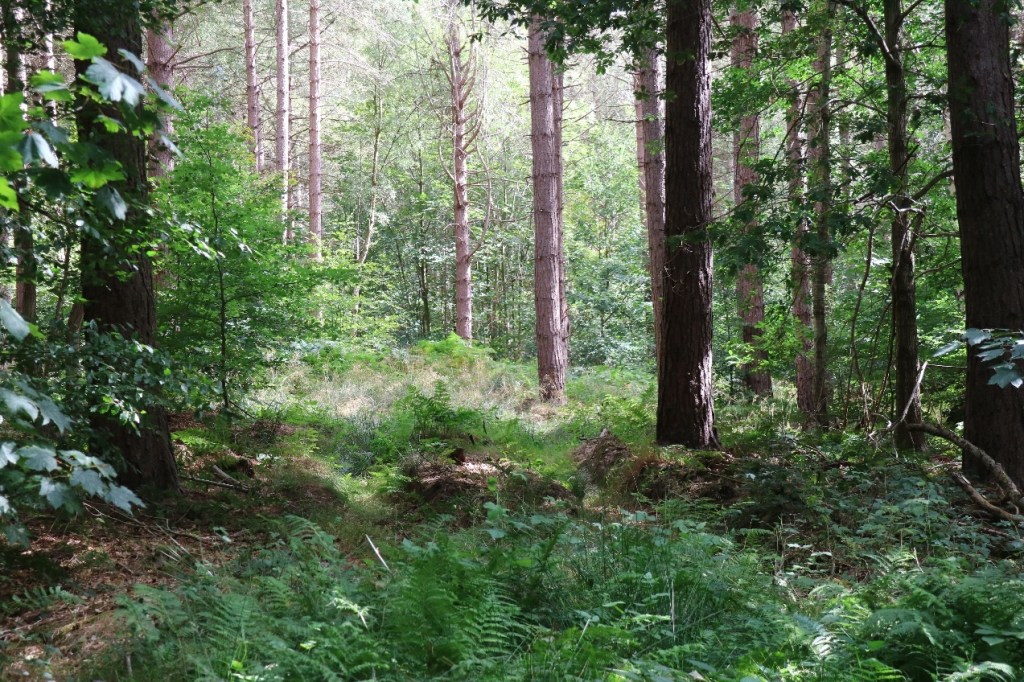
Figure XVII. Chopwell Wood as viewed from the ‘Boundary Walk’ Trail.100
Participants described forms of play in the 1980s embedded both in the natural environment around them and the de-industrial one. The best example of this was Lynn’s recollection of going ‘up the old pit which had just a few trees in… the water had pooled and it had gotten really marshy so all these frogs had moved in and we would go up and catch them… and if you weren’t quick you’d lost a shoe!’. This tactile, immersive experience of nature reclaiming a site of industry emblematises the broader greening process that was beginning to take root across former pit villages in the North East during this period.101 The proximity of the largest wood in Tyne and Wear in particular offered Chopwell children unique opportunities for interaction with nature. Paula remembered the centrality of Chopwell Wood to her generation’s childhoods:
First week back at school the teacher asked us ‘what have you done during the holidays’ and everybody’s essay was all about ‘my time in Chopwell Wood’. (Paula, F, 1980s)
As well as being central, this recollection also demonstrates how the wood provided spatial limitations on children’s mobility during the 1980s in Chopwell. The space offered a lot of temporal freedom – the ability to choose how and when to engage with it – but children were far less likely to have travelled to other parts of the country or overseas on their holiday as participants of later decades more frequently did.102 This meant that younger participants recalled going on holidays to popular European tourist destinations, but did not have the experience of spending a whole summer immersed in Chopwell Wood as some in the 1980s had. Interestingly, this highlights how the amount of time children spent in the wood was falling over the same period its importance for community identity was rising.103
Often memories of natural environments would be communicated with greater reference to sensory richness than urban ones, which would more generally evoke the activities that took place there instead. For participants, simply sensorially experiencing an environment like Chopwell wood created lasting memories; memories that were reinforced over time as they experienced the same places again later in life and, in some cases, during the interviews themselves. For example, Sarah recalled a memory of rain in the woods:
Suddenly it was raining buckets pelting it down and we dove for cover. It’s surprising how much it [the wood] protects you. (Sarah, F, 1990s)
The adventure-book language of ‘dove for cover’ recalls children’s literature in the same way that Lynn drew parallels to Swallows and Amazons, suggesting a common nostalgic association between non-fictional recollections of childhood and fictional stories about childhood. Richard (1990s) also recalled a highly sensory experience, describing how ‘one of the best things was walking through the wood after snow’ because it allowed him to play ‘all sorts of games. But mostly we just went to run around and, like, experience it’. The novelty of sensory experiences to children who naturally spent most of their time in built environments was appreciated by all participants, but the increasing focus on it by younger interviewees suggests they found it more memorably novel, and therefore likely spent less time overall out in the woods. The tone of these 1990s accounts is also more episodic, suggesting that such experiences were less routine and more contingent on specific conditions or events. This reduced familiarity with nature was picked up on by Dianne who described younger children not recognising or registering natural beauty and variety:
Kids these days will just walk along past all this, and it won’t even register. It’s very beautiful… we used to notice things more, I think. (Dianne, F, 1980s)
This observation chimes with 1990s and 2000s academic prognoses (detailed in 1.4) of ‘Plant Blindness’ and ‘Nature Deficit Disorder’, used to describe the idea that children were becoming disconnected from the natural world, and therefore unable to recognise or name common species.104 In Chopwell, participants like Dianne linked this perceived decline in attentiveness to childhoods becoming more technologised, less rooted in spontaneous outdoor play, and consequently less frequently sensorially and emotionally engaged with nature. Whilst the overall body of evidence does generally point to a decline in child-nature engagements, at the same time these assumptions do not speak from personal experience and might better be used as evidence for the ways in which adult fears about childhood disconnection from nature evolved during the period of study. Indeed, the commonality with which adult society has historically utilised the idea of the vulnerable/threatened child, as a vector through which pass general societal fears would suggest such statements can also be used to understand adult worries about their own disconnection from nature and ‘lost childhood’.105
Though mediated increasingly over time, the wood was still a constant presence for children growing up throughout the period of study and came to be central to the formation of a new Chopwell identity based on natural beauty instead of industrial economy. Beyond the wood participants described how spatial and temporal boundaries expanded and restricted over time. For example, David remembered a formative independent explorative experience beyond the village:
The first time I went down to Blackhall Mill I was with a group of friends and there were all these kids there and it was like, who are you? It was tetchy because we thought we knew everybody and suddenly there was this whole new world. (David, M, 1990s)
Blackhall Mill is a village very close to Chopwell by the River Derwent. It is so close in fact that suburban expansions in the 2000s and 2010s began to merge the two together, leading to a sense of identity dissolution, with comments such as Paula’s that ‘Chopwell [in the 1980s] was its own place back then’. The expanding of the spatial boundaries of David’s childhood excited but also challenged as he encountered a new set of children he had not met before. Although not far from Chopwell, David was still encountering groups beyond the village at a much younger age than Ruth in the 1970s, who described how she ‘never went out of Choppy’. As Chopwell transitioned into a commuter town during the latter half of the 20th century, it became more expected and common that children would keep friendships with children outside of the village, facilitated by the car and the centralisation of schooling and leisure activities during this period, favouring larger ‘activity centres’ like the MetroCentre over local walking-distance amenities.106 David’s ‘tetchiness’ demonstrates the period of transition in which he grew up as the close-knit traditional village community fragmented. Ann also told a story that encapsulated the evolving limits of childhood exploration:
A common walk we did was up to this spot called ‘the big tree’ – there’s a housing estate there now – and you would get as far as the tree and my mam had said ‘you turn around and walk back’.
…[Interviewer] Did you ever go past the tree?
When we were older. If you were out on a date and didn’t want anybody to see. (Ann, F, 1990s)
In this example Ann demonstrates how even in a context of increasingly restrictive parental or societal expectations, children exerted control over their own boundaries: especially as they grew older and sought more independence. As Ann’s testimony tells us, participants developed new drivers as they grew older that encouraged them to push boundaries and seek out-of-the-way places for reasons of romance and sex, drinking, partying, and other activities (like stealing) that they did not want other to see or hear. Often, green spaces could provide the distance and cover required.
Those participants who grew up during the 2000s experienced Chopwell both at its greenest and its most restrictive. In Byker increasing restrictions had come into force alongside a cutting back of greenery that was seen as problematic, but in Chopwell – where green space had become central to the community’s new identity – children were still given a good amount of freedom to roam. Although fears about ‘the outdoors’ were common at the time and did lead parents to restrict children’s mobility, such fears held less sway in rural contexts for two main reasons. This was because, first, as noted in Chapter Two (section 4), urban environments were generally cast as the threat in media and, second, because in places like Chopwell Wood cars were evidently a much-reduced danger. For example, Billy described roaming ‘very far… especially when I got a bike [around age 9]. We’d went over to Whittonstall, up to the gliding club… as long as I had my phone on us’. This would be a round trip of a few hours, travelling much further independently at that age than the urban Byker participants described in the 2000s.
Billy’s bicycle and phone were key enablers of mobility. The new technology of the mobile phone gave his parents peace of mind, allowing them – to some extent – to ‘keep watch’ on him in an era when that was increasingly viewed as a necessity. The bicycle was a physical enabler and, indeed, the image of ‘kids on bikes’ became a powerful image of childhood freedom from the 1980s onwards (particularly from the film E.T.) partially because it allowed children to get around in a world where distances between destinations were growing.107 This symbolic role of the bike can also be partially explained by the plummet in ‘kids on bikes’ during this period from 80% of UK 8-9 year olds biking or walking alone in 1971 to 9% in 1990.108 Billy’s testimony also stands in contrast to the Byker testimonials, where bicycles were more used for games and tricks (like going very fast downhill) than for getting around. This was likely because the urban environment made it easier to walk or take public transport.
Billy placed great value on the freedom he had to move about the landscape in unstructured time. However, it was also clear that not every facet of the landscape felt welcoming. Particularly relevant for this thesis were the new suburban-style newbuild areas, which no participant described relishing as an environment of play. As Billy said when asked: there was ‘nothing to do’ there. Such estates had been designed to maintain a degree of separation from the older parts of the village and were successful therein not only in establishing physical (and therefore social) boundaries, but in curtailing opportunities for exploration and play. Contrast this to the allure the natural environment held in Julya’s recollection of a moment when Chopwell Wood encouraged a moment of transgression:
It had snowed very thick snow, very beautiful. We made this plan, and we actually snuck out at night and went into the woods just to run about, but it was so beautiful… but yeah, our parents were not happy. (Julya, F, 2000s)
This testimony strongly echoes Richard’s memory of exploring the wood after snow not to play a game but simply to experience it, although doing it in secret after dark did evidently add a new layer of excitement.
The shifting dynamic of childhood freedoms around natural sites like Chopwell Wood that these testimonies describe was therefore a complex one. Natural places consistently provided opportunities for play and exploration, but the nature of that engagement evolved. Across the decades play in these environments moved away from a quite localised but unsupervised immersion in place toward a much broader but mediated and controlled set of experiences. However, this change was not so transformational or total as was experienced in more urban contexts such as in The Streets, newbuild developments, or in Byker. This was because the characteristics of these natural spaces – being largely car-free, rural, positioned locally as central to a new emerging community identity and positioned nationally as spaces ‘natural’ for children – allowed them to continue to invite a level of spatial and temporal autonomy.
4.4 Conclusion: Continuities of Experience in Adaptive Environments
‘There was no better time to be a kid than the 80s, there wasn’t a better time. We had so much fun… but then my dad if you ask him thinks he was born at the best time.’
(Lloyd, M, 1980s)
Lloyd’s quote brings valuable perspective to the analysis in this chapter, highlighting how every generation has reasons to both bemoan and acclaim their particular lot in life. This generational-self-appraisal is also retrospective, and testimonials about childhood tend to soften over time. However, the value in the testimonials herein lies both in whether participants remembered their childhood fondly, and what they did: the substance and scope of the activities of play and exploration described. For Chopwell this source material has allowed this thesis to track changes in childhood environments over time, most notably factors that contributed to a fall in outdoor play during the 1980s, 1990s, and 2000s in this North East community. It highlights how concerns about decline of certain forms of childhood activity can be both valid and overstated. Looking at a specific context like Chopwell nicely elucidates this point, as this chapter has explored both forces of destruction and construction at play amongst Chopwell childhoods in the 1980, 1990s, and 2000s. Furthermore, it has shed light on how children’s experiences of play, mobility, and community sometimes transgress generations, deeply embedded in physical and sensory textures of place, and have been negotiated contingently based on differing perceptions of different specific places.
The oral testimonies in this chapter have provided insight into the recollections of daily life for those who grew up in Chopwell during an overlooked period in its history, demonstrating how the story of this semi-rural community significantly differed from Byker under the same national changes and pressures and also how joint experiences of de-industrialisation in the North East manifested differently in two different communities. For example, the differing nature of ‘Old Chopwell’s’ de-industrial legacy, not demolished but left (for a time) to decline, led to a longer-lasting legacy in the community that was more slowly eroded with the introduction of new commuter-oriented developments.
Under themes of ‘destruction’ and ‘construction’ the testimonies gathered here have illustrated a clear transformation in the spatial and temporal freedoms afforded to children across the decades from a more geographically bounded but temporally expansive world in the 1980s to a more expansive but timetabled and controlled world in the 2000s. These changes were heavily influenced by the slow fading of the community’s de-industrial half-life over the decades, alongside the new communities (both socially and infrastructurally) that moved in to fill the void. This shift also reflected broader societal changes in attitudes to parenting, safety culture, and the structuring of childhood. In this context natural spaces like Chopwell Wood and the River Derwent emerged as important and enduring sites of play and memory across generations, yet the way these spaces were accessed and understood also changed over time. For older participants, these landscapes were more woven into the rhythms of daily life (remembering spending all the summer holidays in Chopwell Wood for example); for younger ones, the weave was generally looser as such places were often experienced, but less ‘inhabited’. Despite these differences, the woods and river remained central to the formation of identity, offering continuity amidst the broader disruptions of de-industrialisation. The relative permanence and adaptivity of these natural environments contrasts with sites of industry, whose half-life influence was long felt but did wain over the decades. Chopwell Wood and the River Derwent instead were able to adapt or be adapted to new social, environmental, and economic realties, providing environments of play to Chopwell’s children as they had done for centuries.
<- Chapter 3 – Conclusion ->
References
1 Office for National Statistics, ‘Chopwell and Rowlands Gill Population and Household Estimates for England and Wales: Census 2021,’ UK Government (2022), https://www.ons.gov.uk/explore-local-statistics/areas/E05009313-chopwell-and-rowlands-gill.
2 North East England Conservancy, History of Chopwell Forest 1923–1951 (Forestry Commission, 1951), 4.
3 Ibid, 8.
4 Forestry England, Chopwell Forest Plan, North England Forest District (2019), 5.
5 Ibid, 5; exact date of PAW designation unknown.
6 Ibid, 2.
7 S.N., ‘Friends of Chopwell Wood,’ Co-Curate North East, last modified January 2017, http://www.friendsofchopwellwood.org.uk/.
8 Common Ground, ‘Chopwell Wood,’ accessed 14 September 2025, https://www.commonground.org.uk/gateshead/.
9 Matthew Kelly, The Women Who Saved the English Countryside (New Haven: Yale University Press, 2023), 314-317.
10 A.S. Wilson, The Consett Iron Company Limited: a case study in Victorian business history, PhD Thesis (Durham University, 1973), 96.
11 Dradge, ‘Byker: Surprising the Colleagues for 35 Years,’ 156.
12 Jim Tomlinson, ‘De-industrialization: Strengths and Weaknesses as a Key Concept for Understanding Post-War British History,’ Urban History 47, no. 2 (2019): 202.
13 Robert Gildea, Backbone of the Nation: Mining Communities and the Great Strike Of 1984-85 (New Haven: Yale University Press, 2023), 20.
14 Lewis Mates, ‘The ‘Most Revolutionary’ Banner in British Trade Union History? Political Identities and the Birth, Life, Purgatory, and Rebirth of the “Red” Follonsby Miners’ Banner,’ International Labor and Working-Class History 100 (2021): 110.
15 Lewis Mates, ‘“We Want Real Live Wires, Not Gas Pipes”: Communism in the Inter-War Durham Coalfield,’ Twentieth Century Communism 23 (2022): 51–95.
16 Thomas Linehan, Communism in Britain, 1920–39: From the Cradle to the Grave (Manchester: Manchester University Press, 2007), 33.
17 ‘Our History,’ Chopwell Regeneration Group, accessed 29 May 2024, https://www.chopwell.org/history.
18 Kevin Morgan, ‘Bastions, Black Spots and Other Variations: In and beyond the Specificities of the Little Moscow,’ Twentieth Century Communism 5 (2013): 193.
19 Office for National Statistics, ‘Chopwell and Rowlands Gill Population and Household Estimates for England and Wales: Census 2021,’ UK Government (2022), https://www.ons.gov.uk/explore-local-statistics/areas/E05009313-chopwell-and-rowlands-gill; Office for National Statistics, ‘Byker Population and Household Estimates for England and Wales: Census 2021,’ UK Government (2022), https://www.ons.gov.uk/explore-local-statistics/areas/E05011439-byker; Architectuul. ‘Byker Wall,’ Architectuul, 13 August 2012, https://architectuul.com/architecture/byker-wall.
20 Sandra Marie Borger, ‘Coming from the Outside In: Being an Outsider in Oral Interviews,’ The Graduate History Review 2 (2010): 9-10.
21 Sarah Moser, ‘Personality: a new positionality?,’ Area 40(2008): 383.
Martyn Hammersley and Paul Atkinson, Ethnography: Practices in Principle (Routledge: London, 2007), 64.
22 Valerie Janesick, ‘Oral History Interviewing with Purpose and Critical Awareness,’ in The Oxford Handbook of Qualitative Research, ed. Patricia Leavy (Oxford: Oxford University Press, 2014), 460-461.
23 Gary Pattison, ‘Planning for Decline: The “D”-Village Policy of County Durham, UK,’ Planning Perspectives 19 (2004): 311–332.
24 Ibid, 328.
25 Ibid, 328.
26 Hovis, ‘Hovis Advert (Plastic Bertrand – Ca Plane Pour Moi ) May 2010,’ YouTube video, 1:00, https://www.youtube.com/watch?v=pkBTuQ9kzFQ.
27 Gill Davidson et al., Appraisal of the Housing, Renewal and Sustainability Needs of Rural Areas of Gateshead (Sustainable Cities Research Institute, Northumbria University, 2006), 112.
28 Gateshead Archive, Wansbeck Street, Chopwell, GL000975, photograph, 1981, Gateshead Council, accessed 15 August 2025, https://www.gatesheadlocalstudies.com/.
29 Louis Holland Bonnett, photograph, Chopwell, August 2025.
30 The tubway line running through Chopwell Wood was officially called The Chopwell and Garesfield Railway (1896-1961). It was used exclusively for coal freight and ran mostly underground.
31 Louis Holland Bonnett, photograph, Chopwell, June 2023.
32 Pattison, ‘Planning for Decline,’ 312.
33 Ibid, 312.
34 Gill Davidson et al., Appraisal of the Housing, Renewal and Sustainability Needs of Rural Areas of Gateshead (Gateshead Council, 2006), 113.
35 Pattison, ‘Planning for Decline,’ 313.
36 Kevin Morgan, ‘Bastions, Black Spots and Other Variations: In and beyond the Specificities of the Little Moscow (Mining Village Chopwell in Durham, England),’ Twentieth Century Communism 5 (2013): 193–209.
37 Personal observation by the author.
38 Louis Holland Bonnett, photograph, Chopwell, August 2025; I am unsure whether Symon Terrace is named after a socialist figure or not. If so it is possibly named for Madeleine Symons.
39 Louis Holland Bonnett, photograph, Chopwell, June 2023.
40 Land Registry, Transaction Record for 8 Severn Street, Chopwell, NE17 7BY, accessed 1 April, 2025, http://landregistry.data.gov.uk/data/ppi/transaction/3B5CE842-4D0E-EE3A-E063-4804A8C0D6F1/current; Land Registry, Transaction Record for 5 West Meadows, Chopwell, NE17 7BG, accessed 1 April, 2025, http://landregistry.data.gov.uk/data/ppi/transaction/2571E56E-AFC3-47DB-B1F7-B780CBDC931C/current.
41 Robyn Fivush, ‘The Development of Autobiographical Memory,’ Annual Review of Psychology 62 (2011): 560.
42 RAF, ‘Chopwell From Above,’ photograph, 1956, Historic England Archive, https://historicengland.org.uk/images-books/archive/collections/aerial-photos/record/raf_540_1792_f22_0150.
43 Gateshead Archive, ‘Derwent Street, Chopwell,’ photograph, 1915. Gateshead Council, accessed 5 May 2024, https://www.gatesheadlocalstudies.com/.
44 Louis Holland Bonnett, photograph, June 2023, Chopwell.
45 Gateshead Archive, ‘Derwent Street, Chopwell,’ photograph, 1977, Gateshead Council, accessed 15 August 2025, https://www.gatesheadlocalstudies.com/.
46 Felling Heritage Group, ‘Chopwell Colliery,’ accessed 4 August 2024, http://www.gatesheadhistory.com/chopwell-colliery.html.
48 Louis Holland Bonnett, photograph, Chopwell, August 2025.
49 Finn Gleeson, ‘Stories from London’s Docklands: Heritage Encounters, Deindustrialization, and the End of Empire,’ Journal of British Studies 61, no. 4 (2022): 971.
50 Jeremy Burchardt, The Allotment Movement in England, 1793–1873 (Woodbridge: Boydell & Brewer, 2002), 175.
51 Ibid, 17-18.
52 David Morton, ‘The Metrocentre at 30: Three Decades of Retail Therapy in the Heart of Tyneside,’ Chronicle Live, 4 April 2016, accessed 1 September 2025, https://www.chroniclelive.co.uk/news/history/metrocentre-30-three-decades-retail-11126906.
53 Gateshead Archive, The Colliery, Chopwell, photograph, 1950, Gateshead Council, accessed 5 May 2024, https://www.gatesheadlocalstudies.com/.
54 Michael Young and Peter Willmott, Family and Kinship in East London (London: Routledge & Kegan Paul, 1957), 4.
55 Gill Davidson et al., Appraisal of The Housing, Renewal and Sustainability Needs of Rural Areas of Gateshead, Research Findings (Gateshead Council: 2006), 32.
56 Wendy Sigle, ‘Fertility and Population Change in the United Kingdom,’ in Low Fertility, Institutions, and Their Policies, ed. Dudley Poston (Cham, Switzerland: Springer International Publishing, 2016), 78.
57 Simon Cotterill, ‘Chopwell Colliery,’ Durham Mining Museum, accessed 24 January 2025, http://www.dmm.org.uk/colliery/c004.htm.
58 ‘Top Club Closes,’ Newcastle Evening Chronicle, 13 September 1974, 16; ‘Youth Clubs Plea for City Centre,’ Newcastle Evening Chronicle, 24 July 1976, 7; ‘Gateshead Gossip,’ Gateshead Post, 5 April 1984, 12.
59 ‘Our History,’ Chopwell Regeneration Group, accessed 5 March 2024, https://www.chopwell.org/history/.
60 Local History Gateshead, ‘Chopwell,’ Gateshead Council, accessed 10 January 2022, http://www.localhistorygateshead.com/localhistory/gateshead-places/chopwell1.
61 Office for National Statistics, ‘Population Estimates for England and Wales,’ ONS, accessed 1 September 2023, https://www.ons.gov.uk/peoplepopulationandcommunity/populationandmigration/populationestimates/bulletins/populationestimatesforenglandandwales/latest; Sigle, ‘Fertility and Population Change in the United Kingdom,’ 78.
62 Louis Holland Bonnett, personal observation, Chopwell, 2022-2025.
63 Selina Todd, ‘Breadwinners and Dependants: Working-Class Young People in England, 1918–1955,’ International Review of Social History 52 (2007): 81.
64 Ibid, 76.
65 See chapters 1 & 2 of this thesis.
66 Lia Karsten, ‘It All Used to Be Better? Different Generations on Continuity and Change in Urban Children’s Lives,’ Children’s Geographies 3 (2005): 275.
67 Stephen Clark, ‘Mapping car ownership in Great Britain over four decades,’ Journal of Maps 11 (2015): 355.
68 RAC Foundation, ‘Car ownership rates per local authority in England and Wales,’ https://www.racfoundation.org/assets/rac_foundation/content/downloadables/car%20ownership%20rates%20by%20local%20authority%20-%20december%202012.pdf.
69 Ibid; Gateshead Council, Chopwell and Rowlands Gill Ward Factsheet (Gateshead Council, 2018).
70 Gill Davidson et al., Appraisal of the Housing, Renewal and Sustainability Needs of Rural Areas of Gateshead. Gateshead Council, 2006.
71 Louis Holland Bonnett, photograph, Chopwell Wood, June 2023.
72 Louis Holland Bonnett, photograph, Chopwell Wood, June 2023.
73 Joanna Leah, ‘Edgelands Twists: Performing Liminal Fissures in Edgelands Representations,’ paper presented at AMPS: Architecture, Media, Politics – Representing Pasts, Visioning Futures, Singapore University, 1-3 December 2022.
74 Deborah Belle, ‘Varieties of Self-Care: A Qualitative Look at Children’s Experiences in the After-School Hours,’ Merrill-Palmer Quarterly 43 (1997): 480.
75 David Barlow and Mark Durand, Abnormal Psychology: An Integrative Approach (Cengage Learning, 2008), 414.
76 Children and Young Persons Act 1933, as amended by the Criminal Justice Act 1993, part 1.1, accessed 19 September 2025, https://www.legislation.gov.uk/ukpga/Geo5/23-24/12/1993-08-16.
77 Gill Davidson et al., Appraisal of the Housing, Renewal and Sustainability Needs of Rural Areas of Gateshead (Gateshead Council, 2006).
78 Fiona Measham, ‘The Turning Tides of Intoxication: Young People’s Drinking in Britain in the 21st Century,’ Health Education 108, no. 3 (2008): 217.
79 Ibid, 207; Mike Hough and Julian Roberts, ‘Youth Crime and Youth Justice: Public Opinion in England and Wales,’ Criminal Justice Matters 55 (2004): 185-186.
80 Fiona Measham and Kevin Brain, ‘Binge Drinking, British Alcohol Policy and the New Culture of Intoxication,’ Crime, Media, Culture 1 (2005): 280.
81 Measham, ‘The Turning Tides of Intoxication,’ 217.
82 Jenny Wood and Jamie Hamilton, Teenagers and Public Space Research: Final Report (A Place in Childhood, 2023), https://www.safercommunitiesscotland.org/wp-content/uploads/Teenagers-and-Public-Space-Report_FINAL-min.pdf.
83 Robin Dunbar et al., ‘Functional Benefits of (Modest) Alcohol Consumption,’ Adaptive Human Behaviour and Physiology 3 (2017), 129.
84 Emia Fitzsimons and Aase Villadsen, ‘Millennium Cohort Study: Substance Use and Antisocial Behaviour among Adolescents,’ Centre for Longitudinal Studies (University College London, 2021): 2.
85 Louis Holland Bonnett, photograph, Chopwell Wood, June 2023.
86 Gill Davidson et al., Appraisal of the Housing, Renewal and Sustainability Needs of Rural Areas of Gateshead (Sustainable Cities Research Institute, Northumbria University, 2006), 115, 109.
87 This thesis, page 240.
88 Stephanie Schoeppe et al., ‘Socio-Demographic Factors and Neighbourhood Social Cohesion Influence Adults’ Willingness to Grant Children Greater Independent Mobility: A Cross-Sectional Study,’ BMC Public Health 15, no. 1 (2015), 2.
89 Governmental approaches such as with road safety (see 1.2.1) and legal changes to parental responsibility (see 1.3)
90 Gill Davidson et al., Appraisal of the Housing, Renewal and Sustainability Needs of Rural Areas of Gateshead. Gateshead Council, 2006.
91 Environment Agency, River Basin Management Plan: Northumbria River Basin District (London: Environment Agency, 2015); Stephen Mosley, The British Isles Since 1945 (Oxford University Press, 2001), 207.
92 IMDb, ‘Swallows and Amazons Forever!,’ IMDb.com, accessed 4 September 2025, https://www.imdb.com/title/tt0426765/.
93 Pamela Tickell, ‘Second Boy Dies in River Tragedy,’ BBC News, 22 May 2024, https://www.bbc.co.uk/news/uk-england-tyne-68912345.
94 Louis Holland Bonnett, photograph, River Derwent, July 2023.
95 Department for Transport, Reported Road Casualties in Great Britain, Provisional Estimates: 2024, GOV.UK, published 29 May 2025 , https://www.gov.uk/government/statistics/reported-road-casualties-great-britain-provisional-results-2024.
96 Martin Conway, ‘The Construction of Autobiographical Memories in the Self-Memory System,’ Psychological Review 107, no. 2 (2000): 600; Maurice Halbwachs, On Collective Memory, trans. Lewis Coser (Chicago: University of Chicago Press, 1992).
97 Liz O’Brien and Hilary Snowdon, ‘Health And Well-Being in Woodlands: A Case Study of The Chopwell Wood Health Project,’ Arboricultural Journal 30 (2007): 55; North East England Conservancy, History of Chopwell Forest 1923–1951 (Forestry Commission, 1951), 18.
98 O’Brien and Snowdon, ‘Health And Well-Being in Woodlands,’ 24.
99 Environment Agency, Tyne Management Catchment: Baseline Length of Rivers and Estuaries Polluted by Abandoned Metal Mines, GOV.UK, published 12 March 2025, https://www.gov.uk/government/publications/abandoned-metal-mines-in-england-baseline-length-of-rivers-and-estuaries-polluted-by-harmful-metals.
100 Louis Holland Bonnett, photograph, Chopwell Wood, August 2025.
101 Ray Hudson, ‘Rethinking Change in Old Industrial Regions: Reflecting on the Experiences of North East England,’ European Urban and Regional Studies 12 (2005): 581; Jake Stephen Milner, ‘Decarbonising Deindustrial Places: Industrial Collective Memories in the Age of Green Economic Development,’ Local Economy 38 (2023): 3.
102 Office for National Statistics, Holidays in the 1990s and Now, published 7 August 2017, https://www.ons.gov.uk/peoplepopulationandcommunity/leisureandtourism/articles/holidaysinthe1990sandnow/2017-08-07.
103 As Chopwell’s population grew older over the period of study, it started to be viewed more as an adult-oriented amenity for the village. This did not mean children were excluded, only that the adult sphere assuming a greater degree of ownership over the wood elevated its importance within adult spheres.
104 James Wandersee and Elisabeth Schussler, ‘Preventing Plant Blindness,’ The American Biology Teacher 61, (1999): 82; Ian Rotherham, Cultural Severance and The Environment (Dordrecht: Springer, 2013), V; Richard Louv, Last Child in the Woods: Saving Our Children from Nature-Deficit Disorder (London: Atlantic, 2005), 3.
105 Kay Tisdall, ‘Lost childhood?,’ in Revisiting Moral Panics, ed. Viviene E Cree (Bristol: Policy Press Scholarship Online, 2016), 93; Charles Krinsky, ‘Introduction,’ in Moral Panics over Contemporary Children and Youth (London: Routledge, 2008), 2-4.
106 Colin Knox and John Sugden, Leisure in the 1990s: Rolling Back the Welfare State (Eastbourne: Leisure Studies Association, 1992), 30.
107 Katherine Frohlich and Patricia Collins, ‘Children’s Right to the City and Their Independent Mobility: Why It Matters for Public Health,’ Journal of Epidemiology & Community Health 78 (2024): 68.
108 This is discussed more in 1.2.1; Hillman and Adams, ‘Children’s Freedom and Safety,’ 18-19.

