Tag: Imperialism

  • The Death of a New World: Disease and Population Decline In South America from 1492 to 1800CE

    Preface: A Subject of Scale

    In its whole, the story of population in South America from 1492 to 1800CE is one of demographic collapse. At the low point of this period the continent would be witness to a population that reached but 1/5th the size of its pre-Columbian standard. However, taken individually, the huge variance in experience within South America during this period becomes apparent; from regions whose population figures fall and rise in dramatic peaks, to those that undulate composedly across modest crests.

    Initially however, it is important to note the vast scale of this undertaking and the limitations therefore imposed, namely a limitation to the macro. Many of the studies concentrating on South-America in this field have been of a type that focus acutely on one specific area and are successful in realising the demography of such a space in fine detail. These studies range in size from David Noble Cook’s study into Peru over a period of 100 years to Brian M. Evans’ study of an Andean Village over a period of 43 years. The view herein over all South America over 308 years will draw on studies such as these but will not attempt to replicate them in outcome. The expansive scope of this article requires it to correlate broader trends and seek to contextualise them within a continent-wide context. This is a complimentary approach to the mathematical facet of this study which operates more effectively with larger pools of data. The ultimate achievement of this article is to plot the change of the indigenous and total population of South America over this period, as a collation of other studies done in this area alongside primary census data. Moreover, it will explain to what extent disease was the primary causation for demographic change and shall provide offerings as to the variance in population decline across five distinct regions within South America (see figure 1.). Furthermore, when the term ‘disease’ is used herein it is used as a collective term for multiple afflictions; this is due to the fact that there is much dispute as to which diseases affected which populations at what times, although it is generally accepted that smallpox, measles, and typhus were the main killers with the Variola Major strand of smallpox constituting the greatest killer overall.

    The standard disclaimer must be applied here that the figures presented herein, although primarily drawn from census data of the period and believed by the author to be broadly correct, are bound inevitably to be inaccurate in many aspects. This is the challenge of applying a scientific approach to historical data. However, dealing with incomplete source material is the perpetual challenge of the historian and one that cannot be shied away from, lest no history be written at all.

    Pre-Columbian South America

    Before we begin to assess change across the continent we must first be clear in what we are assessing a change from. What was the makeup of South America in 1492?  Estimates for the overall population for the region continue to exist in dispute however some mean figures have been produced for this article, in aggregation of several other estimates made over recent years. The central influence for these pre-Columbian figures continues to be the work of William M. Denevan and his text The Native Population of the Americas in 1492 which remains an excellent source on this topic. Ultimately the total population statistic reached for pre-Columbian South America in 1492 is 20,000,000. Across this study, this total figure is broken down into five regions across South America. These are: Northern S. America, Greater Amazonia, Central Andes, Southern S. America, and Chile. The continent has been split this way partially due to geographical differences in the five regions and partially to facilitate cross-comparison over time. If we were to use boundaries that shifted over time, such as the borders of nations, our comparisons would be less accurate. These borders are approximates of regions and are not intended, nor should not be taken, as accurate boundaries.
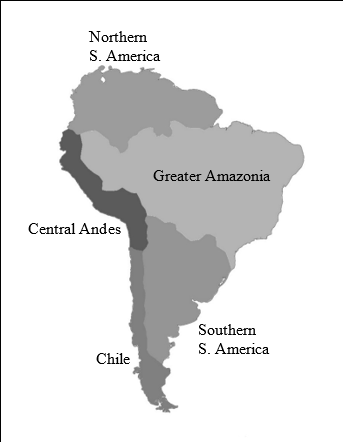
    Figure 1. Map of Identified Regions of South America

    The regions identified in figure 1 are the geography to which the rest of this article is referenced to. Thus, the population split for South America in 1492 is as presented below.

    Figure 2. Table of Pre-Columbian Populations in South American Regions

    These demographics aside, what other features can we ascribe to these five regions that might be important in a study of post-Columbian disease spread? For this study the focus lies on significant factors that can be compared across the five regions identified. These are: climate, geography, and patterns of settlement.

    In terms of climate, for which the Köppen-Geiger climate classification system is used, our two most northerly regions of Northern S. America and Greater Amazonia can be described as ranging between a tropical (Aw) and equatorial climate (Af). These warm and wet conditions which comprise the great majority of these two regions are well suited to the spread of disease, particularly as they are prone to monsoon; we would therefore expect higher levels of mortality in these regions than in others. The Central Andes region contains a greater variance in climates due to its mountainous geography: it is mostly covered by a cold desert climate (BWk) but also contains large areas of semi-arid climate (BSk) and temperate oceanic climate (Cfb). We would expect these colder and drier conditions to be more effective at staying disease spread here. The Southern S. America region would mostly be classified as a warm oceanic climate (Cfa) with some areas of tropical (Aw) and semi-arid climates (BSh). This region can be described as susceptible to the spread of disease but not to the extent of Northern S. America and Greater Amazonia. Finally, in Chile we find areas of cold desert climate (BWk), temperate Mediterranean climate (Csb), and temperate oceanic climate (Cfb). This, in similar fashion to the Central Andes, is an area we would expect to find reduced mortality rates in due to these pathogen-hostile climatic factors.

    The geography of the continent can be split into two areas on either side of the Andean mountain range which covers the regions of the Central Andes and Chile. These mountains are a dominant factor in the lower temperatures seen in these regions as discussed above. Additionally, the mountains help to curtail the spread of disease by limiting travel and isolating groups from one another. On the eastern side of this “Andean split” in Northern S. America we can identify the Guiana highlands as a geographical feature that would act similarly. This is also true for the Brazilian highlands in Greater Amazonia and Southern S. America. However, these highland areas will prove less effective at preventing disease spread in these regions as they do not cover them in entirety, unlike with the Andes, and thus their major comprisal of large lowland areas still allows disease to spread more efficiently.

    For patterns of settlement across the continent: in clear majority we are discussing a dispersed population of peoples that do not gather into large permanent communities. This is the case for Northern S. America, Greater Amazonia, Southern S. America, and Chile. Certainly, there were areas of more concentrated populations within these regions, often along rivers and coastlines, but these were still clusters of villages rather than towns or cities. This type of isolated pattern of settlement is one which is often effective in curtailing the spread of disease, so we would expect regions with this pattern to be less susceptible to illness. In 1492 the exception to this rule was the area of the Central Andes, occupied in majority by the Inca Empire which was home to cities with populations of 700,000 or more such as Cusco, Quito, and Choquequiaro. In this case we would expect to see this area prove more susceptible to disease spread than others.

    Three Hundred Years of Disease in South America

    Population figures across this period, particularly during the first 100 years, are to be taken with a large margin of error. After 1600 the Spanish and Portuguese began taking censuses of the regions they controlled, spanning by this point almost all the continent, and so we do have primary statistics available to us that were not available for our pre-Columbian assessment. Even so, it is highly likely the numbers they give are low estimates, as even today our estimates ever increase for the number of indigenous on the continent. Nonetheless, by collating all these censuses in conjunction with our pre-Columbian estimate we can produce a graph that tracks the population of the continent over these 300 years.
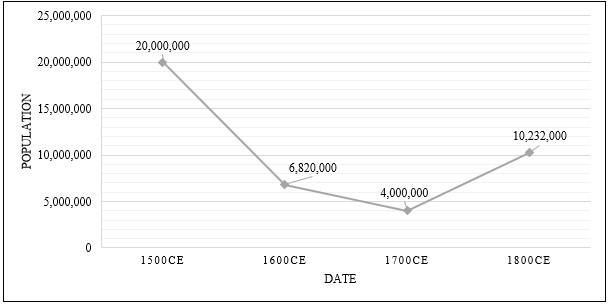
    Figure 3. Graph Plotting the Population of South America from 1500 to 1800CE

    Using this data, we can also calculate the rate at which the population changes between these points, as seen in the table beneath.

    Figure 4. Table of Total Population Rise and Fall (%) in South America 1500-1800CE

    These statistics show the immediate damage done to the continent and the recovery from that. However, it must be noted that these population statistics are not solely for indigenous peoples, they include all those people who have, either by choice or by force, moved to the continent during this time. This is what explains the 155.8% increase in population from 1700 to 1800, it is comprised of immigration, we would not expect a native population to recover at this rate. The question therefore asked becomes what is the rate of native population recovery, as supposed to simple population increase overall? For this we can utilise our regions; by splitting our demographics between these five zones, including those that saw large immigration and those that didn’t, we can determine the extent to which immigration as a factor has affected the overall population statistics. 
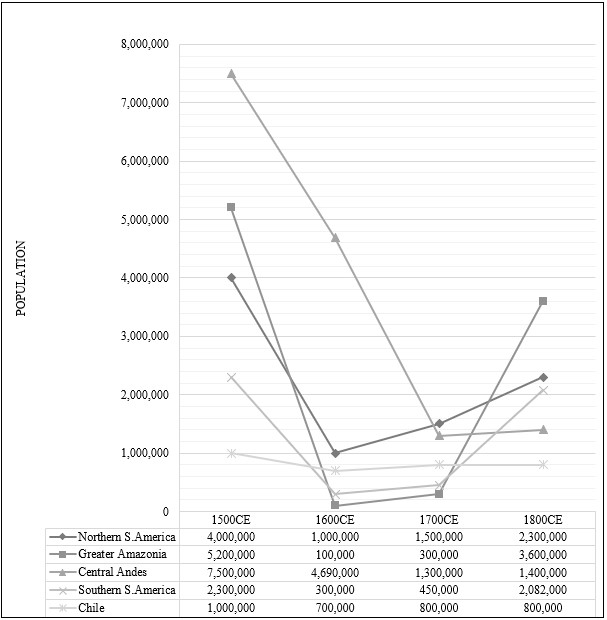
    Figure 5. Graph Plotting the Population of Regions of South America 1500-1800CE

    For this above graph we can also produce a population change rate table.

    Figure 6. Table of Population Rise and Fall (%) in Regions of South America 1500-1800CE

    This information is enlightening in multiple aspects. From 1500 to 1600 we can immediately see that some areas have declined to far greater extent that others, namely Northern S. America, Greater Amazonia, and Southern S. America have declined at much higher rates that Chile and the Central Andes. This can be explained by the climates and geography of these regions which, as was explained above, are far more suited to preventing the spread of disease in the Central Andes and Chile than in the other regions. In Chile this can be further explained by noting that disease did not reach the region before 1561, much later than the other regions (see figure 9.). However, some Umbridge must be taken with the 98% decline figure for Greater Amazonia during this period. Of all the data drawn on for this study this figure seems the most inaccurate. Although it may well be true that mortality rates were high in this region due to its tropical climate, the 0.59 population density for this area would never allow such a drastic reduction (see figure 8.). This article would hazard that the rate of reduction would be closer to the 75% reduction seen in Northern S. America as these two regions have very similar climates and geographies. Nevertheless, in the absence of any further data the -98% figure will continue to be used.

    From 1600-1700 the notable standout is the one region which continues to decline whilst the others begin to rise in population, the Central Andes. This is likely explained by the concentrated population density in this region which allowed for disease to continue to spread virulently, as seen in figure 8. By 1600 the other four regions all have populations densities beneath 1 compared to the Central Andes which sits at 3.13. At this point it may well be argued that these other four regions have reached a point beneath the ‘minimum concentration of hosts’ threshold whereas the Central Andes has not; this means their populations are now too small when compared to the size of their landmass to facilitate further disease spread. The well-developed road system of the Incas will have also allowed continual consistent movement of peoples around the empire; further facilitating dissemination of infection. This is especially crucial if you note the long incubation period of the two largest killers, smallpox and measles, which exist in the body for c.10 days before the person infected begins to show symptoms. The further a person is enabled to travel within these 10 days the faster these illnesses can spread. We can also see within the regions whose populations do rise the difference in the rates of the population increase. This is explained by immigration, not native recovery, and will be explored in depth with the assessment of the data between 1700 and 1800.

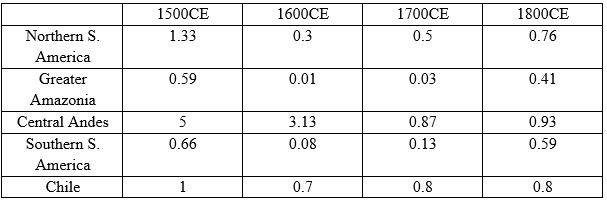
    Figure 7. Table of Landmass Area of Regions (km2)
    Figure 8. Table of Population Density of Regions Within South America (Number of Persons Per km2) from 1500-1800CE

    From 1700-1800 we can clearly identify the regions which are experiencing outside immigration and those which are not. Again, we see a divide made between the Andean regions of Chile and the Central Andes and the rest of the country. On the west side of the Andean split we see population figures that are struggling to begin a recovery towards pre-Colombian levels, with Chile’s population becoming stagnant and seeing no increase in the 100 years between 1700 and 1800. This is representative of how the native population across the country is recovering from the impact of disease: slowly. The reasons for this are numerous; one large factor is a decrease in fertility rates after disease has ravaged a population. This can be due to the disease itself physically affecting reproductive abilities or unbalancing the gender ratios in a population but can also be a result of social grief and stress. Recovery rates are also affected in the long term because disease results in higher mortality rates in the young population, who are the ones able to reproduce.
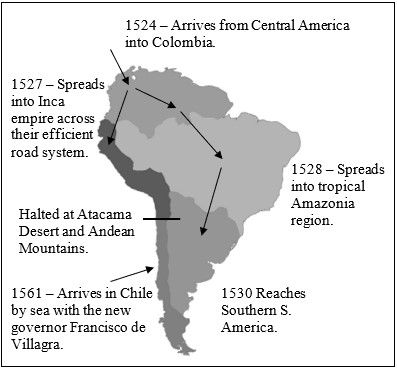
    Figure 9. Map Depicting the Spread of Disease Across South America 1524-1561CE

    With our knowledge of the western side of the Andean split the extraordinary nature of the figures from the eastern side becomes apparent. Even the 53.3% increase seen in Northern S. America would be classed as an unprecedented event, with figures of over a 1000% increase existing in realms of fantasy. These statistics correlate well with the records kept by the Spanish and Portuguese of slaves imported during this period, which indicate c. 5,000,000 were imported into the Viceroyalties of Brazil, Rio de la Plata, and New Granada from 1700-1800. Using this data we can calculate how much of the increase in population on the east side of the Andean split is due to immigration. Taking Greater Amazonia as our example, given that it saw the greatest increase in immigration, we can take 10% as a generous figure for the increase in native population during this period. This would constitute only 30,000 of the 3,300,000-increase seen in population and means that 99.16% of the new population is imported. Using similar thought we can interpolate new data across all our existing figures produce a graph that tracks only the indigenous population statistics
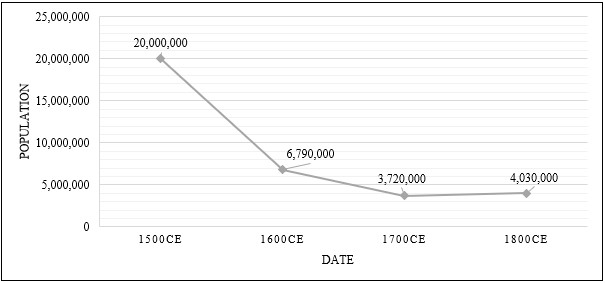

    Figure 10. Graph Plottingthe Indigenous Population of South America 1500-1800CE
    Figure 11. Table ofIndigenous Population Rise and Fall (%) in South America 1500-1800CE

    Now we have calculated the decrease in native population we must ask: to what extent is disease responsible for these deaths? It is understood that it is the major factor, but how far so? Let us examine the Spanish and Portuguese maltreatment of the indigenous to see the extent of their impact.
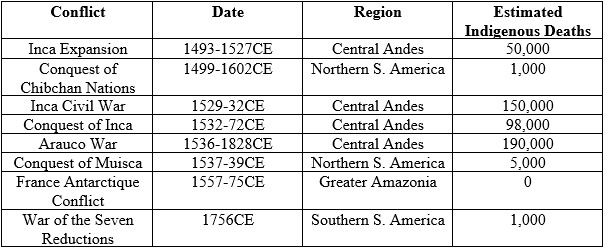
    Figure 12. Table of Conflicts Within South America 1492-1800CE

    It is evident from this information that death from conflict may be considered a negligible factor when considering the overall indigenous population decline of South America. The single conflict with most meaningful impact on population is the Inca civil war which accounts for only 1.1% of the population decline from 1500 to 1600. The Arauco war is the cause of the most deaths but stretched over a far longer period, giving it less impact.

    As for the encomienda and mita systems, alongside other forms of cruelties brought about by the Europeans, it is unknown how many died as a direct result of these persecutions as no records were kept, not even estimates. These, evidently, were not numbers the colonisers wanted recorded. Even if we did have such data it would be difficult to extricate deaths directly caused via cruelty and those that came tangentially because of it. We may still make some assessment of their material impact however; the one undisputable fact is that these systems helped facilitate the spread of disease through multiple means. They gathered previously dispersed populations into concentrated groups, forced them to travel long distances, and worked them into a state of weakness. All of which are ample conditions to facilitate infection. In this sense their impact on population decline may have been far greater than they are given credit for here. Nonetheless the ultimate cause of death is disease in majority by a far margin, as far as our statistics show us.

    If we take our statistics from figures 10 and 11 and subtract population decline for reasons aside from disease we can produce an estimate of indigenous population decline specifically as a result of disease. We have calculated that approximately 1% of the population die as a result of warfare between our 100-year intervals, using a global average we can also calculate that approximately 1% can be accounted for by “natural causes” and accident. As discussed there are no statistics for the impact of systems such the encomienda but we must estimate they had some impact given the severity of their programmes, and have been given a 2% impact factor. Overall these account for 4% of the total indigenous population decline from 1500 to 1800. The total indigenous population decline from 1500 to 1700 (it’s lowest point) is 81.4%, so therefore the total decline as a result of disease before the population begins to rise is 77.4%. This means the total number of indigenous killed by disease from 1500 to 1700 is 15,480,000. It must also be noted for clarity that even after this point, as the population increases, indigenous peoples are still dying from disease and that some of these infections continue to plague areas of South America in the 21st century. 

    Ultimately this article has been able to track the population, indigenous and otherwise, of the South American continent from 1492 to 1800. It has provided reasoning for the variance in figures seen across the five identified regions and compared them against each other to infer further detail about the impacts of disease and other factors during this time. Although it is understood that these figures are approximates, it is nonetheless understood their significance in helping us understand this troubled period of history.

    Author/Publisher: Louis Lorenzo      

    First Published: 19th of October 2018

    Last Modified: 23rd October 2018 (Clarity)

  • The Purpose and Role of Police Forces, Prisons, and Law Courts in Colonial and Post-Colonial Egypt and Sudan

    This article will explain the changing natures of the police forces, prisons, and law courts of Egypt and Sudan across their colonial and post-colonial histories. Although, for the sake of clarity, these three elements will be dealt with individually, it is important that the interconnected nature of these factors is not overlooked. It is also important to not only recognise the differences between the colonial and post-colonial systems, but the differences between how those systems operated in the distinctly separate environments of Egypt and Sudan. Firstly, however, I will give a concise synopsis of how the Egyptian and Sudanese legal institutions have broadly changed across their colonial and post-colonial existences.

    In Sudan I identify a clear arc of progression for the three elements in question, which I group together to call the “legal institution”. In the colonial state, these elements of the legal institution function similarly in how they are used as forms of repression but are disguised as facets of goodwill. Although there is some variation from this central theme, particularly with the adversarial colonial police, I will demonstrate how they all served ultimately as a velvet glove for the British administration. In the post-colonial state, they continued to follow a similar pattern to one other. There was a brief period of attempt at liberal change and reform under Ismail al-Azhari before a return to colonial styles of practice with the rule of Gaafar Nimeiry, despite the superficially divergent style of Islamised rule he introduced. Omar al-Bashir has used the legal administration in much the same way as his predecessor.

    Egypt has a very similar colonial story but a more complex post-colonial one. Due to the colonial system lacking any great nuance in the way it administered its various colonies, Egyptian legal institutions under the British were much the same as Sudan; the legal administration provided great promise of virtue, but granted very little in reality. Post-colonial Egypt is a more interesting case. There is a moment of excitement for change under Muhammad Naguib which amounts to little. This is followed by the takeover of Gamal Abdel Nasser who used the legal administration as an extension of his governance and returned Egypt to colonial-style rule, despite his socialist reforms in other areas. Anwar Sadat flipped the system once more and purged the Nasserians, instituting a more democratic legal system. Hosni Mubarak operated a considerably more restrictive, expanded, and corrupt legal institution but in an underhanded way which disguised its true nature. The 2011 revolution and the election of the Mohamed Morsi was started partly on the grounds of opposing the corrupt legal system, but was short lived and did not introduce radical reform. Abdel Fattaj el-Sisi now uses the legal administration in much the same way as Egypt’s prior dictators.

    In regard to prisons, when the British first arrived in Egypt and Sudan they were vocal about the purpose of prisons as instruments of reform. Many criticised the Ottoman system which had formerly been in place, publicly denouncing it as a proponent of ‘cruelties inflicted upon the defenceless people by unprincipled rulers’. It was seen that Europe’s purpose was to better Egypt and Sudan by exporting “liberalism” to them. The prison system, and the wider legal system more generally, were obvious targets for reform, as these were the tools by which a state enforced its ideologies. However, these lofty ideals were held back by two main factors; lack of resources and lack of conviction. The first one of these is self-explanatory, the prisons were not provided with either enough staff or resource to run a reformative system. In fact, they were barely able to run a system at all, one which could ‘only be managed, rather than controlled’. The lack of conviction is the more interesting and more important of these two however, as it is this ennui which resulted in such poor practical support for the prison system. W.J Berridge describes this as an ‘ambivalent ideology’ which was partially reflective of the internal divides which existed within the legal administration between the prison officers and the colonial command. There was also a significant proportion of prison officials who thought it more reformative to leave some criminals out of prison; those from the countryside. The countryside and the notion of the “tribe” were seen through the colonial lens as areas of naïve innocence, peoples who could hardly commit a crime if they tried. On the other hand, the urban environment was seen as a corrupting force, one which created hard-line recidivists who could never be reformed. Thus, to throw someone from the countryside into the urban environment of the jail would do them more harm than good, and would corrupt them. Along similar lines, if urban criminals were not able to be reformed, the purpose of the prison system as an instrument of reform makes little sense. It was thus a lack of purpose which defined the prison systems in colonial Egypt and Sudan; a lack of purpose which left the original ideal of reform unfulfilled.

    Post-colonial prisons in both Egypt and Sudan initially followed a similar path of progression; a brief period of purpose in attempting to genuinely fulfil the promises of the colonial system. In Egypt this was under the rule of Muhammad Naguib (in power from June 1953 to November 1954) and in Sudan this was under Ismail al-Azhari (in power from January 1956 to May 1969). This has been termed “defensive developmentalism”, a demonstration of capability from the new regime achieved by borrowing European developmentalist ideals. In Egypt this was a far shorter affair than it was in Sudan and so had less opportunity to produce results, however both countries ultimately failed to fulfil the purpose of their prison systems. In Sudan there was greater progress, with the establishment of “prison shows”, allowing prisoners the vote, and a placement of emphasis on prison education. This achievement was tactile but ultimately inadequate, due to physical restrictions such as prison capacity and ultimately a failing to repeal key aspects of the colonial system such as prison labour. Over time in both countries, starting with Nasser in 1956 in Egypt and with Nimiery in 1969 in Sudan, any steps made forward were reversed. These governments became more concerned with immediate security as supposed to long-term rehabilitation and both perpetuated a more retributive system than their predecessors. Interestingly, it was these governments that particularly espoused their unique Islamic form of Justice and their difference to the Christian colonial regime, yet it was these governments that returned the prisons to a colonial-style system. The defensive developmentalists, contrarily, actively followed European ideals yet created a system much divergent from the British one. The purpose of these prison systems was to contain and punish, both Nasser and Nimiery imprisoning thousands of political opponents over their time in power. In Sudan Omar al-Bashir continues to use prisons in much the same way. In Egypt prisons have also been used as a political tool, used by one regime to purge the previous one. Even Anwar Sadat, the most democratically orientated of Egypt’s rulers, imprisoned opponents such as Ali Sabri and Sharawy Gomaa. These post-Naguib/al-Azhari regimes also had the additional pressures of the 1973 and 1979 oil crises to deal with which contributed to economic and political instability and a lack of capital to be invested in the carceral system.

    The colonial law courts were created deliberately and purposefully to be a tangled mess of legislation. Their purpose was to be so confused and unreadable that the British could act as they liked and punish as they liked under the “law” and go unchallenged. In much the same way as Berridge describes the ‘ambiguous ideology’ of prison officials, Jeffrey Adam Sachs describes the ‘strategic ambiguity’ of the courts. The difference is that the prison system promised a purpose but delivered a purposelessness whereas the court system promised purposelessness but delivered a purpose. In Sudan, the establishment of tribal courts in 1920 moved the legal power base away from the more legally literate effendiyya to the inexperienced Sheiks. The same had been the case in Egypt in 1883 with the creation of native tribunals. These “Native Administrations” were given considerable power but it was a power that lay undefined and lay alongside the colonial administration. This plurality of control was yet another clouding factor of informality in the legal system. The reason for this was that legal rigour led to professionalisation, institutionalisation, and urbanisation. The British, just as with the prisons, found it more advantageous to “preserve” (or rather, create) an informal and less organised system, described by Abdallāh Alī Ibrāhīm as a ‘Manichean Delirium’.

    Post-colonial law courts were left to deal with the incredibly confused legacy the British had left behind, and it took decades to dismantle the colonial apparatus. In Egypt, the mixed courts, which had been established to try civil cases involving Europeans in 1876 and which the British regarded as a total triumph, were abolished in 1949. Following that the religious courts were merged with the national courts in 1956 and the trend of a fairer, independent institution was set well on course until the turn of the 1970s. At this point, with Nasser’s political opposition growing, there came a harsher, more restricted court system which would continue to grow harsher into the 1980s with the establishment of “State Security Courts” under Mubarak. The defining point in this turn of attitude was the 1969 “Massacre of the judges” in which over 200 judges were dismissed and by Nasser and the Egyptian Judges Club was dissolved. In Sudan it was not until the more authoritarian rule of Nimiery that the colonial system began to be dismantled with the abolishment of the native administration in 1970 and the return to common law in 1973. This was not replaced with, as it had been initially in Egypt, with a more democratic institution, but with the September Laws and the introduction of Sharia law, as part of Nimiery’s wider program of “Islamisation” across the country, a move which led eventually to civil war. The law courts had different purposes in post-colonial Egypt and Sudan; in Sudan they were to help spread a program of Islamisation and in Egypt they were to, after a brief period of relative independence, enforce an increasingly dictatorial rule of law.

    The British were as critical of the pre-colonial police force as they were of all the other legal institutions. They regarded the police as slaves to the Mudirs, one paper calling that Britain could ‘not tolerate for twenty-four hours longer the continuation of such a system’. In Egypt, one central purpose of the colonial police system was indeed to take power away from the Mudirs by instituting parallel inspectors which could undermine their control, just as with plurality of control involving the native administration and the colonial state with the law courts. The police were also split from the military with the introduction of “civil policing” with the purpose of dividing in order to rule. Despite this division however, the police, more so than the courts and the prisons, proved to be the most rebellious of the three legal institutions. The British were unable to stop the “professionalisation” of the police force, of which they had succeeded with the prisons and law courts, and this caused tensions to rise between the colonial administrators and the police. In Sudan the story was much the same; the defining point of tension being the 1951 Khartoum police strike which involved over 700 policemen, and which had to be quelled by the Sudan Defence Force (SDF). The fact that police were concentrated in urban areas was also a factor in leading to their more nationalistic and rebellious attitude. The purpose of the colonial police for the British was to institute control but without instituting professionalisation, which it was feared would lead to nationalism. Just as with the purpose of a reformative prison system, this purpose was not achieved. However, unlike the prison system, this was not unachieved for the want of trying, as the British were constantly attempting to wrest control away from any kind of independent police and into the hands of a few colonial administrators. The 1951 strike was a perfect pretext in Sudan for furthering this goal and was used to reverse the progress the police had made since 1945. However, ultimately the Police were not total radicals, as they were still inextricably tied to the state system. The nature of their profession made them in some sense loyal to the British, and they would have to give up their work to really institute rebellion. Their purpose from their perspective then, was as reformers rather than radicals.

    For much the same reasons, the police forces across all of post-colonial Egypt and Sudan were never truly revolutionary. Indeed, it was under the colonial system that they had the most potential for insurrection, a potential that was not seen in the post-colonial context. In Egypt and Sudan, the police became far more agents of the state following independence, with new administrations purging and recreating the police force to suit their agendas. At this time the secret police, particularly the soviet secret police under Nasser, rose to prominence and were used as further agents of repression. Sadat was thus hailed for his ejection of the secret police in 1970. Under Mubarak Egypt found itself under a constant “state of emergency” which allowed him and his ever-expanding police force even more power that he could use to exercise control.  Even under al-Azhari in Sudan, perhaps the most liberal of all the post-colonial leaders, the police’s purpose was as agents of repression alongside the military, particularly employed against southern Sudanese. In fact, as time progressed it was the police who became the target of revolution as supposed to the instigators; with the 2011 Egyptian revolutionaries focussing on police brutality and corruption and in which over 90 police stations were set alight in protest. Indeed, the revolution began by no coincidence on Egypt’s national police day, the 25th of January.

    It is interesting to note that with all of these legal institutions; the prisons, the courts, and the police, there is a sense of the cyclical. All have ended up today as dictatorial tools of control, just has they were in the colonial state. Broadly they have all evolved and changed along similar paths, experiencing an initial promise of liberalism immediately post-independence, but soon falling back into repression. Both colonial and post-colonial regimes have made attempts to obfuscate and moralise their actions but ultimately have not been able to disguise the purpose of the prisons, police, and courts. This I do not find unsurprising. The people who serve in the legal institutions of a state are by their very profession loyal to that state, otherwise they would not serve in those institutions. Their purpose is to serve the state’s morals and policies, and ultimately they are resigned to place their faith in a power beyond themselves.

    Author/Publisher: Louis Lorenzo

    First Published: 15th of March 2018

    Last Modified: 15th of March 2018

  • Imperialism Personified: A Brief Evaluation of Evelyn Baring’s “Modern Egypt”

    Even in 1908 it was apparent to many people that Modern Egypt was written with an agenda. Indeed, critics within Britain and Egypt accused Lord Cromer of peddling ‘half-truths’ and using his text as a ‘velvet glove [to hide] the iron hand of his own jealous autocracy’. It was felt by many that the whole text was, ostensibly, lying to the British public who were almost entirely ignorant of Egyptian and Sudanese history. In this extract, the way Baring casts aspersion across the entirety of Egyptian history is extraordinary; he has no qualms in simply stating that Egypt has been misgoverned ‘from Pharaohs to Pashas’. Edward Said identified this as a central facet of imperial “orientalism”, the notion of a “timeless orient”, somewhere that, unless there is outside intervention, will never change. It is an idea that therefore justifies a British presence in Egypt.

    In Egypt’s case this is especially relevant as Britain often saw the country as not only unchanging, but childlike. Alfred Milner, one of Baring’s contemporaries, was most influential in bringing this idea to the fore, claiming that Egypt had ‘dwindled to insignificance’. Said also comments on this, explaining that infantilising Egypt was important to the paternal role that Britain wished to play in its relationship with the country, in control but also in favour, offering a ‘hand of fellowship and encouragement’ to its guileless subject. In this text, Baring is considering Egypt as infantile in two areas, ‘morally and materially’. On a material level he is referring to infrastructure and capital, and on a moral level he refers to “work ethic”. In both of these cases he is arguing that British intervention is solely for the benefit of the native people, as one faithful reviewer commented at the time; Britain is ‘animated at no time by the slightest influence of personal greed’. However, it is evident today through the work of historians such as A. G. Hopkins, that Egypt was a great source of income for many British bondholders who held as much as 50% of the country’s wealth, and whose interests were a large factor behind the original occupation of the country. 

    Religion is another key area that Baring picks out as underdeveloped within Egyptian society. Interestingly however, throughout Modern Egypt Baring is careful not to completely discredit Islam, but instead proselytise the greater benefits of ‘Christian civilisation’. Here also the notion of a childlike state comes into play in that Islam is good for ‘a primitive society’ but that only Christianity will bring you a fully adult state. There are two main reasons why Baring would criticise Islam so heavily yet not fully condemn it. The first is that he knows it would be an impossible task to attempt to convert ‘ten million native Egyptians’, both on a spiritual and logistical level. Secondly, as Said also comments, another central idea in creating an image of “the orient” is to keep it distanced from yourself. By supporting the continuation of Islam, Baring is allowing Egyptian society to continue acting as a “constitutive other” to the western world. Because Britain defines its superiority via the differences it holds between itself and the “the orient”, it is crucial that those differences remain pronounced. However, some scholars such as Humayun Ansari and Kenan Malik have argued against this notion, saying that the creation of such as “constitutive other” was not a consideration of Baring or other colonial officials and that Said conflates western thought with western imperialism. Ansari points out that there was no one idea between states, groups, or individuals of what “the other” was, and thus the idea could never take effect. Malik argues that Said’s view reinforces east/west divisions by placing all agency on the west in creating an “other”; the east therefore appears passive in not being able to change either itself or western opinion of itself.

    For all historians it is generally difficult to assess Baring’s true motives within this text, this is because the internal logic of Modern Egypt is constantly in flux. Just within this section Baring indicates that Britain both accidentally and intentionally conquered the country. In the first paragraph he suggests that Britain simply “found” Egypt and decided to help, yet in the next it appears he has been ‘guided… by his forefathers’ to his current position. This confusion at least reveals the one clear motive behind Modern Egypt; Baring’s attempts to desperately try and clear his name. He was facing criticism in the press for his handling of Egypt and Sudan, and was often blamed for the death of General Gordon, who was now solidified as a national hero. He was also associated with the infamous ‘Denshawai Incident’, in which several villagers were wrongly imprisoned and hanged for the death of a British officer, for which one critic pronounced, ‘the blood of the innocent rises up against us’. It is easy to see Baring as imperialism personified; controlling, powerful, and paradoxically senseless.

    Author/Publisher: Louis Lorenzo

    First Published: 1st of February 2018

    Last Modified: 1st of February 2018

  • The Conquest of Mesoamerica

    On the 13th of August 1521, the most powerful leader in Mesoamerica, the Aztec emperor Cuauhtémoc, surrendered to Hernán Cortés, thus marking the beginning of a colonial dominance in the region that would last for nearly 400 years. Yet, at the time of its surrender, the Aztec empire’s population consisted of c. 5,000,000 people whereas Cortés’ conquistadors numbered a meagre 500. How is it that David managed to bring down Goliath? Although notions of ‘cultural difference’ may seem somewhat innocuous I argue that they played a large role in the fall of an empire. However, it is essential to note that cultural difference is not the only, or even the dominant factor at play here. As with all history, no one factor can provide a total explanation and only by appreciating the existence of a web of causality can you fully understand this, or any other, historiography. Without doubt I would identify the ultimate contributor towards the conquest of Mexico to be biological exchange, which significantly weakened the indigenous population’s ability to retaliate to Spanish aggression. Additionally, we can see the impact of factors less crucial than cultural difference but which still contributed to the conquest, such as indigenous factionalism and technological difference.

    Cultural difference, or more often, cultural ignorance, can account for why the Spanish and the Mesoamerican groups reacted to each other in ways which favoured the Spaniards over the indigenous. An explanation for why Cortés and his men were so turned against the indigenous, and thus less inclined to respect their landholdings, can be attributed to cultural shock at discovering the practice of human sacrifice. Cortés himself lays this viewpoint out in his ‘letters from Mexico’ or ‘Cartas de relación’. Although Cortés was there for looting, he wasn’t there initially for conquest, and if the indigenous had conformed to his own cultural norms he would likely have acted less aggressively towards them. Analogously, the Spaniards’ own forms of barbarism assisted their cause also. The indigenous peoples of the area practiced capture and control of areas they conquered, the Spanish displayed death and destruction. The burning of cities and the massacre of populations was not how warfare was conducted by Mesoamericans at that time, who preferred to take slaves whilst expanding and consolidating power. Had they been originally aware of this practice the indigenous would likely have been more defensive towards the Spanish. The most infamous example of destruction is the ‘massacre at Cholula’ of October 1519, which, through its brutality, had the additional effect of inciting fear into surrounding indigenous groups. Cultural ignorance might also be the factor behind Moctezuma II’s decision to allow Cortés and his men into Tenochtitlan in November of 1519 without hindrance. Even though he knew of the events in Cholula, Moctezuma may not have extrapolated the immediate danger to himself, being unfamiliar with the concept of oversees colonisation, living himself in a city-state society.

    Though less crucial than the impact of cultural difference and biological exchange, the significance of factionalism within central America was still important to the conquest of Mexico. Cortés could exploit existing divisions between the various city-states to help him explore, exploit and conquer. However, it is also the case that from the position of groups that did ally with the Spanish it was they who were exploiting Cortés for their own gains, not the other way around. This is best seen in the actions of the Tlaxcala’s who initially fought and defeated the Spanish on the 1st of July 1520 at what the Spaniards called ‘la Noche Triste’ (The Sorrowful Night) but then unexpectedly allied with them. It is logical that they saw advantage in the alliance, that advantage being the fall of the Aztecs. The Tlaxcala’s have also been placed as the stimulant for the Cholula massacre, which may have started deliberately from a rumour spread by the Tlaxcaltec that the Cholulans were plotting against the Spanish. Charles Gibson has suggested that this factionalism may have been brought to the fore by Spanish intrusion, that it did not exist independently of the Spanish in the vicious form it took upon their arrival. It was the opportunity for dominance that Cortés’ blunderbusses represented which sparked such fierce rivalry. Therefore, I do not rank factionalism to be as important as biological exchange or cultural difference, because it was not an endemic problem, but an opportunistic one.

    But it was not only blunderbusses that marked the gap in technology between the two civilisations, several innovations were important when it came down to the act of warfare. Although it would be incorrect to say that Mesoamerican civilisations were technologically illiterate, their tools of warfare were definitively less effective than those of the Spanish, who had “not only blunderbusses and powder, but also printing presses, steel blades and armo[u]r, crossbows, horses and riding equipment”. Douglas Daniel has put that the Spanish had a distinct tactical advantage over indigenous groups as well, their smaller numbers allowing them to be more flexible, adapting their formations to the circumstance and making use of the ‘tercio’ unit. Contrarily, the indigenous could not adapt their long-entrenched systems of battle that were not designed to cope with muskets and cavalry, which they had never encountered before. The open formations of units such as the Aztec ‘calpulli’ were easy to scatter and isolate. However, I do not consider technology and tactics as significant as the other factors I have listed in this article because of their limited applicability in a situation of being outnumbered by a factor of 10,000. They are certainly useful, but not decisive, a rifle and horse can only do so much.

    However, horses were not the only creatures the Spanish brought with them to the shores of lake Texcoco, and were certainly not the deadliest. The primary factor towards understanding the conquest of Mexico is biological exchange and the most significant exchange was that of disease, specifically smallpox and typhus. J.D Hughes explains that, within 100 years of Cortés landing on the Yucatan peninsula in 1519, c. 90% of the indigenous populations of Mesoamerica had perished to it. Although the worst small pox and typhus epidemics came after the Aztec empire had already fallen, (1545–1548 and 1576–1581 respectively) the immediate impact was still devastating. Within two weeks one quarter of the Aztec empire had succumbed to their ailments. Hughes also points out the impact of rats, weeds, and domestic animals which all disturbed the balance of the native ecosystem alongside these diseases, further upsetting indigenous foodstuff production. All these factors were wholly beneficial to Europeans and wholly disadvantageous to the indigenous whose weak resistance to disease was a result of living with very few domesticated animals for thousands of years.

    There are many other factors that could have been discussed herein, such as the impact of religion, or individuals like Doña Marina. But those I have listed were the most important in the conquest of Mexico, the most significant being biological exchange. This was the crucial factor in the conquest of Mexico because it had the greatest immediate and practical effect. Cultural difference can explain why certain actions were taken but biological exchange explains how they were achieved. Additionally, factionalism and technology were influential but not on the continent-wide scale of the biological impact.

    Author/Publisher: Louis Lorenzo

    First Published: 09th of September 2017

    Last Modified: 09th of September 2017

  • Powder Monkeys: An Engine of Empire?

    The term ‘Powder Monkey’ first came into use in the British Royal Navy in the early period of the 17th century (c. 1620), a time you may have heard referred to as ‘the age of sail’. As sailing ships, and their capacity for munitions, grew larger it soon became apparent that gunpowder was an extremely volatile cargo for a vessel to carry. It was important to keep the substance dry otherwise it would be of no use, but it was also key to keep it away from any source of ignition, otherwise you would be of no use.

    The answer to these problems was the ‘magazine’. Still used as a term for where ammunition is stored today, the magazine was a purpose-built room at the base of the ship where gunpowder could rest (relatively) safe from both water and fire. This led to a further issue however, now all of your gunpowder is several decks away from where your guns are, and there could often be over 100 cannons to constantly resupply. How are you going to sustain any reasonable form of rate-of-fire if you have to keep rushing up and down the ship to fuel your cannons and muskets?

    In steps the powder monkey. Your typical powder monkey was a boy around the age 12 whose job it was to supply the weaponry of the sailors with gunpowder. This meant dashing back and forth, up and down the vessel from the magazine to the upper decks and back again. This was extremely strenuous work; these were heavy bags of explosive material that you were running and scrambling and climbing with, as the ship lurches from side to side with the impact of waves and cannons, as chunks of splintered wood and shrapnel are hurled through the air, and as people die around you. Why is it that you are scrambling with such haste? Because the speed at which you can run up and down the ship directly correlates to the speed at which the ship can fire its cannons. The faster you go, the more likely you are to survive.

    The reason they used boys was because of their size, they were small enough to hide behind the gunwale of the ship and agile enough to fit through tight spaces, enabling them to reach the cannons in the shortest amount of time. Evidently, girls could just have easily been used for the same purpose, but I suspect that this was one element of patriarchal society they weren’t so concerned about at the time.

    Despite their important and horrific job, the boys were at the bottom of the naval hierarchy and never got official recognition as members of the crew on board. Their name isn’t comedic by chance, it’s because they were an easy punchline for the rest of the crew, who were much older and stronger. When ships docked in port it was very common for wandering boys to be kidnapped, either by those of the Royal Navy themselves, or from any other group of passing sailors. Once within the grip of the Royal Navy, powder monkeys were unlikely to see their homes again.

    They are somewhat the unsung heroes of the British navy, without them the guns would have simply stopped firing. Especially in a time where many guns would just… not work… it was crucial that the ones that did had a better rate-of-fire than your opponent. Perhaps this is mere polemics, but it could be argued that Powder Monkeys were one of the most important innovations of the Royal Navy. Britain’s empire was always wholly maritime at its core and it’s clear that Powder Monkeys were essential to naval warfare. They were never respected then and continue to exist as mere trivia today, but Britannia would surely have never ‘ruled the waves’ without them.

    Auhor / Publisher: Louis Lorenzo

    First Published: 05th of April 2017

    Last Modified: 15th of May 2017 (Grammar Corrections)

  • When the Subaltern Spoke

    In the mid-20th century, social history, by which we mean social historiography, saw a major alteration in its focus. It shiftedaway from 19th century Marxist interpretations of a form that concentrated on ‘society’ and the lives of workers who had been underrepresented in favour of a small elite. Its new focus looked instead toward specific historically underrepresented minorities. This approach has been termed neo-Marxism.

    But what caused this shift in focus? I argue, it was the influence of ‘history from below’ which forced social historians to focus on minorities. This is because history from below gave a stage to real individual ‘commoners’, they were no longer one hegemonic group as theorized by academics. This revealed the hypocrisy at the heart of 19th century Marxist historiography, being that it was the top-down, dictatorial version of history it claimed to rebuke, generalising what ‘the people’ believed in.

    Post-imperial subjects were one of the most influential historical minorities to facilitate the rise of ‘history from below’ and thus the wider shift in social history in the mid-20th century. Their sheer numbers being partly why; 145 countries gained independence in the 20th century. Additionally, their collective influence was added to by the proximity of their releases from imperial historiography (a few decades). They spoke loudly and together.

    The popularisation of the term ‘subaltern’ amongst social historians is a testament to the relationship between post-imperial history, history from below, and social history.The term was first coined by Italian Marxist, Antonio Gramsci, in 1926, but only became significant to the world of ‘history from below’ in 1988 when the post-imperialist historian, Gayatri Chakravorty Spivak revived the term. She defined the subaltern as “persons who are socially, politically and geographically outside the hegemonic power structure”.

    In Spivak’s essay, ‘Can the subaltern speak?’ and in her subsequent text; ‘Towards a Critique of Post-Colonial Reason’ she explains that, although the metaphor used is one of minorities ‘without a voice’, a more accurate appraisal would be of ‘a deafened hegemonic ear’. Meaning that minorities had always been expressing their views, they just weren’t being listened to. The importance here is that subalterns have agency in these new histories, they do not simply act at the behest of their oppressors and fade away when not doing so. They are autonomous and can act independently of elites. This is a form inherent to ‘history from below’.

    We can see from this how history from below led to a focus on historical minorities within social history, and Post-imperial history shows us one of the reasons why history from below affected social history in this way.

    Author / Publisher: Louis Lorenzo

    First Published: 05th of April 2017

    Last Modified: 05th of April 2017